
Master Fitting Roller Blinds Bay Window
You're probably looking at your bay window right now thinking two things at once. It's one of the best features in the room, and it's an awkward nightmare to dress properly. That's normal.
Bay windows punish lazy measuring. A blind that would be straightforward on a flat wall suddenly has to deal with angles, handles, shallow recesses, uneven plaster, and frames that aren't quite as square as they look from the sofa. That's why fitting roller blinds bay window jobs often go wrong before the drill even comes out.
The good news is that a clean result is absolutely achievable. You just need to treat the bay as a set of separate working spaces, not one big opening. And before you order anything, it's worth checking the condition of the window itself. If you've got drafts, staining, or water getting in around the frame, sort that first with practical guidance like how to fix leaking windows. A blind won't hide a window problem for long.
Your Bay Window Deserves the Perfect Fit
A typical mistake goes like this. A homeowner sees a neat photo online, orders one blind to cover the whole bay, and expects a crisp, hotel-style finish. Then the corners clash, the chain sits too close to the frame, the blind doesn't run square, and the light gaps look worse than they did before.
That isn't because roller blinds are wrong for bay windows. It's because bay windows need fitter's logic, not catalogue logic.
What makes bay windows tricky
In a standard front room, the centre section usually gets all the attention. But the side returns are where the trouble starts. The meeting points between sections are tight, and even a small measuring error shows up immediately once the blinds are installed.
On top of that, many UK homes have modern replacement windows. uPVC bays often look generous from the room side, but the actual recess can be much tighter once you account for frame shape, beads, vents and handles.
Practical rule: If a blind only works on paper, it won't work in a bay.
The best results come from slowing down at the start. Decide the blind layout first. Then measure each section properly. Then check how the mechanism will sit in the available depth. That order matters.
What a professional finish actually looks like
A proper job isn't just about making the blind fit inside the opening. It should:
- Run cleanly: the fabric rolls without drifting to one side.
- Clear the corners: no headrail or chain rubbing at the bay angles.
- Sit level: especially across the centre section where the eye goes first.
- Respect the window: handles still work, vents aren't trapped, and the blind doesn't foul the sash.
If you get those details right, roller blinds suit a bay extremely well. They keep the lines of the window visible, they don't bulk out the room, and they work in both period and modern spaces.
Planning Your Blinds Individual vs Continuous
Get the layout wrong and the rest of the job fights you. I see this a lot in modern UK bays where the front looks generous, but the actual fitting space inside the uPVC recess is mean once you allow for beads, trickle vents and handles.
The first decision is simple on paper. Fit one blind across the bay, or treat each section as its own window. In real houses, especially angled bays, separate blinds usually give the cleaner result because they let you work with the shape instead of forcing one system to behave across awkward corners.
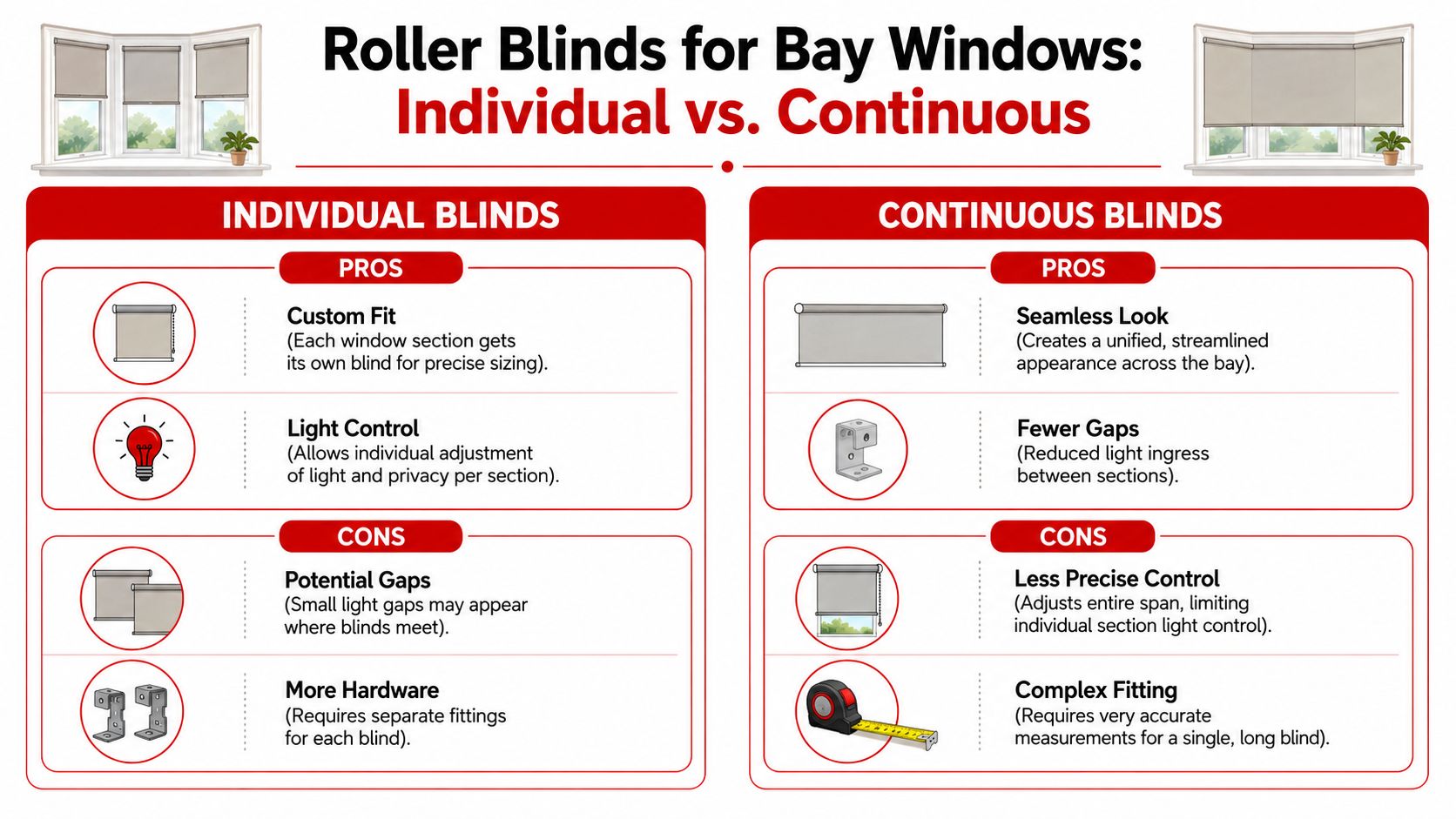
Individual blinds usually make more sense
For most angled bays, I would choose three separate roller blinds. Each section gets its own brackets, its own adjustment, and its own margin for error. That matters because bay corners are unforgiving. A small mistake that would pass unnoticed on a flat window stands out straight away in a bay.
A continuous setup can look neater in a brochure. On site, it needs more from the opening. The heads must line through properly, the corners need clearance, and the fixing positions have to be right first time. If the bay is slightly out, which many are, one long visual line can make the problem more obvious rather than hiding it.
| Feature | Individual Blinds (3+) | Continuous/Linked Blinds (1 System) |
|---|---|---|
| Fit to each section | Better for angled bays and irregular widths | Harder to adapt to shape changes |
| Light control | Each pane can be adjusted separately | Whole span tends to move together |
| Appearance | Slightly more segmented look | More unified visual line |
| Tolerance for measuring error | More forgiving | Much less forgiving |
| Corner clearance | Easier to manage | More likely to create clashes |
| Hardware | More brackets and fixings | Fewer visible fixing points |
| Maintenance | Easier to replace one blind | One issue can affect the full run |
There is one exception homeowners ask about all the time. Perfect-fit style systems can suit some modern windows, but they are not a shortcut for every bay. On shallow uPVC bays, they can solve drilling concerns, yet they still need enough frame shape to clip onto properly, and they do not remove the problem of tight corners or proud handles. In many homes, three well-planned rollers are still the more practical answer.
If you want the job to be easier to fit, easier to live with, and easier to replace later, separate blinds are usually the safer choice.
Recess fit or face fit
After the layout, decide where the blinds will sit. This choice affects how the bay looks, how much light slips round the edges, and whether the blind clears the frame hardware.
Recess fit
A recess fit keeps each blind inside its own section. It suits bays where the depth is honest and the hardware does not project into the blind path. It also keeps the shape of the bay visible, which is why many homeowners prefer it.
Choose recess fit when:
- The recess depth is enough: the bracket, tube and fabric all sit clear of handles and vents.
- The side returns are not pinched: the blind can roll down without rubbing the corners.
- You want a neater built-in finish: especially where the bay trim is worth showing.
Face fit
A face fit goes outside the recess, onto the wall or trim. It is often the better fix in newer homes because it gets you past shallow recesses and awkward frame details without trying to force a tight inside fit.
Choose face fit when:
- The recess is shallow: common with replacement uPVC bays.
- Handles or vents sit proud: the blind needs to pass in front of them, not into them.
- The opening is uneven: an outside fit hides minor variation better.
If the bay is angled and the recess looks marginal, I would not chase a one-piece "perfect" look. I would set it up as three blinds and give myself the option to face fit. That is the approach that saves the most call-backs.
How to Measure a Bay Window Accurately
Measuring a bay properly is less about tape measure confidence and more about method. You're not just finding width and drop. You're checking where the hardware will sit, where the blinds will meet, and whether the corners will clear.
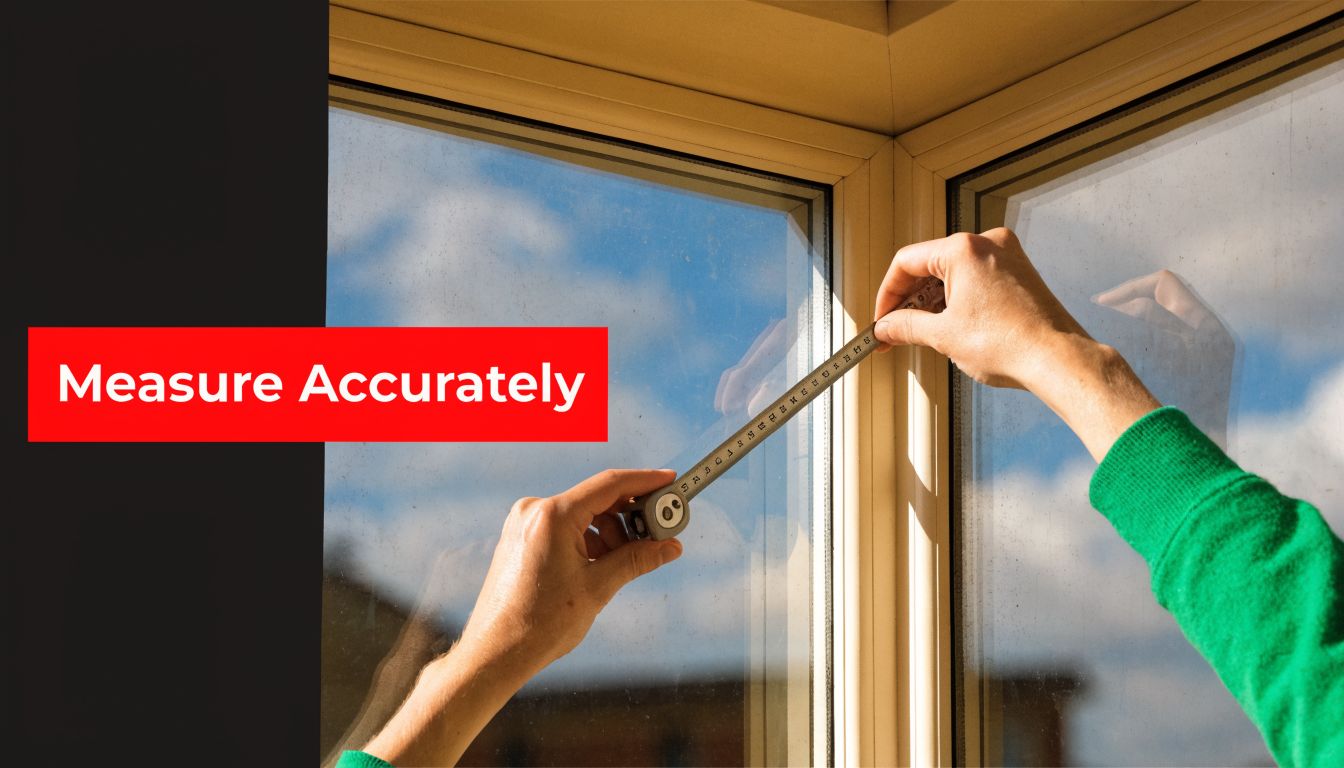
Start by identifying the bay type
A box bay is more squared off. An angled bay has side sections meeting the centre at an angle. That distinction matters because the measuring method changes. UK fitting guidance treats them differently, and angled bays often need corner marking to find the precise meeting point between blinds.
For angled bays, don't guess where one blind should stop and the next should begin. Mark it.
The working method I trust
Use this process in order:
- Measure each pane separately. Don't take one grand overall width and try to divide it later.
- Take width measurements at top, middle and bottom of each section.
- Take depth measurements in three places and work from the smallest figure.
- Check handle and vent projection against where the blind fabric and bottom bar will travel.
- Mark the corner meeting points before you finalise side blind sizes.
According to UK guidance on measuring a bay window for blinds, the standard depth protocol is to measure in three separate locations and use the smallest depth, because limited depth in many UK bays creates collision risk, especially on casement-style windows. The same guidance notes roller blind headrails typically range from 50mm for top-fix mounting to 70mm for face-fix mounting, which is exactly why depth errors cause so many corner clashes.
Measure for clearance, not just for coverage.
The paper strip and cardboard check
This is one of the simplest trade habits and one of the most useful.
Paper strip method for corner points
Take a strip of paper or thin card and place it into the corner where the centre and side sections meet. Mark the point where the front line of one blind would intersect with the next. That gives you a physical reference for where the blinds can meet without guessing from angle alone.
This is especially useful on angled bays where the plaster line, frame line and visual line don't quite agree.
Cardboard square for collision testing
Cut a cardboard square to represent the projection of the headrail. Offer it up into the corner where the bracket will sit. Move it around until you can see clearly whether the side and centre blind hardware will foul each other.
That quick mock-up can save a mis-order and a wall full of patched drill holes.
What to write down
Keep a simple written record for each section. Don't rely on memory once you've moved around the bay.
- Centre section width
- Left section width
- Right section width
- Drop for each section
- Smallest usable depth per section
- Handle position and projection notes
- Mounting choice, recess or face
If one side differs from the other, treat them as different windows. Because they are.
Common measuring mistakes
A few errors turn up again and again:
- Using the largest width: that almost always creates a tight fit or rub point.
- Ignoring depth variation: bays rarely hold the same depth across the section.
- Measuring only the frame opening: not the actual operating space for the blind.
- Assuming both side sections match: they often don't.
A good bay measurement sheet should look slightly fussy. That's a good sign. It means you've noticed the details that usually cause trouble later.
A Step-by-Step Installation Guide
Once the blinds arrive, the fitting stage is mainly about bracket position. If the brackets are right, the blind usually behaves. If the brackets are wrong, no amount of tidying up at the end will save it.
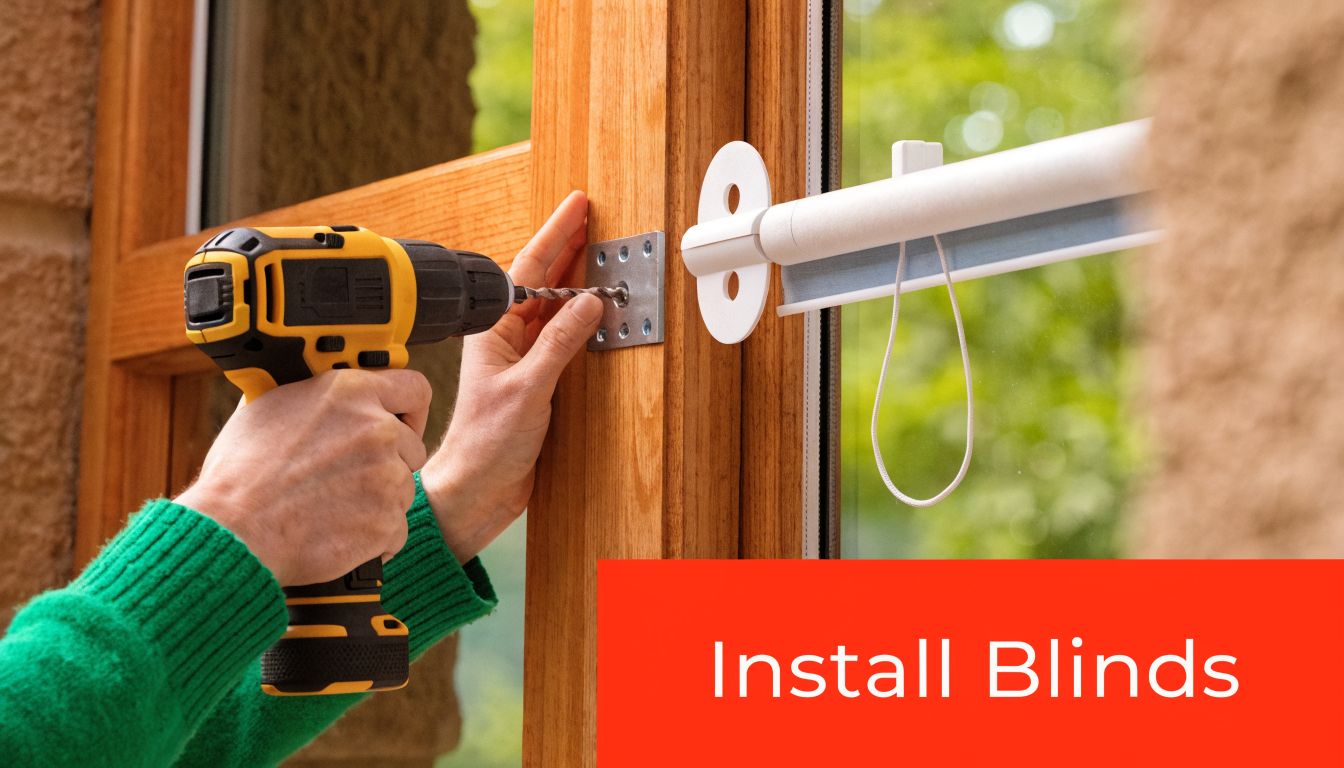
Get the fixing surface right
The fixing method depends on what you're drilling into. A bay can include timber, plasterboard, masonry, or a mix of all three around the reveals and lintel.
Use the right fixing for the substrate:
- Timber lintel or wood trim: pilot hole first, then suitable wood screws.
- Masonry or solid wall: use the correct masonry bit and plugs matched to the screw.
- Plasterboard: use a fixing designed for hollow walls, not a standard plug that spins.
If you're costing up whether to fit them yourself or bring someone in, Henson's Designs window treatment pricing gives useful context on installation cost factors without overcomplicating the decision.
Fit the centre blind first
Always start with the centre section. That blind sets the visual line for the whole bay, and the side brackets work around it.
Step 1
Mark the centre bracket positions carefully, checking level across the mounting line. On a recess fit, check that the blind body clears any handles or vent details when fully lowered.
Step 2
Drill pilot holes and secure the brackets firmly. Before clipping the blind in, offer the headrail up once more to confirm the fixing points still make sense visually and mechanically.
If the centre blind sits crooked, the whole bay looks wrong even when the side blinds are perfect.
Position the side blinds from the centre outward
Many DIY jobs go off line because people measure the side blinds independently and forget they still need to coexist with the centre mechanism at the corner.
Step 3
Use your headrail projection and corner markings to place the side brackets. Don't just centre them in the opening by eye. The important line is the clearance line near the meeting point.
Step 4
Use the cardboard square check again before drilling. It's quicker to spend two more minutes testing than to move a bracket after the wall is marked.
Step 5
Fix the side brackets, then clip in each blind and test the full travel by hand before adding any final trims or chain safety devices.
Final fitting checks
Before you call it done, run through this list:
- Roll action: does the fabric track straight up and down?
- Corner clearance: do the headrails and controls stay clear?
- Bottom bar line: does it sit level when lowered?
- Fixing security: do any brackets flex under load?
- Window use: can the sash, handle or vent still operate properly?
Small levelling corrections are easiest before the room is put back together. If a blind wants to walk sideways on the tube, recheck level first. That's usually the cause.
Solving Common Roller Blind Fitting Problems
A bay can look spot on when you first clip the blinds in, then show every weakness the moment you lower them together. On modern UK bays, the trouble is usually mechanical, not cosmetic. The recess is too shallow, the corner clearance is too tight, or the blind type never suited the frame in the first place.
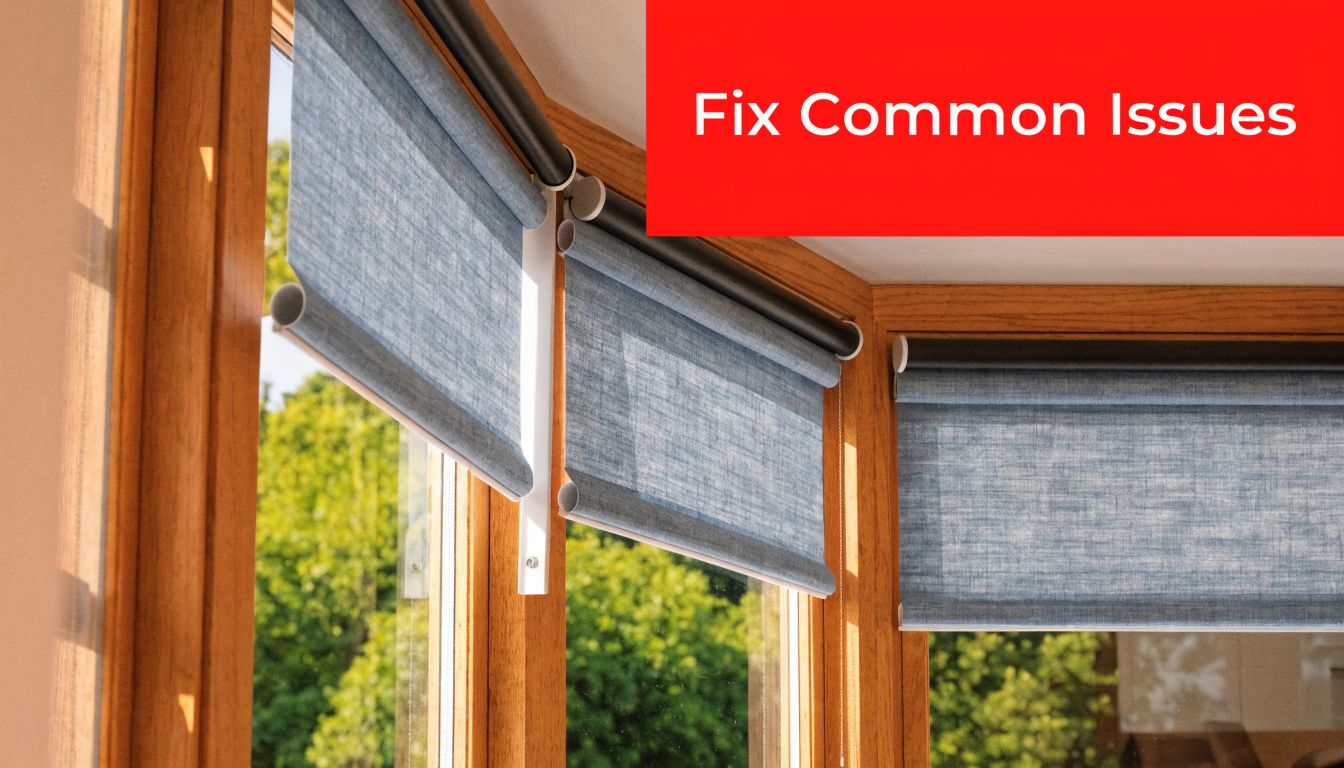
Problem one, the blinds clash at the corners
You'll see this straight away. The headrails rub, the chain ends up hard against the frame, or one blind catches the next as soon as both are down.
Start with the bracket position. In most cases the blind is behaving exactly as it was built to behave, but the side bracket has been fixed too close to the meeting point. Shifting that bracket a little further from the corner usually gives the mechanism enough breathing room.
Check the coverage before you redrill. If moving the bracket creates too much exposed glass, the blind width is wrong for that bay angle and no amount of tweaking will make it read properly.
Problem two, there are visible light gaps
Roller blinds nearly always leave some gap at the sides. In a bay, those gaps stand out more because you are looking at three vertical lines together, not one blind in isolation.
The job is to keep the gaps even and make them look intentional. Uneven gaps make a bay feel badly fitted, even when the difference is only a few millimetres. This is one reason three separate blinds usually work better than trying to force one perfect-fit answer onto an awkward uPVC bay.
What usually helps:
- Keep bracket lines consistent: one bracket set slightly out of line makes normal gaps look much larger
- Use a face fit where coverage matters more than recess neatness: this often gives better edge cover on shallow bays
- Be realistic about the blind type: roller blinds will not seal the opening the way curtains or shutters do
Problem three, the blind binds in a uPVC recess
This catches out plenty of homeowners in newer UK houses. The recess looks deep enough until the mechanism goes in, then the chain side fouls the frame, the fabric sits too far forward, or the blind only runs cleanly with the window shut.
Government guidance on window and door energy performance is published by the Department for Business, Energy and Industrial Strategy, now within the Department for Energy Security and Net Zero, at gov.uk guidance on energy performance for windows and doors. The practical fitting point is simpler. A lot of replacement uPVC bay windows have tight, awkward recesses, and standard manual rollers often need more clear depth than the opening gives them.
That is where the single-blind versus three-blind decision matters in real life. On a shallow bay, three smaller blinds are often easier to place and easier to clear at the corners. If the recess is especially tight, a slimmer system may be the only recess-fit option that works properly.
On a shallow uPVC bay, forcing a standard chain-operated roller into the recess usually creates a bad blind, not a neat one.
If the mechanism is already close to the frame, don't keep packing brackets and hoping it frees up. Move to a face fit, or change to a slimmer blind system that suits the opening.
Problem four, the fabric doesn't roll straight
If the fabric walks to one side, assume a fitting fault first.
Check these points in order:
- Bracket line level: even a slight fall can pull the fabric sideways over repeated use
- Bracket seating: one bracket not clicked home properly can twist the tube
- Tube tension: if the blind was clipped in under strain, it may track badly from the start
- Mounting surface: packed plaster, bowed trim, or debris behind a bracket can throw the whole run off
Leave the fabric alone until you have ruled all of that out. In bay work, a blind that tracks badly is usually telling you the fixing line is wrong.
Final Adjustments and Child Safety Essentials
The last part of the job is where the installation stops looking “newly fitted” and starts looking right. Lower each blind fully and check the bottom bar line from across the room, not from a ladder at arm's length. If one blind looks slightly out, your eye will catch it every time you walk in.
Finishing the operation
Make the final adjustments in use, not in theory.
- Check the top stop: the blind should roll up neatly without slamming into the bracket line.
- Check the bottom stop: it should finish at a consistent height if the bay is meant to read as one feature.
- Watch the fabric edge: if it starts wandering, revisit the bracket level before blaming the blind.
A bay is viewed as a whole. Tiny differences that would disappear on a single window stand out immediately here.
Child safety is not optional
Any blind with a looped chain needs the safety components fitted correctly. That means using the supplied safety device and mounting it so the chain is kept taut and out of reach. It's not an extra. It's part of the installation.
If you're fitting in a family home, don't leave the chain hanging loose while you “come back to it later”. Finish the safety fitting on the same visit, then test the blind again with the chain secured in its proper running position.
A neat blind that isn't safely finished is not a professional job.
Good fitting roller blinds bay window work comes down to three things. Choose the right layout, measure the actual operating space, and fit for clearance rather than hope. Do that, and even an awkward bay becomes a tidy, reliable installation.
If you're also improving ventilation, insect control, or usable airflow around windows and doors, Premier Screens Ltd offers bespoke UK-made fly screens built to fit uPVC and timber openings with a clean, made-to-measure finish.