
Upgrade Your Home: A Practical Guide to Magnetic Fly Screens in 2026
Magnetic fly screens are a brilliantly simple way to keep insects out of your home while still enjoying a fresh breeze. They are essentially fine mesh curtains that hang in your doorway, but with a clever twist: the central opening is lined with magnets that allow you to walk straight through, hands-free, before they snap shut behind you.
This actionable guide will walk you through choosing, installing, and maintaining the perfect magnetic fly screen for your home.
How to Get Hands-Free Protection with Magnetic Fly Screens
Picture a screen door that closes itself perfectly every single time, without you ever having to think about it. That’s exactly what a magnetic fly screen delivers. It’s a wonderfully practical solution that combines constant insect protection with total convenience.
The design itself is beautifully straightforward. A mesh curtain is split right down the middle, and the two edges of this opening are fitted with a series of powerful, well-placed magnets. It acts as an automatic gateway to your home.
The Self-Sealing Mechanism in Action
When you, your children, or even the dog wants to go through, the central seam just parts with a gentle push. The moment you're clear, the magnets go to work, pulling the two sides of the mesh back together with a satisfying click. It’s this immediate re-sealing that makes them so incredibly effective.
Actionable Insight: The automatic closure is the key benefit. A traditional screen door can easily be left ajar by mistake, but a magnetic fly screen diligently seals itself every single time. This maintains a solid barrier against flies, wasps, and other unwelcome pests, making it a "set and forget" solution.
This smart, simple mechanism allows you to flood your home with fresh air and natural light, without having to worry about what else might be flying in.
Why They Work So Well in UK Homes
It's no surprise that magnetic fly screens have become such a popular choice for home improvement across the UK. They tackle a common frustration—how to keep bugs out without sacrificing ventilation—with an elegant, low-maintenance solution.
The design relies on a central split in the mesh, with magnetic strips that automatically pull the panels back together after someone passes through. Most models you'll find on the market are designed to fit standard UK door frames, which are typically around 210 cm high and between 100–110 cm wide. They provide continuous insect control without resorting to chemical sprays, all while letting daylight and fresh air in. To learn more about the mechanics, you can explore the science behind fixed magnetic fly screens.
For high-traffic areas like patio or back doors, this design is hard to beat. It’s a simple upgrade that delivers a huge improvement in comfort and peace of mind.
How to Choose the Right Screen for Your Lifestyle
To find the right insect screen for your home, don't just look at feature lists. Instead, start by analysing your daily life and the specific needs of each doorway or window.
The perfect screen for a rarely used guest room window will be completely different from what you need for the main back door that sees constant traffic. Your decision should be based on your space, how you use it, your budget, and your aesthetic preferences.
Match the Screen to Its Primary Use
To make the right choice, be honest about your main priority. Are you looking for hands-free convenience, a completely clear view, or a more permanent, heavy-duty barrier?
- For High-Traffic Areas: If you have children, pets, or a constant flow of guests using your patio or back door, choose a magnetic fly screen. The hands-free, self-closing design is a lifesaver – no more shouting "shut the screen!" as it automatically snaps closed behind you.
- For Uninterrupted Views: If your main goal is to preserve a beautiful view, select a retractable screen. When you don't need it, it disappears into a discreet cassette, leaving your window or doorway completely open.
- For Permanent Security: For a front door or any entrance where you want a more robust and secure barrier, install a traditional hinged screen door. These often come with locks and provide a much sturdier presence.
- For Wide Openings: If you're dealing with large bi-fold or sliding patio doors, you'll need a purpose-built sliding screen system. These are specifically designed to cover those expansive openings smoothly and efficiently.
By zeroing in on what you need most, you can cut through the noise and find a screen that genuinely works for you, rather than one that just looks good in a picture.
Actionable Insight: The right screen should solve a problem, not create a new one. A screen for a busy family kitchen must be effortless. For a formal living room, it should be almost invisible. Define the problem first, then choose the solution.
We’ve seen a big shift in screen design in the UK over the past twenty years. The trend has moved away from old-school rigid barriers towards much more flexible, user-friendly solutions. Magnetic screens, with their ability to open with a gentle push and then snap shut, are a perfect example of this. Their simple installation and removal make them a popular choice for homes, rental properties, and even temporary summer setups in places like cafés.
Fly Screen Feature Comparison
Use this table to quickly compare how each screen type performs across the most important features.
| Feature | Magnetic Screens | Retractable Screens | Hinged Screens | Sliding Screens |
|---|---|---|---|---|
| Hands-Free Operation | Yes (self-closing) | No (manual) | No (manual) | No (manual) |
| Ease of Installation | Very easy (DIY) | Moderate to difficult | Difficult (professional) | Difficult (professional) |
| Pet & Child Friendly | Excellent | Good | Fair | Good |
| Unobstructed View | Good | Excellent (when open) | Fair | Good |
| Security Level | Low | Low | High (lockable) | Medium |
| Best For | High-traffic doorways | Preserving views | Main entrances | Large openings |
As you can see, there’s no single "best" option—only the best option for your specific situation.
A Quick Visual Comparison
This graphic does a great job of showing the fundamental difference in approach between a modern magnetic screen and a traditional hinged door.
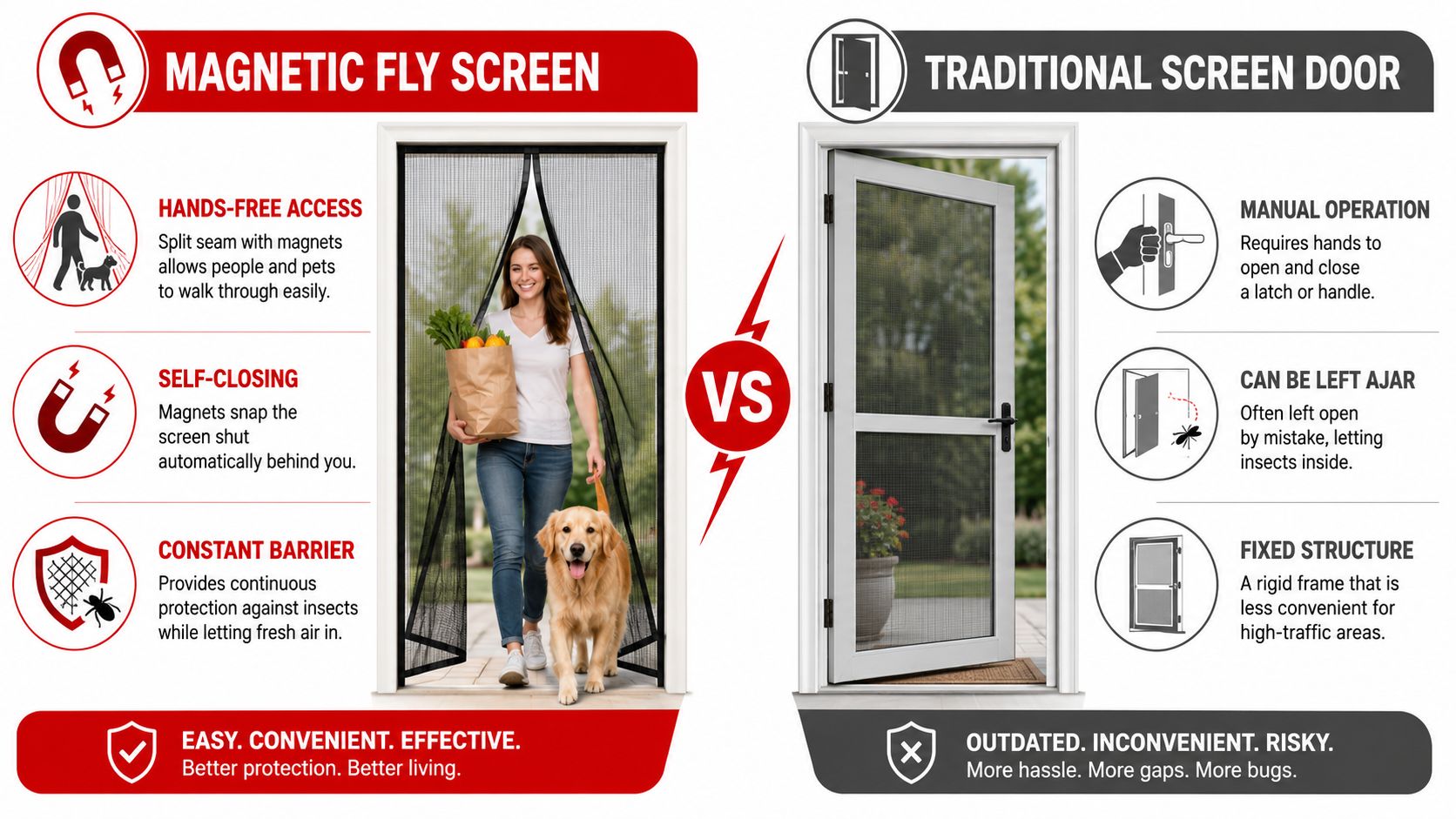
Ultimately, magnetic screens are built for convenience and flow, while traditional doors are about creating a fixed, manual barrier. Weighing these distinct benefits against what you truly need will point you towards the most practical and effective choice for your home or business.
How to Select the Perfect Mesh for Your Needs
The mesh is the real workhorse of any magnetic fly screen. Your choice of mesh has a huge impact on how well your screen performs. It's about more than just insects; it's about finding the perfect balance for your home's needs.
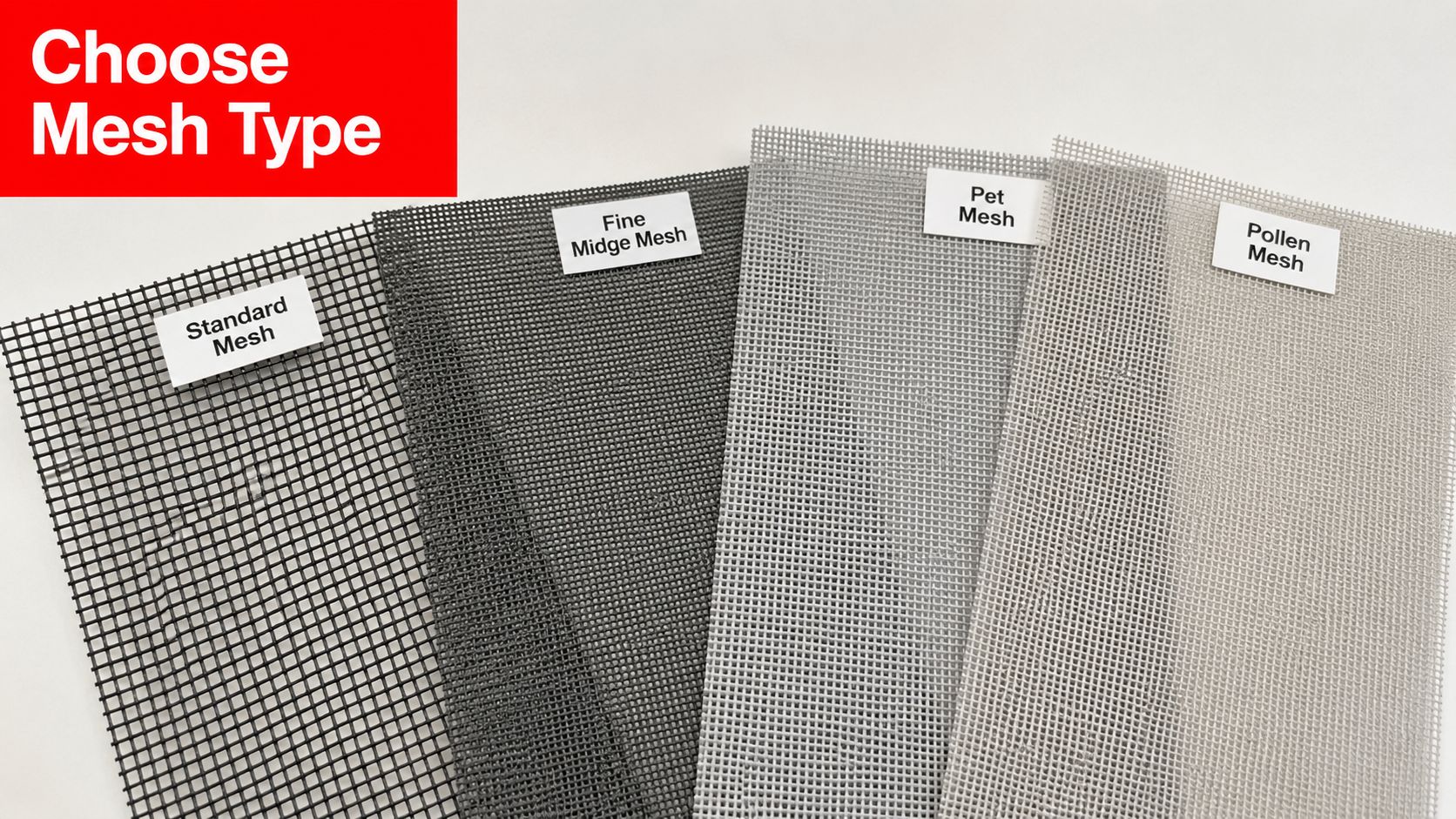
Every mesh type involves a trade-off between airflow, visibility, and the size of the pest it blocks. A super-fine mesh might be fantastic for stopping pollen, but it will naturally let a little less light and air through. A tougher mesh might be more noticeable, but it’s going to stand up to a determined cat. Getting this choice right from the start is the key to being truly happy with your screens.
Match the Mesh to Your Primary Goal
To get started, pinpoint your main objective. What is the number one problem you're trying to solve? Are you constantly swatting away tiny midges in the evening? Is the family dog a bit too enthusiastic with its paws? Or are you hoping for some relief from seasonal hay fever?
Actionable Insight: Treat your mesh choice as a specific tool for a specific job. You wouldn't use a hammer to turn a screw. Similarly, don't use standard insect mesh if your real battle is with airborne pollen.
Here is a breakdown to help you choose the right mesh:
- Standard Insect Mesh: Choose this for all-purpose protection against common pests like flies, wasps, and moths. It offers the best balance of airflow and clear visibility and is the ideal starting point for most homes.
- Fine Midge Mesh: If you live near water or in a rural area where midges are a problem, select this tighter weave. It creates a barrier that these tiny pests simply can't penetrate.
- Tough Pet Mesh: If you have pets, invest in this thicker, more resilient mesh. It is specifically engineered to handle claws and prevent the frustrating rips that can quickly ruin a standard screen.
- Pollen Mesh: If you suffer from hay fever, this mesh is a must. Its unique weave is lab-tested to capture a high percentage of airborne allergens before they enter your home, while still allowing for decent air circulation.
When looking at mesh, it's also worth considering factors like durability and UV protection, especially for larger installations. Exploring resources on choosing the best porch screen can offer valuable insights into how different materials hold up over time. If allergy relief is your top priority, you can discover more about the technology in our article on pollen mesh.
A Step-by-Step Guide to Installation and Maintenance
One of the biggest draws of a magnetic fly screen is its simple installation. However, paying attention to the details during setup and performing basic upkeep will ensure your screen works perfectly for years.
Treat this as a quick and satisfying home improvement project.
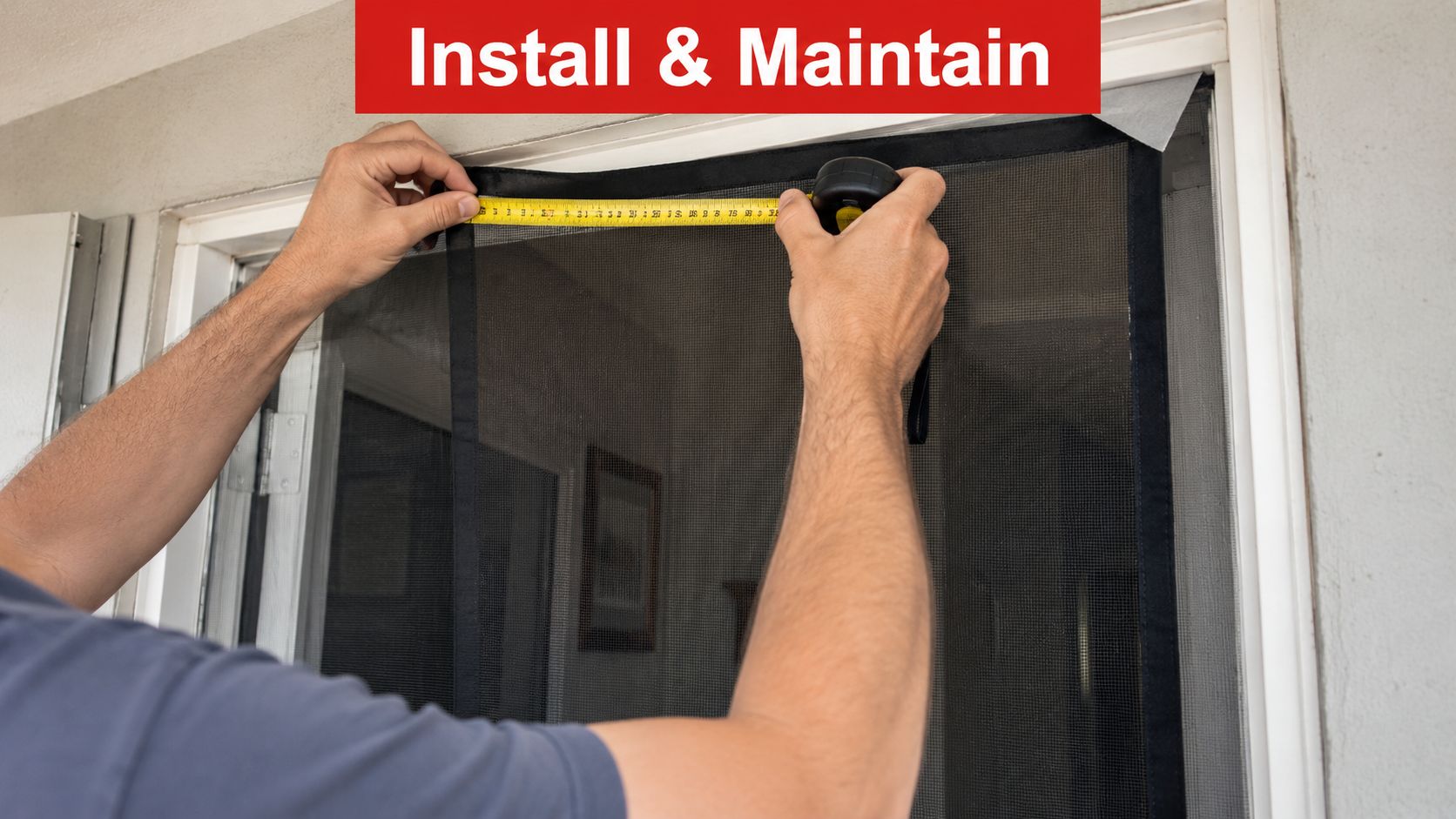
Getting the Installation Right in 3 Steps
An accurate measurement is the foundation of a perfectly sealed screen. Get this wrong, and you'll be left with frustrating gaps. Follow these steps for a flawless installation.
- Measure with Precision: Use a steel tape measure. Measure the inside of your door or window frame’s width at the top, middle, and bottom. Do the same for the height on the left, right, and in the centre.
- Use the Smallest Measurement: When ordering a custom screen, always provide the smallest width and height measurements. This crucial pro-tip guarantees the screen will fit inside the opening without buckling.
- Prep Your Surface: Before applying adhesive, clean the frame thoroughly. Use a mild degreaser or rubbing alcohol to wipe away dust, grease, or grime. The adhesive strips need a perfectly clean surface to create a strong, lasting bond.
Once your measurements are sorted and the frame is prepped, fitting the screen itself is generally a straightforward process. The trick is to work slowly and methodically, ensuring the screen is pulled taut and hangs straight.
Long-Term Care for Lasting Performance
Maintaining your magnetic fly screen is easy. A few simple habits will keep it working like new, season after season.
Actionable Insight: The number one reason a magnetic screen stops closing properly is a build-up of dirt on the mesh or a slight misalignment of the magnets. A quick clean and check-up every few weeks prevents almost any issue.
Follow this simple maintenance checklist:
- Gentle Cleaning: Every couple of weeks during warmer months, clean the mesh with a soft brush, microfibre cloth, or your vacuum's upholstery attachment. For stubborn dirt, use a cloth dampened with soapy water, wiping it dry afterwards. Avoid harsh chemicals.
- Check the Magnets: Regularly inspect the central magnetic seam. Ensure the magnets are clean and meeting flush for a tight seal. If the connection feels weak, wipe them down to remove any dust.
- Off-Season Storage: In winter, take the screen down. Carefully detach it, clean it, and roll it up loosely. Store it in a dry, protected place to prevent unnecessary wear.
For more complex window designs, you might be wondering how magnetic screens stack up against other solutions. If that’s the case, our guide on retractable fly screens for windows offers some excellent comparisons and further insights.
Why a Custom-Fit Screen Makes a Difference
While off-the-shelf magnetic fly screens offer a quick fix, a bespoke screen delivers a level of finish and performance that standard sizes can't match. When a screen is made to the exact dimensions of your door, it creates a flawless, gap-free seal that truly works.
It's like the difference between buying a jacket off the rack and having one tailored. The first covers you, but the second fits perfectly, offering superior comfort and a sharper look. That same principle of precision turns a decent screen into a great one.
The Advantage of a Perfect Seal
The primary reason to choose a custom screen is to eliminate gaps. Off-the-shelf screens are made for standard frame sizes, but many UK homes have non-standard openings. A tiny gap of a few millimetres is an open invitation for insects, defeating the purpose of the screen.
A bespoke magnetic fly screen is built from your specific measurements, creating an impenetrable barrier.
Actionable Insight: A custom-made screen allows you to open your home to fresh air without worrying about pests. It guarantees a perfect fit with absolutely no gaps for insects to sneak through.
This precise fit also ensures the magnetic closure works flawlessly. When the screen hangs perfectly taut and straight, the central magnets align every time, giving you that satisfying, crisp seal the moment you pass through.
Benefits Beyond the Perfect Fit
Customisation offers more than just correct dimensions. Opting for a made-to-measure screen provides a range of benefits that improve longevity and aesthetics.
- Superior Materials: Custom screens typically use higher-quality components. Choose robust aluminium frames that won’t rust or warp, unlike the plastic found in cheaper, mass-produced versions. This is an investment in durability.
- Colour Matching: You are not limited to black or white. Professional suppliers offer various frame colours, allowing you to match the screen to your existing uPVC or timber frames for a discreet finish.
- Mesh Selection: A custom order lets you select the ideal mesh for your situation—whether that’s a fine midge mesh for rural locations or a tough pet mesh for a home with lively animals.
Ultimately, ordering a bespoke magnetic fly screen is an investment in quality, longevity, and a truly effective insect barrier. It guarantees a solution designed specifically for your space.
How to Meet Health and Safety Standards in Commercial Spaces
For businesses in the food or hospitality sector, keeping insects out is a legal requirement. Facilities managers must ensure their sites meet the strict guidelines set by the UK’s Food Standards Agency (FSA), making effective pest control non-negotiable.
Your choice of fly screen is critical. A standard domestic screen won’t suffice in a busy commercial kitchen. These environments demand robust, hygienic solutions built for constant, heavy use.
Selecting Compliant Materials for Your Business
To comply with health and safety regulations, your fly screen system must be durable and easy to sanitise. Your primary action is to choose the right materials from the start.
- Durable Frames: Always specify strong aluminium frames. They resist rust and corrosion from moisture and frequent cleaning, unlike less durable plastic alternatives.
- Resilient Mesh: Demand commercial-grade mesh, such as stainless steel or UV-stable fibreglass. It must endure regular scrubbing and resist degradation from sunlight or cleaning chemicals.
- Hygienic Design: Ensure the system is designed to minimise crevices where dirt, grease, and grime can accumulate. This allows for easy and effective cleaning.
Actionable Insight: In a commercial kitchen, a fly screen is food safety equipment. It must perform flawlessly and be easy to keep hygienic. Therefore, robust, non-porous materials are a baseline requirement, not an optional upgrade.
For high-traffic areas like service entrances and kitchens, a robust system is vital for protecting both your products and your reputation. Opting for professional-grade, heavy-duty insect screen doors ensures you can maintain a pest-free environment without blocking essential airflow. It's not just about compliance; it's a clear statement about your commitment to the highest standards of operational hygiene.
Your Questions About Magnetic Fly Screens Answered
When you're close to making a decision, a few practical questions often pop up. We get it. Let’s tackle some of the most common queries we hear about magnetic fly screens, giving you clear, straightforward answers to help you choose with confidence.
Are Magnetic Fly Screens Effective in Windy Conditions?
Yes, a high-quality, made-to-measure magnetic screen holds up remarkably well against the wind. The key is in the construction: powerful, full-length magnets and a perfectly taut fit are essential.
While a sudden, strong gale might momentarily part the magnets, a well-made screen is designed to snap right back together almost instantly. This is where they really outperform cheaper, off-the-shelf kits that use weaker, spaced-out magnets that just can't hold their own.
Can I Install a Magnetic Screen on Any Door Frame?
One of the best things about bespoke magnetic screens is their versatility. They can be manufactured to fit just about any door or window frame you can think of, including uPVC, timber, and aluminium.
Actionable Insight: The most important part of the process is getting the measurements spot on. A custom system is built precisely for your frame, ensuring a flawless, secure seal that leaves absolutely no gaps for pests to sneak through. It's a level of perfection that standard sizes simply can't match.
How Do I Choose Between a Magnetic and a Retractable Screen?
This decision comes down to your lifestyle and how you use the doorway. To decide, analyse your daily routine.
- Choose a Magnetic Screen if: You need constant, hands-free access. They're brilliant for busy back doors or patio doors, especially if you have children or pets who are always on the move.
- Choose a Retractable Screen if: An unobstructed view and a discreet appearance are your main goals. These screens can disappear completely when not needed, making them ideal for bi-fold doors or openings that look out onto a beautiful garden.
Both give you fantastic protection from insects, so it's really a choice between everyday convenience and sleek aesthetics.
Ready to enjoy a bug-free home with a solution made just for you? Explore the bespoke options available at Premier Screens Ltd and find your perfect fit today.