Roller Shades for Doors: The Complete 2026 UK Guide
A warm day makes every door in the house feel like an invitation. You want the patio open, the kitchen door ajar, and the garden connected to the room you’re using. But then practicalities intrude. Flies drift in, pollen settles on surfaces, and by evening you’re choosing between stale air and unwanted guests.
That’s where many people start searching for roller shades for doors. What they often mean isn’t a blackout blind or a privacy shade. They want something that lets air through while keeping the rest out. In practice, that points to a different category entirely: retractable roller fly screens.
Used properly, these systems solve a more practical problem than traditional shades. They preserve ventilation, reduce mess, help with hygiene, and disappear when you don’t need them. For homeowners, that means a cooler, cleaner living space. For facilities managers, it can mean a more workable door opening that supports day-to-day operations without turning the entrance into a weak point.
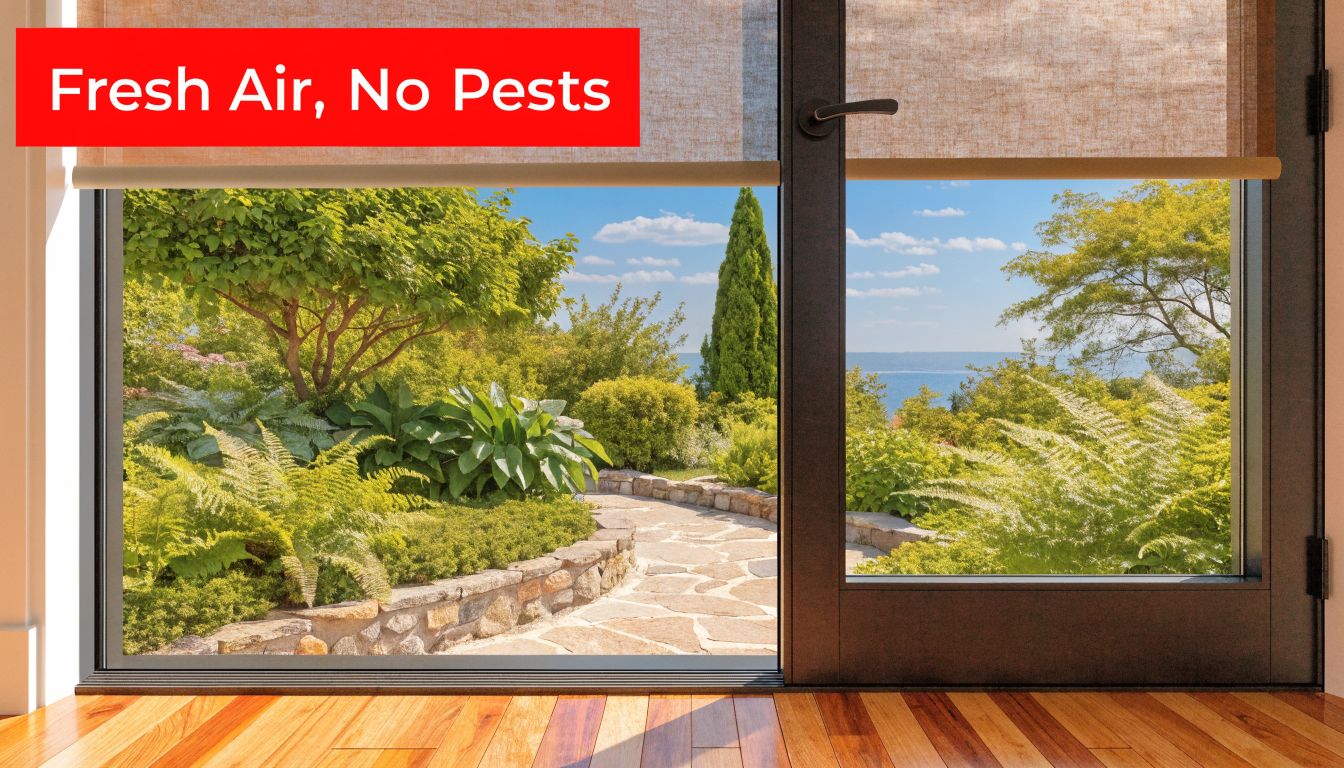
Enjoy Fresh Air Without Unwanted Guests
The usual trigger is simple. A set of French doors goes open at breakfast, or a back door stays open while children move in and out of the garden. Within minutes, insects are in the room, leaves collect near the threshold, and anyone with hay fever starts to notice it.
Traditional door blinds don’t solve that. They block light. They may add privacy. But once they’re down, they also reduce the airflow you were trying to get in the first place.
What homeowners usually need instead
A retractable door screen works more like a controlled barrier than a shade. It rolls away into a side or top cassette when not needed, and when deployed it covers the opening with mesh rather than opaque fabric. That difference matters.
You still get the open-door feeling. You still see the garden, terrace, or yard. But the opening becomes usable for longer stretches of the day, especially around food prep, family meals, or evening ventilation.
In homes, the benefit is comfort. In commercial settings, it’s often hygiene and access.
- For kitchens: You can keep a service or rear door open for airflow without turning the room into an easy route for insects.
- For garden-facing rooms: You keep the visual openness that made you install large doors in the first place.
- For allergy-conscious households: The right mesh changes the screen from a simple insect barrier into part of the home’s comfort strategy.
A good door screen should feel almost invisible in use and very obvious in what it stops.
Shades versus screens
This distinction gets muddled all the time. If your goal is privacy after dark, glare control, or room darkening, a roller shade still has its place. If your goal is ventilation with protection, a roller screen is usually the better answer.
That’s why the best solutions for doors aren’t always the ones sold as blinds. They’re the ones designed around movement, threshold traffic, mesh choice, and daily handling. On a door, those details matter more than appearance alone.
Manual Retractable and Motorised Systems Explained
Most door roller screens fall into two operating types. Manual retractable and motorised. The right one depends less on trend and more on how the doorway is used.
Manual retractable systems
A manual retractable screen is the simplest design to live with. Think of the action as similar to a smooth blind or projector screen, except built for a doorway and regular traffic. The mesh is housed in a cassette and drawn across the opening by hand, then guided back into place when released or unlatched.
For many homes, this is the practical default.
It suits:
- Single back doors that are opened often but not constantly
- French doors where one leaf is used more than the other
- Occasional-use openings such as utility rooms or garden rooms
The main advantage is control. There’s less to go wrong, and the screen can usually be opened and closed quickly without power, remotes, or wiring. If the opening is moderate in size and the door isn’t in constant use, manual operation is often the cleanest choice.
When motorised systems make sense
Motorised screens earn their keep on larger openings and in settings where convenience matters every day. Wide-span doors, busy hospitality spaces, or homes where ease of access matters can all benefit from powered operation.
The gain isn’t just comfort. It’s consistency. A large screen that feels cumbersome by hand often gets left open or avoided entirely. A motorised unit is more likely to be used properly because the effort disappears.
Anyone weighing automation may also find it useful to look at broader smart-home thinking around door and shade control, such as this guide to Wisconsin smart home shades. The product category is different, but the decision logic is similar: opening size, frequency of use, access needs, and how much convenience you value.
A simple way to choose
Use this quick filter before you order:
Check the width of the opening
Larger spans put more demand on smooth tracking and controlled movement.Be honest about traffic levels
A screen on a rarely used patio door can be manual. A screen on a door crossed all day may need something easier.Consider who uses it
Older occupants, children, staff carrying trays, or anyone with limited mobility often benefits from simpler operation.
Practical rule: Choose the most straightforward system that people will actually use every day.
- Think about maintenance access
Motorised systems need planning for power and servicing. Manual systems need less infrastructure.
The mistake is choosing by appearance alone. On a door, operation is the product. If it’s awkward, the screen won’t stay in service for long.
Matching a Roller Screen to Your UPVC or Timber Doors
Door type changes everything. A screen that works neatly on a modern patio opening can become awkward on a timber French door with projecting handles, limited fixing space, and outward swing. That’s where generic advice tends to fall apart.
Many online guides are written around broad US door formats, but UK homes often present a different set of fitting conditions. Over 4 million Georgian and Victorian properties are part of this challenge, and many have narrow reveals and outward-opening French doors that off-the-shelf solutions don’t address well, as noted in guidance on door fitting challenges in British homes. The same practical issue affects modern homes too. The material may be different, but clearance, fixing depth, and traffic path still decide whether the installation works.
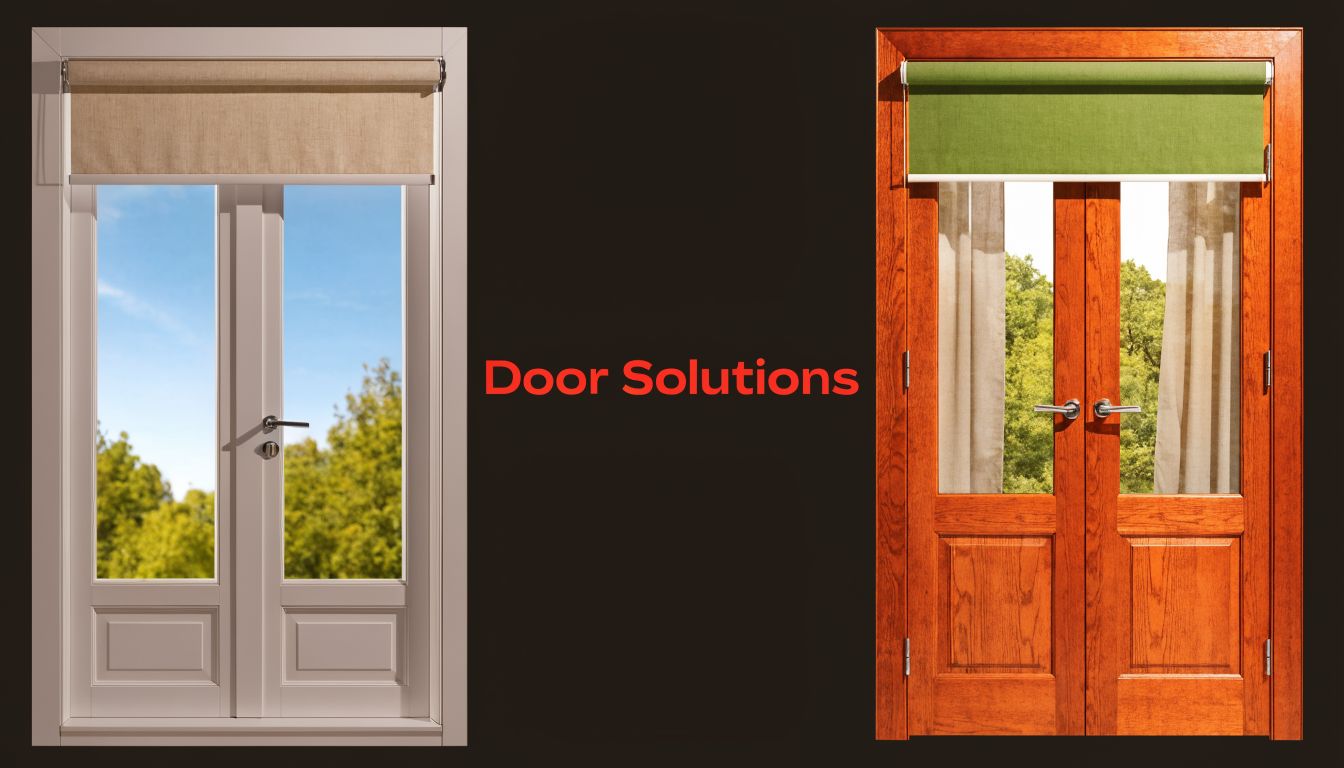
UPVC doors
UPVC usually gives you a stable, consistent frame to work with, but that doesn’t mean every opening is easy. The key questions are whether there’s enough flat mounting area and whether the handle projects into the screen path.
For single doors, a made-to-measure retractable screen is usually straightforward if the frame is square and the threshold is clear. Problems start when buyers try to force a standard unit onto a frame with uneven trims or tight side clearance.
Check these points first:
- Frame face depth for brackets or cassette mounting
- Handle projection so the mesh or pull bar doesn’t catch
- Threshold condition if the system uses a bottom guide
- Opening direction because outward-swing doors need a different planning approach from inward-opening ones
Timber doors
Timber is often the better-looking option, but it’s less forgiving if you install carelessly. Older frames may not be perfectly square, and decorative mouldings can reduce usable fixing space fast.
On timber, a good installer pays close attention to:
- whether the frame is plumb
- whether the paint finish will need protecting during fixing
- whether movement in the timber changes seasonal clearance
- whether a face-fix or reveal-fit produces the cleaner result
Bespoke systems are particularly important. You can work around heritage detailing and still keep the screen neat, but only if the frame and hardware are measured properly.
French doors and bifolds
French doors are the detail that frequently causes unexpected issues. Handles, meeting stiles, and swing arc all compete for the same space. If the doors open outward, the screen has to sit where it won’t foul the movement of the leaf and where daily use still feels natural.
On French doors, handle clearance should be treated as a design input, not a problem to solve after ordering.
Bifolds create a different issue. The opening is wider, and the screen has to deal with a lot more movement around the threshold area. If the family uses the opening constantly in summer, ease of retraction becomes just as important as mesh quality.
What works and what usually doesn’t
What works well
- Made-to-measure cassettes and tracks
- Systems planned around the actual handle position
- Fit choices matched to the frame, not guessed from brochure photos
- Cordless or safely tensioned operation where relevant under BS EN 13120
What often disappoints
- Trimming a standard-size unit to “make it fit”
- Ignoring outward swing on double doors
- Choosing a bulky cassette for a shallow reveal
- Treating period joinery like a modern square opening
If you have UPVC or timber doors, the answer isn’t whether a roller screen can work. It’s whether the unit is built around your opening rather than adapted to it after the fact.
Selecting the Perfect Mesh Fabric
The frame gets most of the attention, but the mesh decides how the screen behaves. In this context, “roller shades for doors” becomes a misleading phrase. You’re not just choosing a shade. You’re choosing a working fabric for a specific problem.
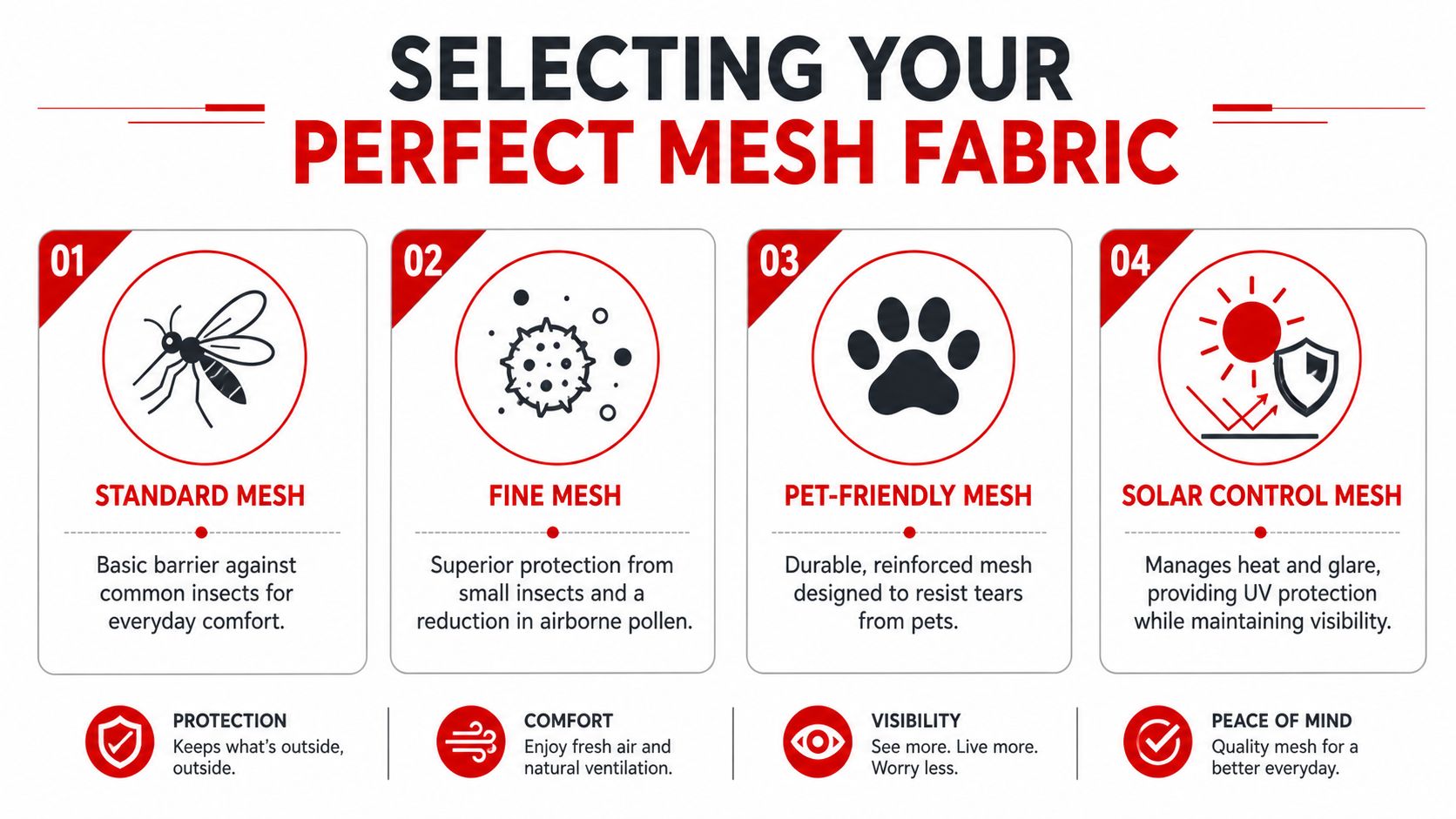
Four common mesh directions
Some households need a simple insect barrier. Others need finer filtration, extra durability, or better control of heat and glare. The right choice depends on what annoys you most once the door is open.
| Comparison of Roller Screen Mesh Types | |||
|---|---|---|---|
| Mesh Type | Primary Use | Key Feature | Best For |
| Standard Mesh | General insect control | Good visibility and everyday airflow | Most homes with common flying insects |
| Fine Mesh | Small insect and pollen reduction | Tighter weave for finer protection | Allergy sufferers and midge-prone areas |
| Pet-Friendly Mesh | Resistance to scratching and pushing | Tougher construction | Homes with dogs or cats near doors |
| Solar Control Mesh | Sun and glare management | Helps moderate light and heat | South-facing doors and bright glazed openings |
Standard and fine mesh
Standard mesh is the all-rounder. It suits kitchens, garden doors, utility entrances, and most domestic situations where the goal is simple: let air in, keep insects out.
Fine mesh is the upgrade when the nuisance is smaller or more persistent. This is the option many buyers should consider if they live near water, in rural locations, or if airborne irritants are part of the problem. The tighter weave can help where a standard insect screen feels too basic.
If the doorway is used most in peak pollen season, mesh choice matters more than frame colour.
Pet-friendly and solar control mesh
If animals use the same doorway, a standard mesh may not last well. Claws, noses, repeated contact at the lower section, and excited impacts at feeding time all put real strain on a screen. Pet-friendly mesh is built for that abuse. It’s not indestructible, but it gives you a better margin against tears and push-through damage.
Solar control mesh answers a different problem. Some glazed doors don’t just admit air. They also bring in sharp glare and heat. In those cases, a mesh that moderates solar gain while keeping visibility can make the opening more usable during the brightest part of the day.
How to choose without overcomplicating it
Ask one question first: what are you trying hardest to stop?
- If it’s flies and wasps, standard mesh is often enough.
- If it’s midges or pollen, move toward a finer weave.
- If it’s damage from pets, durability comes first.
- If it’s strong sun on the opening, look at solar-control fabrics.
The wrong approach is trying to make one mesh solve every problem perfectly. Most buyers get better long-term results by choosing for the main use case and accepting the normal trade-off that comes with it, whether that’s visibility, durability, or fineness.
More Than Just a Bug Screen The Added Value
A good door screen earns its place because it improves the way the building works. In homes, that usually starts with comfort. In commercial sites, it often starts with hygiene, airflow, and how staff move through an opening without constant interruption.
Better airflow matters
Purpose-built screens distinguish themselves from traditional light-blocking products in this regard. Specialist insect mesh can deliver up to 90% better airflow than light-blocking roller shades according to internal FSA-compliant tests referenced in the earlier guidance. That difference matters when rooms heat up and people still want the door open.
For households, that means the room stays usable without turning the doorway into a funnel for insects. For commercial kitchens, prep spaces, and serving areas, it supports a cleaner flow of air while keeping the opening controlled.
Practical value for businesses
A lot of commercial buyers don’t need another decorative product. They need a screen that fits routine operations and supports hygiene expectations.
That can include:
- Food preparation areas where insect control supports good working practice
- Hospitality venues that want open-door airflow without obvious contamination risk
- Retail or healthcare side entrances where visibility and access both matter
A proper screen also looks more considered than an improvised barrier. That changes how customers read the space. They see a doorway that’s managed, not one that’s left open while hoping for the best.
Safety and day-to-day use
Modern systems also bring practical safety gains. Cordless operation reduces one of the common concerns on family doors, and smoother retracting mechanisms make screens easier to live with in busy spaces.
There’s also a strategic point that gets missed. A screen that retracts neatly is more likely to stay in service than one that people have to unclip, fold, prop open, or work around manually.
In daily use, the best screen isn’t the one with the longest specification sheet. It’s the one people stop noticing because it works.
The added value isn’t abstract. It’s cleaner air movement, better usability, fewer interruptions, and a doorway that serves the room properly.
Achieving a Perfect Fit Your Action Plan
Most fitting problems start before the screen is built. Wrong dimensions, ignored handles, and assumptions about fixing space create nearly all the frustration people blame on the product later.
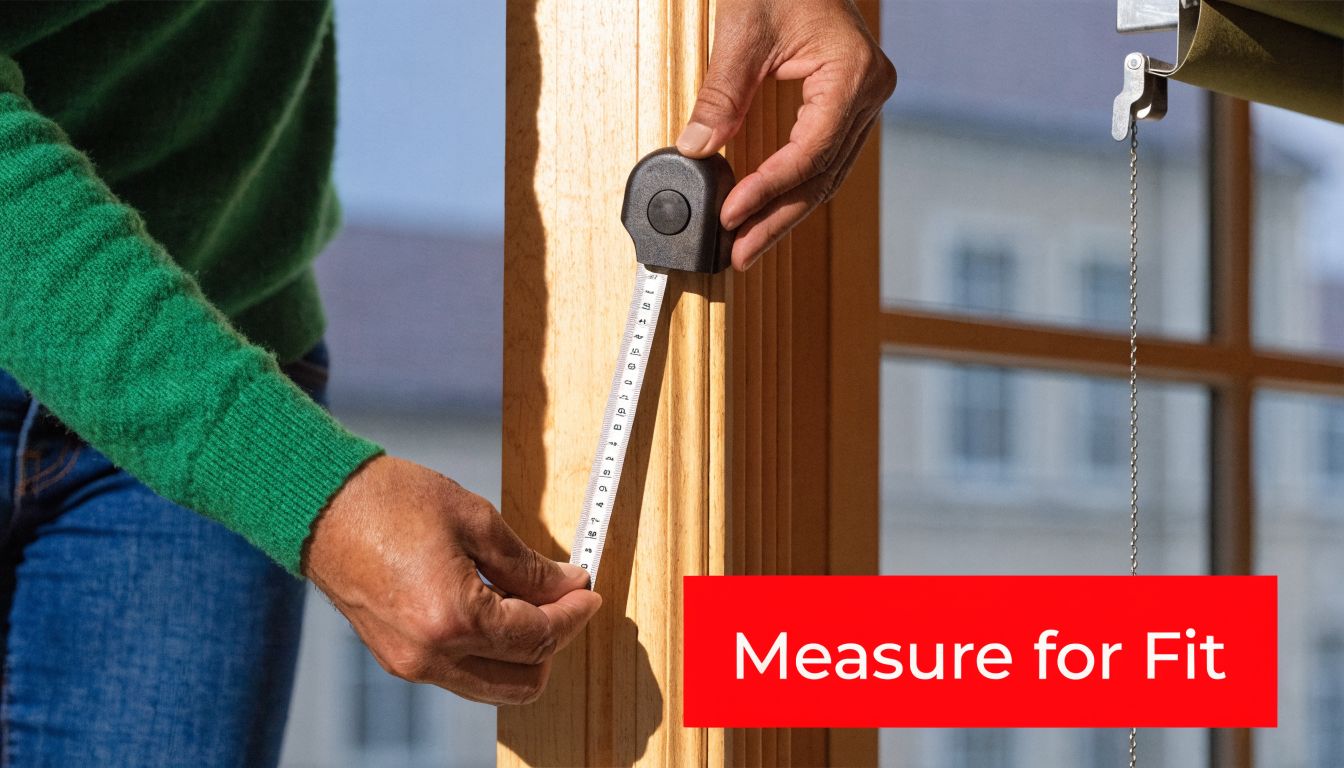
Step one, measure the opening properly
Use a metal tape, not a fabric one. Measure the width and height of the intended fixing area, not just the visible glass or the clear gap you happen to notice first.
Take note of:
- the narrowest point in the width
- the full usable height
- handle projection
- any skirting, trim, threshold lip, or closer that may interfere
Critical measuring tip: Always measure width and height in three places, then work from the tightest usable dimension rather than the most generous one.
If the frame is old, check whether it’s square. A few millimetres out can matter on a retractable system.
Step two, order for the frame you have
Made-to-measure matters most on doors with traffic, handles, and uneven reveals. Off-the-shelf units may look cheaper at first, but they often leave you compromising on fit, operation, or finish.
When ordering, be ready to specify:
Door material
UPVC, timber, aluminium-clad, or mixed frame details can affect fixing choice.Opening style
Single door, French doors, bifold, or another configuration.Mounting preference
Face fix or reveal fit, depending on available space.Mesh priority
Everyday insect control, finer protection, pet resistance, or solar management.
For readers dealing with an older sliding screen that needs fabric replacement rather than a full new system, this overview of professional sliding door rescreening is useful for understanding what a rescreening process generally involves.
Step three, install with realism
Many domestic door screens are within reach of a careful DIY installer. If the opening is square, the fixings are straightforward, and the instructions are clear, the job is manageable with basic tools and patience.
Call in a trade installer when:
- the frame is visibly out of square
- the opening is unusually wide
- the door is part of a period property with delicate joinery
- the system is motorised
- the door gets heavy daily traffic and can’t afford a poor setup
A clean installation is not just about appearance. It affects retraction, latch alignment, wear on the mesh, and how long the screen remains trouble-free. Measure carefully, order accurately, and install without forcing anything into place.
Common Questions About Door Roller Screens
Can door roller screens work on outward-opening French doors
Yes, if the screen is designed for that layout. The important part is planning around the swing path, handle clearance, and fixing position before ordering. Outward-opening doors aren’t a reason to avoid a screen. They’re a reason to avoid generic sizing.
Are they suitable for UK weather
In a properly specified system, yes. Aluminium frames and UV-stable mesh are common choices because they cope well with regular use and changing conditions. The main issue isn’t weather alone. It’s whether the screen is fitted square and tensioned correctly.
How do you clean the mesh
Keep it simple. Vacuum gently with a soft brush attachment or wipe lightly with a damp cloth. Don’t scrub aggressively, and don’t use harsh chemicals that can affect the mesh coating or frame finish.
Is pollen mesh worth it
For households affected by seasonal allergens, it can be a very sensible upgrade. It’s especially useful when people want the door open for ventilation but don’t want that decision to make the room less comfortable. The exact feel and visibility can differ from a standard mesh, so it’s best chosen for a clear reason rather than as an automatic upgrade.
Do retractable systems last in busy settings
They can, but only if the screen type matches the traffic level. A lightly used garden door and a busy commercial entrance place very different demands on the same basic idea. High-traffic sites should prioritise stronger hardware, appropriate mesh, and realistic installation planning.
If you want a made-to-measure answer rather than a guessed fit, Premier Screens Ltd supplies bespoke fly screens for UK homes and commercial sites, including retractable door screens, specialist mesh options, and heavy-duty solutions for higher-traffic environments. It’s a practical route if you need a screen built around your opening, not adapted to it afterwards.