

Custom Made Screen Panels: Design Your Perfect Fit
Fresh air sounds simple until you open a window and immediately invite in flies, midges, pollen, or worse. That's usually the point when people stop looking for a quick fix and start looking for something that fits. Off-the-shelf panels rarely suit older UK openings, patio sets, sash windows, or commercial doors that get constant use. A made-to-measure screen does.
For homeowners, the problem is comfort. You want ventilation without insects, and you don't want to spoil the look of the room. For commercial sites, the demands are greater. A screen has to cope with cleaning, traffic, and hygiene expectations, not just keep bugs out.
An Introduction to Custom Screen Solutions
A quality screen panel begins with the specific opening rather than a catalogue size. A ground-floor kitchen door left open throughout summer requires a different solution than a sash bedroom window, a patio slider, or a commercial servery where staff pass through all day. If the panel is specified by width and height alone, small mistakes show up quickly. You get edge gaps, a frame that twists during use, awkward removal for cleaning, or a screen that becomes annoying to live with.
That is why custom made screen panels are specified around fit, use, and environment. Exact sizing matters, especially in older UK properties where timber frames are rarely perfectly square and masonry openings can vary more than expected. In commercial settings, precision is even more critical. The panel still has to fit properly, but it also has to stand up to cleaning routines, repeated handling, and, in food premises, hygiene expectations that align with FSA requirements.

In practice, custom usually solves problems that standard panels leave behind. A made-to-measure unit can be built for the actual reveal, the right fixing method, and the way the opening is used day after day. That might mean a neater frame line on a visible front elevation, a tougher mesh on a family back door, or a removable panel that can be cleaned and reinstalled without tools.
Three specification points matter early:
- Fit to the actual opening, including out-of-square frames, worn timber, or uneven reveals
- Mesh chosen for the job, whether the priority is insect exclusion, airflow, pet resistance, or wash-down conditions
- Frame and fixing method matched to use, especially if the panel will be removed often or pushed against regularly
I tell clients the same thing on both domestic and commercial jobs. Measure the opening, then assess how it will be used. A lightly used bathroom window can accept a slimmer, simpler setup. A patio door, school kitchen hatch, or takeaway rear door usually needs a stronger frame, more secure retention, and a mesh that will not fail after a few months of traffic and cleaning.
This is the part many general buying guides skip. Product specifications only make sense once they are tied to the actual site conditions. In the UK, that includes practical issues such as old housing stock, coastal exposure, and, for food businesses, selecting a panel system that helps the site maintain insect control without creating a cleaning problem of its own.
Deconstructing the Screen Panel Frames and Mesh
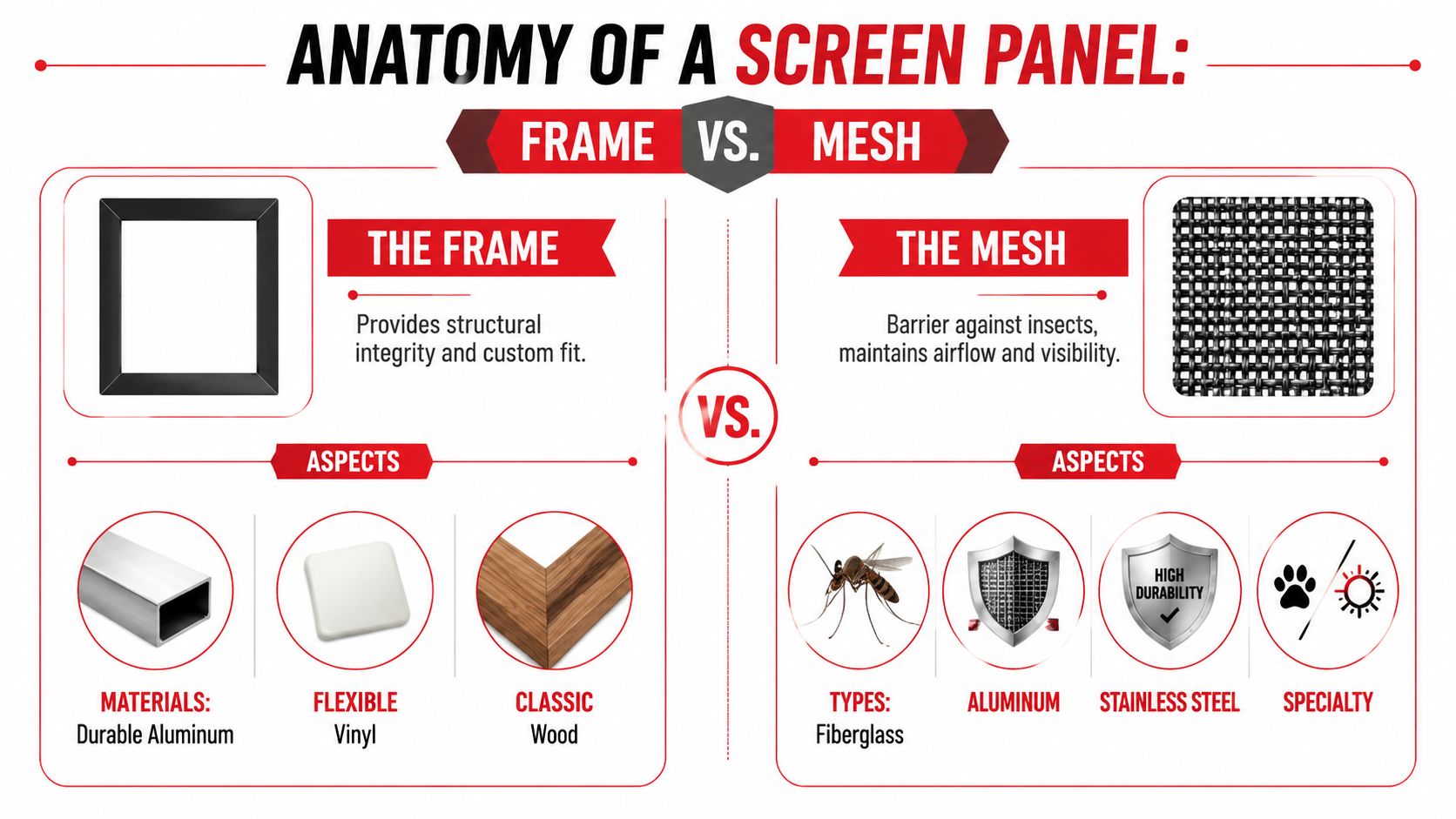
A screen panel succeeds or fails on two parts. The frame has to stay square, hold its fixing points, and cope with how the opening is used. The mesh has to stop the right nuisance, whether that is flies in a kitchen, midges near the coast, or pet damage on a back door.
Poor specifications usually start with appearance. A slim frame and an almost invisible mesh can look right on paper, then fail once the panel is clipped in and used every day. I see it on domestic doors, and I see it in commercial settings where cleaning staff remove panels regularly and refit them in a hurry.
Frame choice starts with load, span, and removal frequency
For most UK work, aluminium is the practical frame material. It stays stable, resists corrosion well, and gives cleaner corners than many lighter plastic-based options. The detail that matters is not just the material, but the section size and how the panel is retained.
A small bathroom window can often use a slimmer profile because the panel is light, the span is short, and nobody is pressing against it. A wide sash, patio screen, or rear door panel needs more section strength. Larger panels are easier to rack out of square during handling, especially if they are removed for cleaning or stored badly between seasons.
Frame specification usually follows this pattern:
- Slim aluminium frames suit low-traffic windows and smaller openings where visual impact matters more than impact resistance.
- Mid-weight frames suit everyday residential use, especially windows and doors that are removed and refitted several times a year.
- Heavier-duty frames suit larger door panels, commercial access points, and openings where the screen may be knocked, pushed, or cleaned aggressively.
Corners matter too. A weak corner joint can ruin an otherwise decent panel. If the frame twists under hand pressure, the mesh will slacken, the panel will sit badly in the reveal, and the life of the unit drops quickly.
Mesh selection is a trade-off, not a tick-box
Mesh should be chosen for the actual problem at the opening. That sounds obvious, but it is where many orders go wrong. People ask for the finest mesh available, then complain that airflow feels restricted. Or they choose a standard insect mesh on a busy back door and wonder why it distorts after a short period of use.
Here is the practical difference between the common options:
| Mesh Type | Primary Use | Key Feature | Airflow/Visibility |
|---|---|---|---|
| Standard insect mesh | General household windows and doors | Balanced insect exclusion for everyday use | Usually the most open feel |
| Fine mesh | Areas with smaller pests such as midges | Smaller aperture for better exclusion | Reduced airflow and a denser appearance |
| Tough pet or reinforced mesh | Doors, pet access, high-contact areas | Better resistance to scratching, pushing, and impact | Heavier feel, with lower openness |
| Pollen mesh | Homes where airborne irritants are a concern | Helps reduce allergen entry during ventilation | More restrictive than standard mesh |
Every mesh gives something up. Finer weaves cut airflow and visibility. Stronger meshes resist damage better, but they are heavier and put more load on the frame. On a lightly used casement window, that compromise may be unnecessary. On a school kitchen door or a takeaway rear exit, it is often the right call.
Residential and commercial panels should not be specified the same way
A domestic screen often needs to disappear visually and come out for cleaning without fuss. A commercial screen has a harder job. It may need to stand up to frequent wash-down, repeated handling, and closer scrutiny as part of pest-control practice.
For food premises, screen choice also has a compliance angle. A panel that traps grease, cannot be cleaned properly, or bows out of its frame under repeated removal creates problems for hygiene and insect control. FSA compliance is not about buying a special magic mesh. It is about choosing a screen system that supports cleanable surfaces, reliable fit, and practical day-to-day use in the site's workflow.
A simple way to specify the build
Use the consequence of failure as the guide.
Light-duty: standard insect mesh in a slim aluminium frame for ordinary windows with low contact.
Medium-duty: finer mesh or a stronger frame where insects are smaller, openings are larger, or the panel will be removed often.
Heavy-duty: reinforced mesh and a thicker aluminium frame where people, pets, stock, or cleaning routines put regular stress on the panel.
That is how custom made screen panels should be specified. Match the frame to the span and handling. Match the mesh to the actual nuisance and the cleaning regime. If both choices reflect actual site conditions, the panel will last longer and perform properly.
Selecting the Right Screen for Your Home
You open the patio doors on a warm evening, then spend the next hour swatting midges and telling the dog not to walk through the mesh. That is usually the point where homeowners realise a screen panel has to suit the opening, the traffic, and the people using it. A panel that works well on a bathroom window can be the wrong specification for a kitchen back door.
Start with how the opening is used
The right starting point is the room and the routine around it.
A kitchen window needs a screen that can be removed and cleaned without a struggle. Cooking residue, moisture, and frequent opening put more demand on the panel than many buyers expect. Standard insect mesh is often enough for general ventilation. Fine mesh earns its place where smaller insects are the actual problem, but it does reduce airflow slightly, so the trade-off should be deliberate.
A bedroom window usually benefits from a lighter visual approach. The panel should sit neatly in the reveal and allow overnight ventilation without making the window feel blocked off. Pollen mesh can help where allergies matter, but the denser weave changes both airflow and outward visibility. That can be worthwhile in a bedroom and less welcome in a kitchen used all day.
Doors need a different specification
Doors fail for predictable reasons. They get pushed, knocked, and opened with full hands. Children miss the handle. Pets test the lower corners. If the door leads straight to the garden or patio, specify for impact and repeat use, not just insect control.
A few common scenarios make the choice clearer:
Back doors with regular daily traffic
Hinged or sturdier fixed systems usually hold up better than light removable panels.Patio or bi-fold openings where appearance matters
Retractable or sliding systems keep the opening usable, but they need careful planning around threshold detail, furniture clearance, and how often the screen will be opened and shut.Homes with pets
Reinforced mesh is often the safer option, even though it is thicker and less open than standard insect mesh.
I tell clients to look at the busiest week in summer, not the quietest day in spring. That gives a more accurate specification.
Match the screen to the opening size
Wider openings create their own problems. Frames can deflect. Tracks can collect debris. A badly chosen threshold can become a trip point or a cleaning nuisance. For large patio spans, the question is not only whether the mesh keeps insects out. It is whether the system still feels easy to live with after months of use.
That practical approach matters in commercial settings too, which is why the same specification discipline used in homes often carries over into food premises and service areas. Buyers comparing domestic and workplace insect control options can also review Professional business pest management solutions to understand how screening fits into wider pest prevention.
Premier Screens Ltd offers made-to-measure options in retractable, sliding, magnetic, and hinged formats, with mesh choices such as standard insect, fine midge, pet, and pollen mesh. The value in that range is simple. It gives the buyer room to specify the screen around the opening, the traffic level, and the maintenance routine, which is the same disciplined approach used when a screen has to meet stricter hygiene expectations in UK commercial premises.
For most homes, the best buying sequence is straightforward. Identify the opening that causes the problem. Work out who uses it every day. Then decide what matters most there: airflow, durability, or a cleaner, less visible finish.
Meeting Commercial Durability and FSA Standards
A kitchen pass door left open for airflow can undo a lot of good hygiene practice. In a commercial setting, a screen panel is not a finishing touch. It is part of how the site controls pest entry while keeping the space workable for staff.
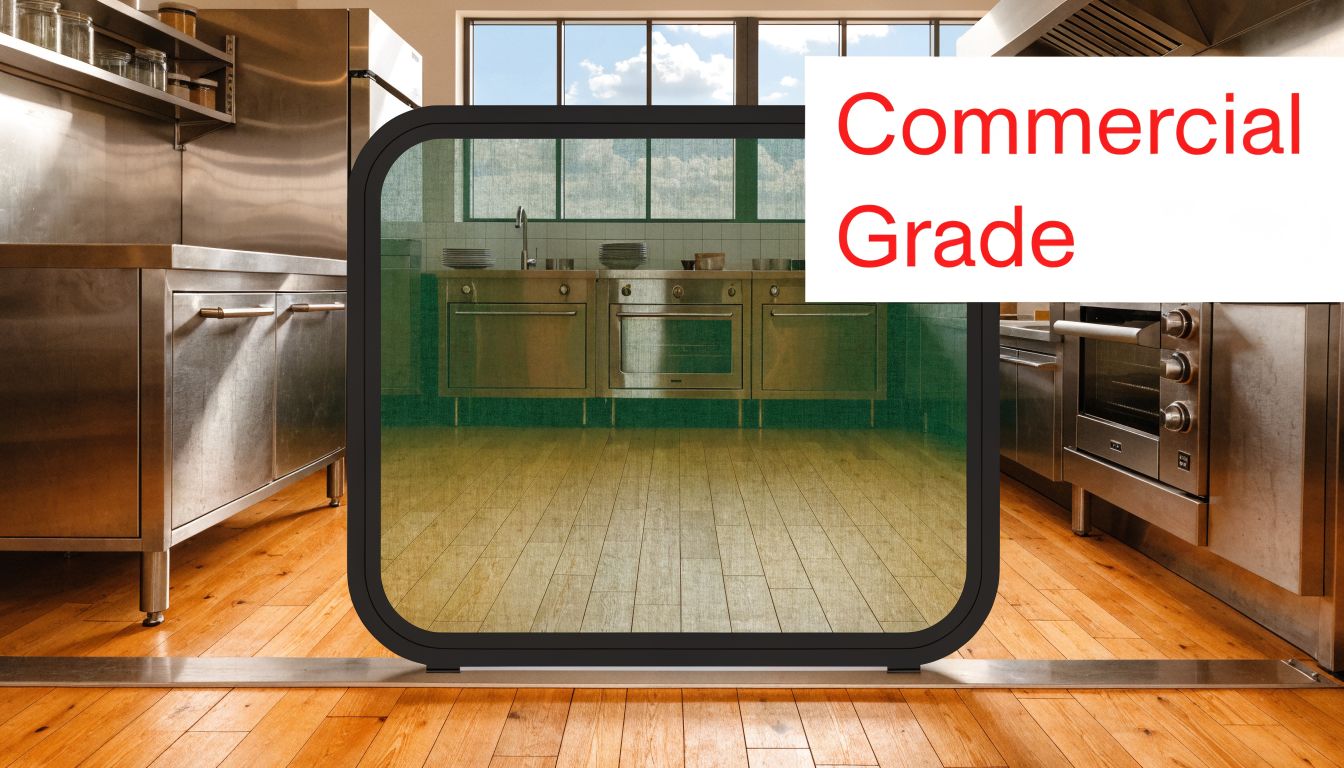
For UK food premises, the specification needs to satisfy two tests at once. The screen has to suit daily use, and it has to stand up to scrutiny under food hygiene expectations. Food businesses are expected to protect openings against pest ingress, and that is the point many buying guides miss. A panel can look well made and still be the wrong choice if it leaves edge gaps, cannot be cleaned properly, or is awkward enough that staff prop it open during service.
That is where the gap between product specification and real use matters. A domestic flyscreen description rarely tells you what an installer or site manager needs to know for a prep room, bakery, café kitchen, or refuse area. FSA compliance is not about buying the heaviest frame available. It is about specifying a screen that stays closed properly, tolerates repeated cleaning, and matches the way the opening is used.
What inspectors and operators both care about
Inspectors usually look past the sales description very quickly. They look at the opening itself. If the frame is loose, the mesh is damaged, the seals are poor, or the panel has to be removed just to clean around it, the installation starts to work against the site.
Commercial specifications should answer four practical questions:
- Does the screen close the opening properly with minimal gaps around the perimeter
- Can staff clean the mesh, frame, and surrounding reveal without special tools or awkward removal
- Will the panel keep its shape after frequent opening, impact, and routine washdown
- Does the access method suit the workflow so the screen is used consistently instead of bypassed
Those points matter more than brochure terms.
Material choice under hard use
For commercial kitchens and service corridors, light domestic-grade assemblies are often a false economy. They may cost less upfront, but repeated handling exposes weak corners, flexible frames, and mesh that distorts too easily.
Aluminium remains the standard frame material for many sites because it resists corrosion, keeps weight manageable, and is straightforward to maintain. The difference is in the section strength, corner construction, fixings, and how well the panel holds square over time. In a high-traffic doorway, I would usually favour a heavier frame profile and hardware that can be serviced, not just replaced.
Mesh choice also needs context. Stainless steel mesh suits harsher environments where impact resistance and long-term cleanability matter more than a near-invisible finish. Fibreglass or lighter insect mesh can still be appropriate in lower-risk commercial areas, but only if the opening is not taking regular knocks from trays, trolleys, bins, or delivery traffic.
A screen that is difficult to clean usually gets ignored. Once that happens, it stops being part of the hygiene control system.
Screening works best as part of site proofing
A well-specified panel helps, but it does not carry the whole job. Staff behaviour, waste storage, door management, delivery routines, and the condition of surrounding openings all affect pest pressure. For that reason, commercial buyers often get better results when the screen specification is considered alongside wider proofing and inspection work, including Professional business pest management solutions.
The right commercial screen panel is the one that fits the opening, survives the site routine, and supports hygiene practice without slowing the operation down. That is the standard to specify against.
A Practical Guide to Measuring and Ordering
A screen panel usually fails on paper before it fails on site. A patio door that looked straightforward can turn out to have a tapered reveal, a projecting handle, or barely enough fixing area once you measure it properly. In commercial kitchens, a small clearance mistake can be the difference between a panel that supports pest control and one that gets removed after the first busy service.
That is why measuring is part specification, not just admin. The job is to identify where the panel will sit, how it will fix, what clearance it needs, and whether the opening can accept the system you want. For UK residential work, that often means checking tired timber frames, uneven masonry reveals, or tight UPVC details. For commercial sites, it also means making sure the final panel can be cleaned, removed if required, and used without undermining hygiene procedures or FSA-focused site standards.
Reveal fit or face fit
Start by deciding the fixing method before you write down final sizes.
A reveal fit places the panel inside the recess. It gives a tidy finish and keeps the frame visually contained, but only if the opening is square enough and the reveal depth is usable across the full perimeter.
A face fit fixes the panel onto the surrounding surface. This is often the safer option on older properties, shallow reveals, and openings with hardware or trim that steals internal space.
Use a reveal fit if:
- The recess measures consistently at several points
- The panel has enough depth clearance from sash movement, handles, and beads
- The fixing surface is flat enough to seal properly around the frame
Use a face fit if:
- The opening tapers or bellies
- The internal reveal is too shallow
- The hardware projects into the opening
- You need more tolerance for an imperfect substrate
If there is any doubt, choose the fixing method first and size the panel to suit it. Ordering to the wrong fit type is one of the most expensive measuring mistakes I see.
How to measure without guesswork
Measure width at the top, middle, and bottom. Measure height at the left, centre, and right. Then check both diagonals if the opening looks suspect. A square-looking opening can still be out enough to cause binding, perimeter gaps, or an untidy face line.
Work in this order:
Identify the true fixing plane Measure the surface the frame will mount to. Decorative trim, old sealant lines, and cover beads can mislead you.
Take all dimensions twice
If the second set does not match the first, stop and find out why before ordering.Record obstructions
Note handles, vents, trickle vents, alarm contacts, closers, drip bars, thresholds, and anything else that affects frame size or swing.Check usable clearance
A panel may fit the opening but still foul the door leaf, sash travel, or adjacent ironmongery.Send photos with the order
A clear front view, side view, and close-up of difficult areas often prevent avoidable remake issues.
If you want a quick refresher on measuring basics before sending sizes, this guide explains how to get precise window measurements.
Measure the fixing condition that exists now, not the one the building should have had when it was new.
Common UK measuring mistakes
Older timber frames often drift out of square over time. UPVC doors may have trims, beads, or cills that reduce the usable fixing area more than the visible opening suggests. Sash windows are another common problem because the available reveal depth and the sash movement often conflict.
Commercial openings add a different layer of risk. A panel for a food prep or waste-adjacent area needs enough clearance to operate reliably, enough access to clean properly, and a fixing method that does not leave dirt traps or awkward edges. If the screen is being specified as part of pest control and hygiene practice, measure for serviceability as well as fit.
What to confirm before you place the order
Before signing off, make sure the supplier has the information needed to manufacture the right panel the first time:
- Finished width and height
- Reveal fit or face fit
- Fixing substrate, such as timber, aluminium, masonry, or UPVC
- Opening type, including window, single door, patio door, hatch, or service opening
- Any required deductions or tolerances
- Obstructions and access limits
- For commercial sites, cleaning and compliance needs
A capable DIY buyer can measure a simple, square opening with confidence. Bring in an installer or surveyor if the opening is badly out of square, access is awkward, the screen serves a high-traffic door, or the panel forms part of an FSA-conscious hygiene and pest-control setup. Good ordering is not about filling in a width and height box. It is about specifying a panel that fits the opening, the use pattern, and the standard the site has to meet.
Installing and Maintaining Your Screen Panels
Installation doesn't need to be complicated, but it does need to be careful. Most fitting problems come from rushing the first alignment. If the frame starts out twisted or out of square, the mesh will never sit quite right and the screen will feel cheap even if it isn't.
A sensible installation routine
Before fixing anything permanently, dry-fit the panel and check the corners, edges, and operating clearance. On doors, confirm the screen won't clash with handles, closers, thresholds, or adjacent trim. On windows, make sure the frame sits flat on the intended fixing plane all the way round.
A simple checklist helps:
Check squareness first
Don't pull one corner tight and force the rest to follow.Confirm smooth operation
Hinged, sliding, or retractable elements should move freely before final tightening.Inspect edge contact
Small perimeter gaps can defeat the purpose of the whole panel.
Maintenance that actually extends life
Screens don't need much attention, but they do need the right kind. Use a soft brush or gentle wash to remove dust, grease, and trapped debris. Harsh scrubbing can damage coated mesh, and aggressive chemicals can spoil finishes or fittings.
For commercial settings, cleaning is part of hygiene control as much as appearance. Make sure the panel design allows regular access and that staff know whether the screen should be removed, wiped in place, or checked for edge buildup.
Clean the corners and frame channels, not just the centre of the mesh. That's where dirt and insect debris often collect first.
Seasonal checks are enough for most homes. Check the mesh tension, frame fixings, and any moving hardware. If a panel starts to bow, rub, or loosen, sort it early. Small alignment issues are easy to correct before they become torn mesh or distorted frames.
Common Questions for Installers and End Users
Do screens reduce airflow and light
Every mesh has an effect on airflow and visible openness. What matters is whether that reduction is acceptable for the room, the opening, and the level of insect control needed.
On a patio door in a house, standard insect mesh is usually the better balance. It keeps the opening feeling usable and doesn't make the room feel boxed in. In a commercial kitchen or food prep area, finer mesh or heavier-duty specification may be the right choice if hygiene risk, pest pressure, or wear matter more than maximum airflow. Better screening usually means some sacrifice in openness. That trade-off should be specified on purpose, not discovered after installation.
Are retractable systems less durable than fixed panels
In many cases, yes.
Fixed panels generally cope better with frequent use, knocks, and poor handling because the design is simpler and there are fewer moving parts to go out of alignment. Retractable systems suit openings where the screen needs to disappear when not in use, or where appearance is a priority. They work well in the right setting, but they are less forgiving of abuse.
For a family patio door with moderate use, a retractable screen can be a sensible choice. For a service door, staff entrance, or any opening that gets pushed, slammed, or caught by trolleys, a fixed or hinged heavy-duty panel is usually the safer specification.
Can custom made screen panels work in older or unusual properties
Yes, provided the screen is designed around the opening rather than forced into a standard format.
Older UK properties often have reveals that are out of square, uneven masonry, timber that has moved over time, or hardware sitting exactly where a standard panel wants to fix. In those jobs, the panel itself is rarely the problem. The core issue involves the mounting method. Face fit may give better coverage on a poor opening. Reveal fit can look cleaner, but only if there is a consistent fixing plane and enough clearance for the frame and mesh to sit properly.
This is one of the main reasons made-to-measure matters. Good specification solves awkward openings before fabrication starts.
What should commercial buyers ask that most product pages don't answer
Commercial buyers should ask how the screen performs during cleaning, inspection, and day-to-day use, not just what size it is.
That matters most in food premises. A panel may look suitable on paper but still create problems if staff cannot clean the frame edges properly, if gaps open around the perimeter, or if the mesh choice is wrong for the area being screened. For UK sites working to food hygiene expectations, including FSA-related compliance requirements, the detail matters.
Ask these questions before ordering:
- Is the mesh suitable for the specific area, such as food prep, storage, or back-of-house ventilation
- How are perimeter gaps controlled once the panel is installed
- Can the unit be removed, opened, or cleaned in a way staff will consistently follow
- Will the frame and fittings tolerate regular washdown, grease, and repeated handling
- Does the opening need a fixed panel, a hinged access panel, or a removable unit for inspection and cleaning
A domestic screen that works well on a kitchen window is not automatically suitable for a commercial kitchen. The specification needs to match the hygiene procedure, the traffic level, and the cleaning routine.
Are removable panels better than permanent ones
Sometimes.
Removable panels are useful where access for cleaning, decorating, or seasonal maintenance is part of the job. They are common on windows and low-traffic openings. The downside is that anything designed to come out easily can also be refitted badly, left off, or loosen over time if the fixing method is too light.
Permanent or semi-permanent systems usually make more sense on busy doors and commercial openings, where consistency matters more than convenience. The better option is the one that stays secure in normal use and can still be maintained properly by the people using the building.
Premier Screens Ltd offers made-to-measure fly screen systems for UK openings, including residential window and door screens and heavy-duty commercial options designed around ventilation, insect control, and practical day-to-day use.