
Easy Fit Window Blinds: A Complete UK Installation Guide
You're probably looking at a window right now thinking the same thing most homeowners do. The old covering works, but only just. The curtains catch dust, the slats on the old blind never sit straight, and the blackout option still leaks light around the edges. You want something cleaner, neater, and easier to live with.
That's where easy fit window blinds earn their place. On the right window, they give you a tidy finish without drilling into the frame, without filling the sill with dust, and without turning a simple update into a weekend job. They suit modern living because they're quick to fit, simple to use, and far easier on the eye than bulky older systems.
They are not magic, though. Some windows take them beautifully. Some don't. That's the part many product pages skip, and it's the bit that matters most if you live in an older UK property, have unusual glazing beads, or want to keep windows open for airflow.
A Simple Upgrade For Modern Living
A lot of people come to easy fit blinds after getting fed up with the same daily irritations. A roller that won't sit level. A venetian blind with bent slats. Curtains that make a compact room feel heavier than it is. The appeal of a no-drill blind is obvious because it promises a cleaner look with much less hassle.
In newer homes with straightforward uPVC windows, that promise is often justified. A well-chosen easy fit blind sits close to the glass, looks more integrated than a bulky recess blind, and keeps the window reveal clear. In kitchens, bedrooms, and home offices, that can make the whole room feel more organised.
What people usually want is simple:
- A quicker refresh: Something that changes the room without plaster dust, screws, or patching up later.
- A neater finish: A blind that looks made for the window rather than added as an afterthought.
- Less day-to-day annoyance: No trailing cords across the sill, no fabric pooling, no awkward cleaning around brackets.
Easy fit works best when the blind matches the window, not just the room style.
That's the practical approach. Start with the frame, not the catalogue picture. The best results come from choosing a system that suits the bead shape, the seal, the depth, and the way you use the room.
What a good result looks like
A professional-looking fit is usually quiet rather than dramatic. The blind sits square, moves smoothly, clears handles, and doesn't rattle every time the window opens. Nothing pinches, nothing bows, and nothing looks forced into place.
That's what matters. Not whether the box says “easy”, but whether the product is right for the actual opening in front of you.
Choosing The Right Easy Fit Blind For Your Space
Picking the right blind starts with how the room is used. Privacy, glare, sleep, moisture, cleaning, and the style of the frame all matter. Too many buyers choose by colour first and only think about fit once the box arrives.
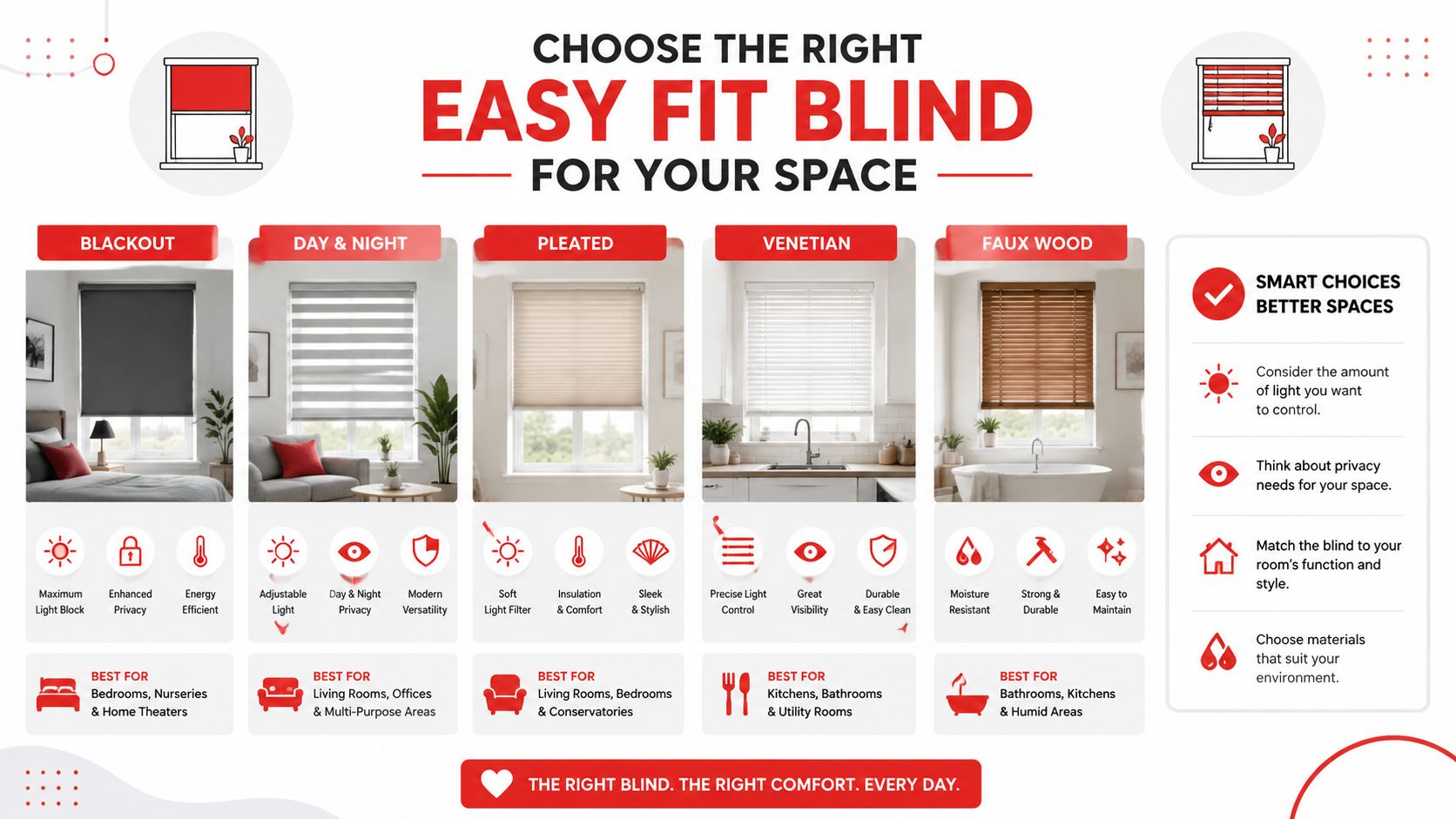
Pleated, roller and venetian compared
Each blind type does a different job well.
| Blind type | Best for | What it does well | Where it can disappoint |
|---|---|---|---|
| Pleated | Bedrooms, living rooms, rooms where a softer look suits | Sits neatly against the window and gives a lighter visual finish | Can be the wrong choice if the frame details don't suit the system |
| Roller | Modern rooms, simple schemes, stronger light control | Clean appearance, straightforward operation, good for minimal interiors | Less flexible for fine-tuning light than slatted options |
| Venetian | Kitchens, studies, rooms where you want adjustable light | Lets you tilt light and privacy through the day | Can look fussier on small windows and takes a bit more cleaning |
| Faux wood style easy fit options | Rooms where a chunkier visual style works | Stronger decorative look and a more traditional feel | Not every frame profile will accept the system neatly |
A bedroom usually benefits from a blind that sits close to the glazing and feels visually calm. A kitchen often benefits from something easy to wipe and easy to adjust. In a home office, glare control matters more than soft styling.
The fit problem most buyers miss
Here's the trade secret. Frame compatibility matters as much as the blind style. UK supplier guidance notes that pleated blinds can fit most windows with an internal rubber seal, but square or astragal beads and non-bevelled beads can make Perfect Fit roller, venetian, pleated, and wooden blinds unsuitable. It also stresses that fit depends on profile geometry and depth clearance, not just width and height, as outlined in this UK blind system fitting guidance.
That means two windows with the same visible size can behave very differently.
If the bead shape is wrong, the smartest blind in the world still won't sit properly.
A practical way to choose
Use this sequence before you order:
- Start with the room job: Sleep, privacy, glare control, or appearance.
- Check the frame details: Look at the bead shape, the internal seal, and the handle clearance.
- Think about maintenance: Slats need different cleaning from a flat blind face.
- Be honest about the property: A modern square uPVC frame is one thing. An older opening with quirks is another.
If the frame passes the compatibility check, choosing the blind is straightforward. If it doesn't, don't try to force an easy fit product into a window that wants a different solution.
How To Get Perfect Measurements For A Flawless Fit
Most ordering mistakes happen before the blind even arrives. The product gets blamed, but the actual problem is usually the measuring method. For UK-style inside-recess fitting on uPVC windows, the method is specific and it's worth following exactly.
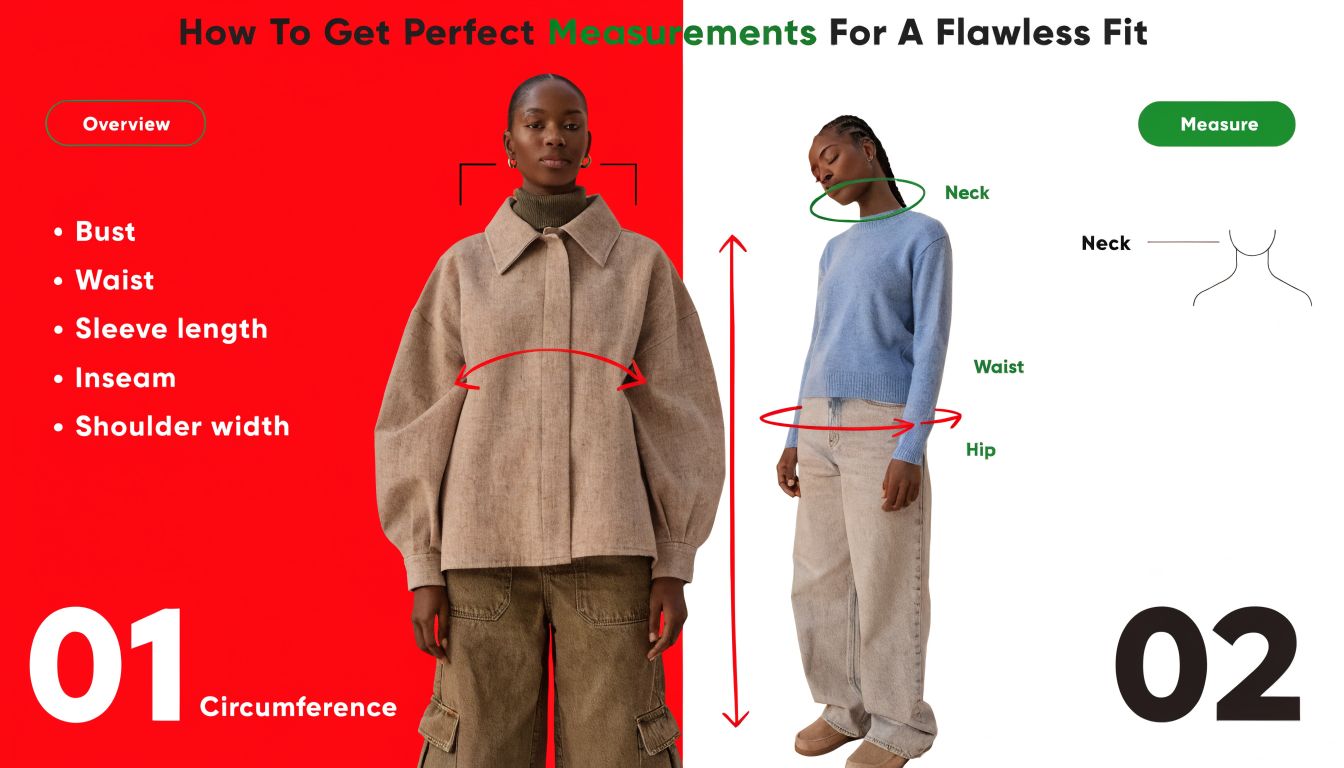
Measure the glass, not the whole frame
For this style of fitting, measure the visible glass only from the inside edges of the frame where the glass meets the rubber bead. Don't include the bead or the seal itself. Measure the width at the top, middle, and bottom to the nearest millimetre, then use the shortest reading. Repeat for the drop at the left, centre, and right, again using the shortest reading. This method is specifically recommended for EasiFIT and ClickFIT-style systems to reduce ordering errors caused by minor frame squareness issues, as set out in this inside-recess measuring guide.
That sounds fussy. It isn't. It's the difference between a blind that slips in cleanly and one that binds or leaves you guessing.
A measuring routine that works
Follow the same order on every window so you don't mix anything up.
- Clean the glass edge first: Dust and paint flecks can hide the true line where the glass meets the bead.
- Measure width in three places: Top, middle, bottom.
- Record the shortest width: Not the average. Not the biggest.
- Measure drop in three places: Left, centre, right.
- Record the shortest drop: This helps account for frames that aren't perfectly square.
- Label each window clearly: Bedroom left, landing, kitchen sink side, and so on.
Golden rule: Measure every window individually, even if they look identical from across the room.
That last point catches people out all the time. Mass-built windows still vary slightly, and older houses vary even more. A few millimetres can decide whether the result looks fitted or awkward.
Common measuring mistakes
These are the ones that cost time and money:
- Measuring the outer frame: That gives you the wrong size for bead-fit systems.
- Rounding too casually: Easy fit blinds are far less forgiving than people assume.
- Copying one size across several windows: Similar doesn't mean identical.
- Ignoring handles and vents: The blind may fit on paper and still foul in use.
If you want a professional finish, measure like a fitter. Slow down, write everything down properly, and treat each opening as its own job.
Your Guide To A Headache-Free Installation
Once the blind is sized correctly and the frame is compatible, installation is usually the easy part. That's the point where homeowners realise this job isn't like fitting a traditional recess blind with rawl plugs, pilot holes, and patching.

Before you clip anything in place
Keep the setup simple. You usually need very little beyond what comes in the box, plus a cloth to clean the frame and glass edge. Dirt around the bead can stop brackets seating properly, and grit trapped behind clips can scratch surfaces.
Run through this short prep list:
- Lay out every part: Check you've got the cassette, brackets, side channels if supplied, and any tensioning parts.
- Clean the contact areas: Wipe the glass edge, bead line, and adjacent frame.
- Test the brackets by hand: Don't force anything before you understand how the clip is meant to sit.
The basic fitting sequence
Most easy fit systems follow the same logic even if the bracket shape differs slightly.
First, position the brackets so they locate under or against the bead area as designed. Then make sure each bracket sits evenly and isn't twisted. Once they are aligned, offer up the blind cassette and press or click it into place.
The final step is checking movement. Raise it, lower it, tilt it if the system allows, and open the window carefully to make sure nothing catches.
A proper click-fit installation should feel controlled, not violent. If you're having to wrestle it, stop and check alignment.
If something feels wrong
Installation problems usually point to one of three issues. The bracket is in the wrong position, the frame profile isn't suitable, or the blind size is off.
Use this quick fault check:
| Problem | Likely cause | What to do |
|---|---|---|
| Bracket feels too tight | Wrong clip position or incompatible bead detail | Remove it and recheck how the clip engages |
| Cassette won't sit square | Brackets not level with one another | Reset all clips before trying again |
| Blind rubs during operation | Size, alignment, or handle clearance issue | Stop and inspect before repeated use |
| Window won't open cleanly | Blind projects into handle path | Check hardware clearance and fitting position |
A rushed installer usually creates problems at this stage by trying to “make it go”. Don't. If the system is right for the window, it should assemble cleanly. If it doesn't, assume there's a reason and find it before anything gets marked or damaged.
Common Pitfalls And Long-Term Care Advice
Easy fit blinds are convenient, but they are not universal. That's especially true in the UK, where a lot of housing stock predates modern standardisation. Older frames can be out of square, reveals can wander, and conservation settings can restrict what you can do with the opening.
Where easy fit stops being easy
A frequently missed issue is that many non-standard windows do not suit standard tension-fit or no-drill systems. Guidance on no-drill blinds warns that if the difference between the smallest and largest internal width measurements exceeds 1/4 inch, around 6mm, the blind may not fit properly. That's a useful warning sign for older or irregular openings, as noted in this guidance on no-drill fit limits.
That doesn't mean the window can't be dressed well. It means a standard easy fit product may not be the right answer.
Typical problem properties include:
- Older terraces and cottages: Openings often look square until you measure properly.
- Period homes: Heritage restrictions can rule out some convenience-led options.
- Windows with decorative internal profiles: The blind may fit the size but not the shape.
- Rooms with replacement windows fitted into older reveals: The frame and the opening can disagree with each other.
Care that keeps them looking sharp
Once fitted well, maintenance is straightforward if you match the method to the material.
- Pleated blinds: Use a gentle duster or soft vacuum attachment. Don't crush the fabric folds.
- Venetian slats: Dust regularly and wipe carefully so you don't bend the slats.
- Roller-style faces: Spot clean lightly and avoid soaking the fabric or backing.
- Hardware and clips: Check now and then that everything still sits snugly and square.
Don't wait until grime builds up. Light, regular cleaning is easier and far kinder to the blind.
A safety point people shouldn't skip
If your blind has cords or chains, fit the supplied safety devices properly and keep them out of reach of children. A smart finish isn't only about neat lines. It's also about safe use every day.
The best long-term results usually come from honest product choice at the start. If the window is awkward, choose for reliability first and convenience second.
Beyond Blinds For Ventilation And Insect Protection
Blinds do two jobs very well. They manage light and they give privacy. The moment you want fresh air, they stop solving the fundamental problem.
Open the window and the blind no longer protects the opening. Air comes in, but so can insects, pollen, drifting debris, and all the everyday irritations that make people shut the window again. That's the trade-off many homeowners only notice once the weather turns warmer.

Why blinds can't do this job
Standard blinds are not screening systems. They don't seal the opening against insects, and they don't filter airflow in any meaningful way. Guidance on this broader problem shows a clear gap between convenience shading products and purpose-built systems for airflow and exclusion. For homes that want open windows for cooling or allergen management, blinds do not address the issue, as discussed in this overview of the ventilation and screening gap.
That matters more than ever in bedrooms, kitchens, loft rooms, and sun-facing spaces where people want overnight ventilation or daytime cooling.
When a fly screen is the better answer
If your primary goal is to keep the window open, a bespoke fly screen is usually the better tool for the job. It deals with the opening itself rather than just covering the glass.
That changes the whole result:
- You keep airflow: The window can stay open as intended.
- You block insects: Midges, flies, and wasps don't get a free route indoors.
- You support cleaner air habits: Especially useful in warm rooms and stuffy bedrooms.
- You can reduce nuisance from seasonal particles: Some mesh options are designed for that kind of environment.
If you're trying to work out whether your room has an airflow problem rather than just a shading problem, this guide to signs of poor ventilation in house is a useful starting point.
Blinds for privacy, screens for open-window living
This is the practical distinction. Use blinds when you want privacy, glare reduction, and light control. Use screens when you want the window open without inviting the outside in.
In plenty of homes, the best setup isn't one or the other. It's both, each doing the job it's built for.
If your priority is fresh air without insects, made-to-measure screening is the more reliable answer. Premier Screens Ltd manufactures bespoke fly screens for UK homes and businesses, with custom options for windows and doors, durable aluminium frames, and mesh choices suited to everyday insect control, high-traffic use, and pollen-conscious households.