
How to Fit a Roller Blind: A DIYer’s Perfect Guide
You’ve got the blind out of the box, the brackets in a little bag, and a window that looks straightforward until you notice the handle sticks out, the recess isn’t square, or the wall sounds hollow when you tap it. That’s where most DIY jobs go off course. The blind itself is simple. The fit is where the work is.
A neat result comes down to two things. Measure properly, then fix the brackets to suit the wall and the window in front of you, not the ideal one shown in the leaflet. If you want to know how to fit a roller blind so it runs straight, clears handles, and doesn’t need redoing a week later, this is the practical version.
Your Guide to a Flawless Roller Blind Fit
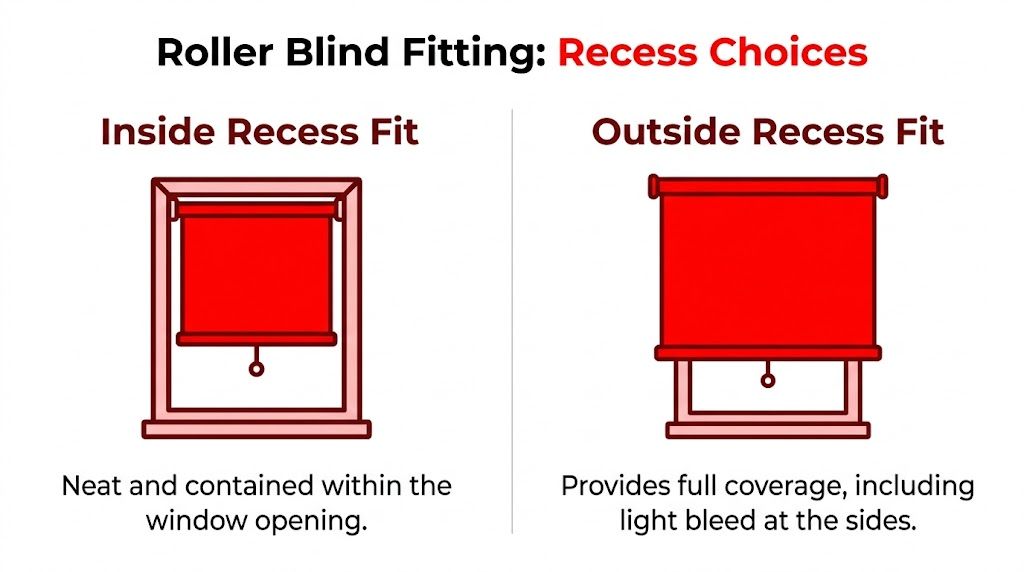
Most roller blind installs fall into one of two camps. You either fit inside the recess for a tidy, built-in look, or you fit outside the recess when you need more coverage or the window itself gets in the way. Both work well. The wrong choice is forcing an inside fit where the handle, opener, or shallow recess makes it awkward from day one.
Inside the recess usually looks sharper. It suits modern windows and keeps the blind contained within the opening. Outside the recess is often the smarter choice in older properties, on awkward windows, or anywhere you want better light control around the edges.
Practical rule: Don’t decide on looks alone. Decide on clearance first, then appearance.
A good fitting job also means thinking beyond the blind. In plenty of UK homes, the issue isn’t just the window opening. It’s the UPVC handle, the trick of fixing into plasterboard over masonry, or leaving enough room if you also want a fly screen at the same window.
Before you drill anything, sort three decisions:
- Fit type: Recess or face fit.
- Fixing surface: Brick, plasterboard, timber, or the window frame itself.
- Obstructions: Handles, trickle vents, tiles, architraves, screen frames, or anything that projects into the blind’s path.
Get those right and the rest becomes a straightforward fitting job. Get them wrong and even a decent blind will look poor, roll unevenly, or catch every time you open the window.
Preparation and Measurement The Foundation of a Perfect Fit
A roller blind can be perfectly decent out of the box and still look wrong within ten minutes of fitting. I see it most often on two kinds of UK window. Modern UPVC where the handle sits proud and steals your clearance, and older recesses where nothing is perfectly square once you put a tape on it.
Decide the fit before you measure
Measure the window you have, not the one you expect to have.
For a recess fit, start with depth and front clearance. A recess can look generous until you account for the bracket, the tube, the fabric roll, and a UPVC handle that sticks out further than the frame. If the blind will foul the handle or stop the sash opening properly, face fit is usually the better job. That is especially true on inward-opening windows and tilt-and-turn styles found in plenty of newer UK homes.
Fly screens need checking at the same stage. If a screen frame sits inside the recess, or you plan to add one later, the blind and screen cannot both claim the same fixing space. In that case, a face fit above the recess often keeps both systems workable and easier to maintain.
What each option does well
| Consideration | Inside Recess Fit | Outside Recess Fit |
|---|---|---|
| Look | Tidy and built-in | More visible, more decorative |
| Light control | Cleaner within the opening, but more edge light if measured too tight | Better overlap at sides and top |
| Window hardware | Can clash with handles or openers | Easier to clear handles and vents |
| Uneven walls | Less forgiving in older recesses | Hides uneven reveals better |
| Future screen compatibility | Often works best if the screen sits elsewhere | Useful when recess space is already occupied |
Measure a recess fit properly
With a recess blind, small errors show up quickly. One side rubs. The bottom bar sits close on one end and wide on the other. You also get caught out by plaster that bows inward halfway down the opening.
Take the width in three places. Top, middle, and bottom. Take the drop in three places as well. Left, centre, and right. Write every figure down and order from the smallest measurement if the blind is going inside the recess.
That method matters in older properties because the opening is often slightly pinched at one point. In Victorian and 1930s houses, I regularly find a recess that looks square but is out by several millimetres.
Use this sequence:
Use a steel tape
A soft tape can sag or twist. Hook a steel tape firmly into each corner and keep it straight.Measure width in three places
Top, middle, bottom. Record all three figures, even if they are close.Measure drop in three places
Left, centre, right. Again, keep the smallest figure for a true recess fit.Check for obstructions
Handles are the obvious one. Also check trickle vents, tile edges, alarm contacts, deep glazing beads, and any fly screen frame that projects into the opening.Confirm fabric width, not just blind width
The quoted blind size is often bracket to bracket, not fabric edge to edge. That means a blind can technically fit the recess but still leave more daylight down the sides than you expected.
If edge light will annoy you, check the actual fabric width before ordering. That single detail catches out a lot of DIY jobs.
Measure a face fit with overlap in mind
Face fit solves more problems than it creates. It gives you room to clear proud handles, untidy reveals, and shallow recesses. It is also the safer option if you want to keep space free for a fly screen system inside the opening.
Measure the width you want to cover, then add overlap on each side and above the recess. The right amount depends on the room. In a bedroom, you usually want as much overlap as the wall space allows. In a kitchen or bathroom, cupboards, tiles, and extractor trunking can limit you, so measure the fixing area as carefully as the window itself.
Check the top fixing line too. Old lintels can wander, and decorative trim is not always level even when the ceiling looks straight.
Tools worth setting out before you start
You do not need a van full of kit. You do need tools that suit the wall in front of you.
- Steel tape measure for accurate window and bracket measurements.
- Spirit level so your marks stay true.
- Pencil and bradawl for clear, repeatable fixing points.
- Drill and suitable bits for masonry, timber, metal, or plasterboard.
- Correct plugs and screws matched to the fixing surface.
- A decent fixing reference if the bracket lands on a hollow section. This guide to best fixings for plasterboard walls is useful when the bracket position lands in plasterboard rather than solid backing.
One last check before ordering or drilling. Open the window fully, hold a straightedge where the blind will sit, and make sure nothing hits it. That thirty-second check saves a lot of rework.
Installing Your Roller Blind Step-by-Step Guidance
A roller blind usually goes wrong in the first ten minutes. The fabric gets blamed later, but the actual cause is nearly always bracket position, the wrong fixing for the surface, or a recess that is less square than it looked from the floor. That shows up a lot in UK homes, especially older properties with wandering plaster lines and newer UPVC windows where handles project further than people expect.
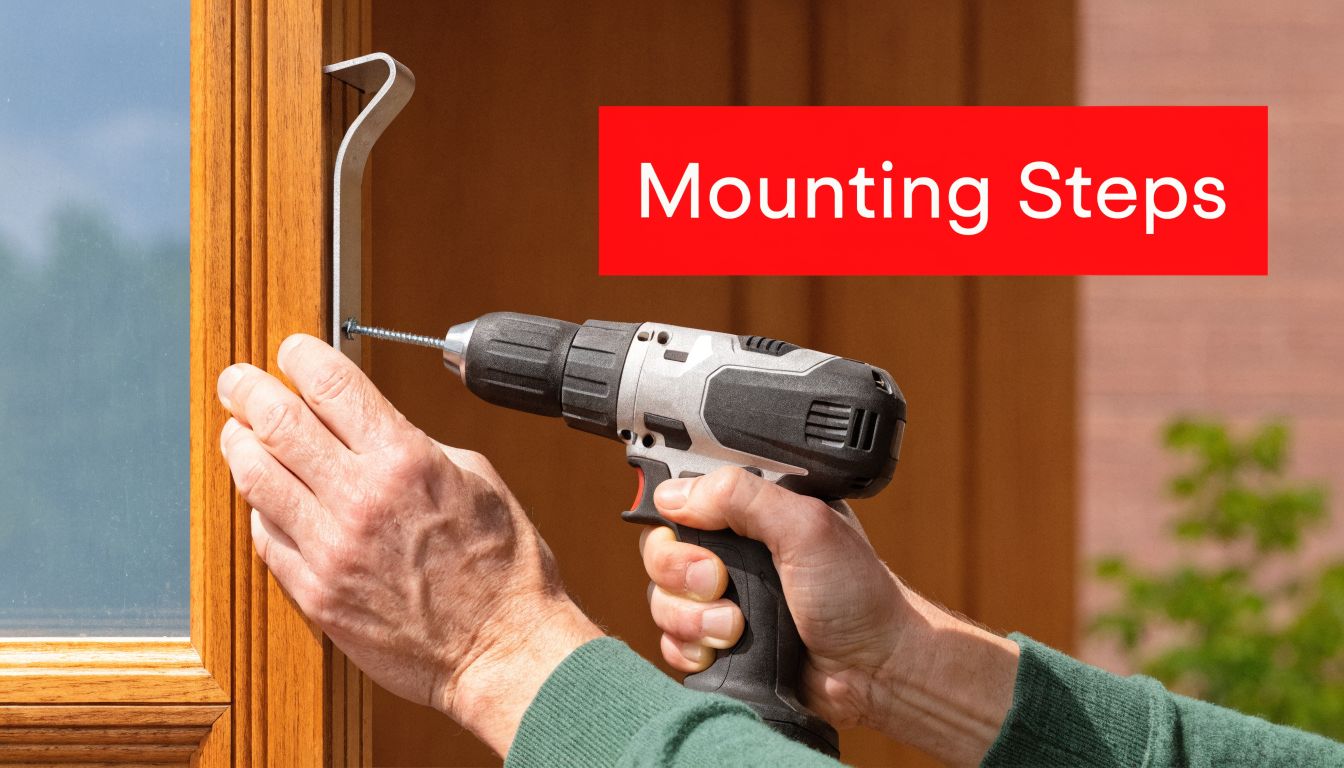
Marking your bracket positions
Lay the blind out first and identify the two ends properly. One bracket takes the control end with the chain drive. The other takes the spring-loaded pin. Choose the chain side before you mark anything. On a neat drawing either side can work, but on a real window one side may clash with a handle, a tiled return, a cupboard door, or a fly screen frame.
Set the brackets in from the ends of the tube so the blind is properly supported, then offer them up and mark the holes lightly. Keep the measurement equal on both sides. On a recess fit, check that the chain can drop cleanly without rubbing the wall. On a face fit, check the blind will clear any protruding UPVC handle when it comes down. I see that missed regularly on bedroom windows and it always means taking the brackets back off.
Use a level, but do not trust the wall line more than the blind. In older houses the soffit or reveal can be out while the window itself is reasonably true. Mark from a consistent reference point and then confirm both brackets are level to each other.
One good habit helps here. Hold the brackets in place and run the tube position through in your head before drilling. It saves a lot of unnecessary holes.
If one bracket is pulled slightly out of line as the screw bites, the blind may still click into place but the fabric will not run cleanly. Check alignment again with the brackets tightened, not just marked.
Drilling for the surface you actually have
Fixings need to match what is behind the plaster or frame. In UK houses that can change across the same window opening. One side may be solid brick, the top may catch timber, and the opposite side may be plasterboard over a gap.
For masonry, drill cleanly and use plugs and screws that suit the hole size and bracket load. Blow the dust out before inserting the plug. A plug sitting proud will twist the bracket as you tighten it.
For timber, drill a pilot hole first. That keeps the screw straight and stops narrow sections from splitting. It also matters on older painted frames where the screw can wander on the surface.
For plasterboard, use a fixing made for hollow walls unless you know you are hitting solid backing. Standard wall plugs in plasterboard are a common cause of blinds working loose after a few weeks. If you need to compare options, a general range of fasteners and fittings can help you identify the right type for the surface you have.
UPVC needs a bit more care. Some frames will take a direct fixing, some should not, and some are better left alone because of reinforcement, drainage paths, warranties, or the position of the glazing bead. If you are fixing to the frame itself, use screws intended for that material and keep clear of areas that could affect the unit. Where there is any doubt, top fixing into the reveal or face fixing above the opening is usually the safer route.
Fitting the blind mechanism
Once the brackets are solid, fit the blind carefully rather than forcing it.
- Insert the spring-loaded pin end into its bracket first.
- Compress the pin and lift the control end into the chain-side bracket.
- Let the pin extend fully so the blind seats home.
- Turn the chain slowly and check the blind rolls the correct way.
If it does not drop from the glass side as intended, take it back out and reverse the roll if the blind design allows for it. Do not leave it "nearly right". A back-to-front blind often fouls handles, catches on screen frames, and leaves a poor light gap.
You should feel the mechanism engage positively. If it resists, stop and check that the control end is going into the correct bracket and that no packing piece or screw head is obstructing the tube.
Small details that make the blind run properly
These are the checks that make the finished job look tidy and work well long term:
Keep each bracket flat to the surface
If the wall is bellied or the plaster is uneven, pack behind the bracket. Do not bend the bracket to follow the wall.Check clearance with the window hardware
Run the blind down past the handle area and confirm the fabric and bottom bar clear it. This matters most on modern casement windows with chunky UPVC handles.Allow for fly screen frames
If a fly screen sits inside the recess, make sure the blind hardware and chain path do not foul the screen frame or clips. A few millimetres lost here can be the difference between a blind that runs freely and one that scrapes every time.Watch the bottom bar as it lowers
If one side drops first, the brackets are usually out of level or one bracket is under strain from the fixing surface.Test it several times
Run the blind fully down and fully up a few times before calling it finished. That is when skewing, rubbing, and bracket movement usually show themselves.
A roller blind is simple to fit. A tidy result comes from treating the bracket line, the fixing surface, and the clearances as part of the job, not as afterthoughts.
Mastering Child Safety and Final Adjustments
You can fit the brackets neatly, get the blind running straight, and still leave the job unfinished if the chain safety device is missing or badly set. In UK homes, that matters even more in bedrooms and bathrooms where the blind often sits close to a window reveal, tiled wall, or a narrow strip of plasterboard that is poor for fixings.
Fit the safety device every time. Set it so the chain stays taut in normal use and cannot form a loose loop. If the supplied fixing point lands on crumbly plaster, a weak tile edge, or trim that will not hold, choose a better fixing position nearby and use the right fixing for that surface. The goal is a working safety device, not one that is just screwed in for show.
Fitting the safety device properly
Chain tensioners and cleats only do their job if they are fixed to something solid and aligned with the chain path. On a modern UPVC window, that often means checking the device does not foul the frame detail or clash with a fly screen frame if one is fitted close to the reveal. In older properties, the issue is usually the opposite. Wavy plaster and shallow timber grounds can pull the device out of line and make the chain drag.
Check these points before you call it done:
- The chain runs under light tension and does not hang in a loose loop.
- The fixing stays firm when you operate the blind several times.
- The chain path is straight and does not rub on the window board, frame, or screen hardware.
- The blind still operates freely with the fabric fully down and fully up.
A badly positioned tensioner makes the blind unpleasant to use, so people stop using it properly. That is how safety parts end up ignored or removed.
Final adjustments that improve the finish
Once the safety device is fixed, test the blind as a complete installation. Lower it fully, raise it fully, then do it again at a normal pace. Listen as much as you look. Clicking, rubbing, or a chain that tightens then loosens through the travel usually points to alignment that is close, but not right.
If the chain feels stiff, check the blind is fully located in both brackets and that the control side is not being pulled sideways. I see this quite a lot where one bracket has been fixed on a slightly uneven recess face. The blind will often go in, but the mechanism binds once the chain is under load.
Watch the bottom bar at the last third of the drop. That is where small fitting errors show up, especially in older UK houses where the recess is rarely square. If the fabric starts to walk to one side, correct the bracket alignment now. It will not improve with use.
On windows with protruding UPVC handles, do one final clearance check with the blind down and the window opened and closed if possible. If a fly screen is installed or planned, make sure the chain, bottom bar, and screen frame can all occupy the space without touching. That extra check saves a lot of refitting later.
A properly finished roller blind rolls freely, hangs straight, clears the hardware, and stays safe in daily use.
Troubleshooting Common Fitting Problems
Most fitting problems aren’t faults with the blind. They’re installation clues. The trick is reading the symptom correctly instead of taking the whole thing down in frustration.
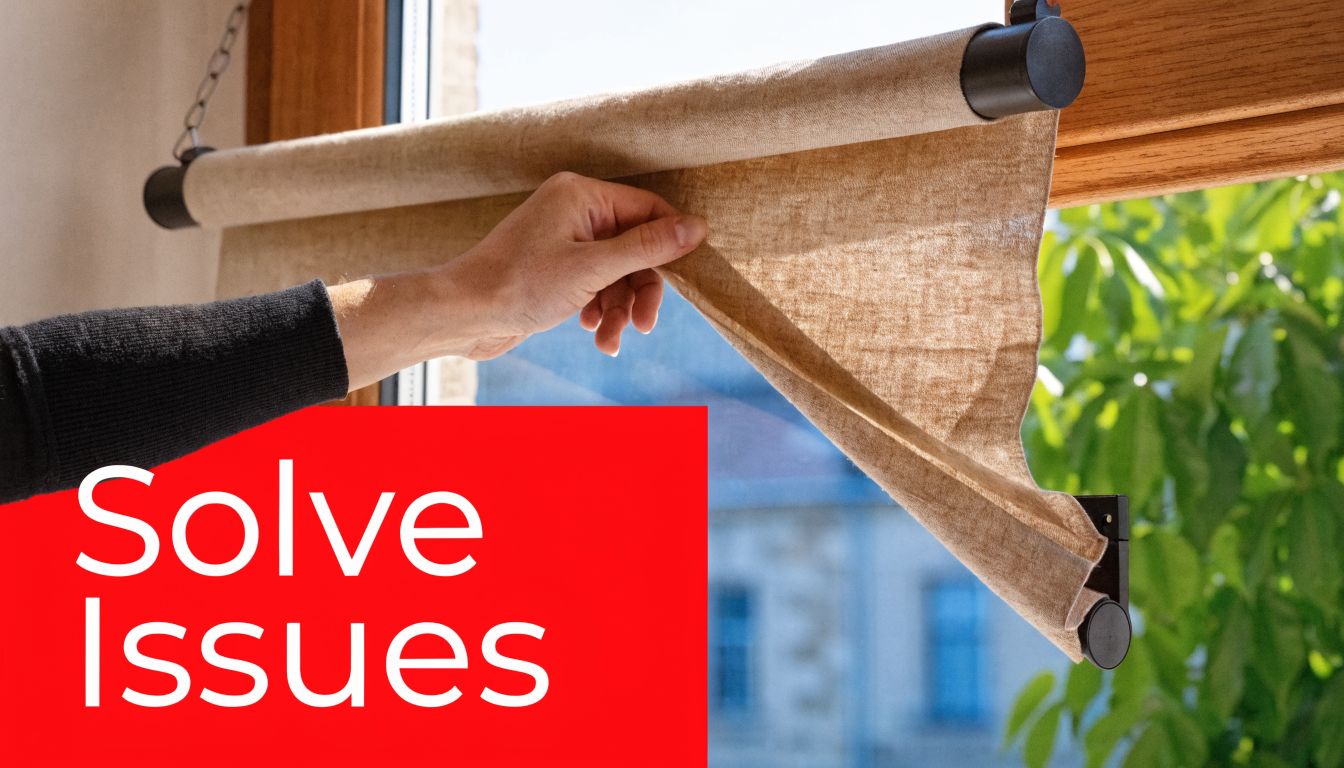
The blind catches on the window handle
This is the complaint I hear most often on modern windows. In the 68% of UK homes with UPVC windows, protruding handles regularly interfere with the blind, and this UK guide recommends 3-4mm spacers to move the brackets forward. The same guidance notes that this can prevent misalignment in 40% of DIY installation failures.
If the handle only just catches, spacers are usually enough. If the handle projects a lot, stop trying to force a recess fit and move to a face fit. That’s usually neater than building the brackets too far out.
The blind rolls unevenly
Likely cause: The brackets aren’t level or one bracket has twisted as it was tightened.
What to do: Remove the blind and check the bracket line again with a spirit level. Also check whether one fixing has pulled into softer material and changed the bracket angle. This problem rarely fixes itself with use.
The fabric rubs at one side
Likely cause: The blind is tracking slightly off because the fixing points are out, or the blind wasn’t seated fully in the bracket.
What to do: Reseat the roller first. If the rub remains, inspect both brackets front-on and from above. Even a slight skew can make the fabric walk sideways over repeated use.
If the fabric frays at one edge, don’t trim the fabric and hope for the best. Find the alignment fault first.
The blind is too tight in the recess
Likely cause: The recess was measured at one point only, or the opening narrows slightly.
What to do: Check the recess width at top, middle, and bottom again. Also make sure plaster snots, tile adhesive, or paint build-up aren’t reducing clearance where the brackets sit. Sometimes the blind size is right and the opening is the problem.
The chain feels stiff or awkward
Likely cause: Wrong bracket orientation, poor seating of the control end, or bracket faces not parallel.
What to do: Take the blind out and identify the control bracket and idle bracket again. Refit in the correct order. Then test with slow, full runs rather than short yanks on the chain.
The fixings feel loose after a few uses
Likely cause: The fixing method doesn’t suit the substrate.
What to do: Don’t keep tightening the same screws. Remove them, assess the wall, and refix with a proper solution for that material. A blind gets operated repeatedly, so a fixing that is only just holding will eventually show it.
Troubleshooting gets easier when you stop thinking in terms of “the blind is wrong” and start looking at line, clearance, and fixing. Most issues come back to one of those three.
Compatibility with Fly Screens and Long-Term Care
Fit the blind without thinking about the screen, and you often end up with two products fighting for the same few millimetres. I see this a lot on UK windows. A roller blind fits neatly enough on its own, then a fly screen gets added later and suddenly the handle catches, the blind won’t drop cleanly, or the screen frame has nowhere sensible to sit.
The fix is to plan the window as a whole. On a modern UPVC opening, check three things before you order anything. Handle projection, bead depth, and how far the blind tube and bottom bar will sit off the frame. On older properties, also check whether the recess runs out of square, because a fly screen frame will show up twists and bellies that a blind can sometimes hide.

Where no-drill systems make sense
No-drill systems suit some UPVC windows well because they keep the surrounding frame free for other fittings. That can help if a fly screen also needs room around the sash or within the reveal. It is often the tidiest option on windows where drilling into the frame would leave you short of space or create awkward clashes with screen channels.
They do have limits. They rely on the right bead shape and enough clearance around the sash, so they are not a universal answer. They are usually a poor match for older timber windows, metal frames, or any opening with uneven sections that stop the blind from sitting square.
If you are combining a blind with a fly screen, decide which product gets the prime position. In many UK homes, the better layout is a blind in the recess and the screen mounted to the face, or the other way round, rather than forcing both into one narrow plane. That extra thought at the start saves a lot of trimming, packing, and bad language later.
Keeping the blind working well
Roller blinds last best with light, regular care rather than occasional heavy cleaning.
- Dust the fabric with a soft cloth or vacuum brush.
- Clean marks locally instead of soaking the cloth.
- Keep the chain route free of paint, grit, and plaster dust.
- Check brackets and fixings from time to time on blinds that get used every day.
- If a fly screen sits nearby, clear dead insects and debris from the meeting points so nothing gets dragged into the blind fabric or chain control.
Avoid spraying lubricant into the mechanism unless the manufacturer specifically allows it. In practice, stiffness usually comes from poor alignment, dirt in the control, or a bracket that has shifted slightly. Oil tends to attract more dust and makes a minor problem messier.
Fabric wear is the early warning sign. If one edge starts to fluff, curl, or mark up, inspect the blind position and nearby screen frame before the damage becomes permanent.
If you’re planning blinds and insect control together, Premier Screens Ltd can help you get the screen side right with made-to-measure fly screens for UK windows and doors. Their bespoke options make it easier to keep ventilation, handle clearance, and neat fitting in balance, especially on UPVC openings where space is tight.