

Magnetic Fly Screens for Windows: Your Guide to Fresh Air
You open the window for ten minutes to cool the room down, then spend the next hour chasing a bluebottle, checking the lampshade for a wasp, and wondering why fresh air always seems to come with unwanted company. That's the usual UK trade-off. Ventilation helps, especially in bedrooms, kitchens, conservatories, and stuffier upstairs rooms, but open windows also invite in exactly what you don't want.
Magnetic fly screens for windows solve that problem when they're specified properly. The key phrase there is specified properly. A cheap kit that sort of sticks to the frame isn't the same thing as a made-to-measure screen with the right mesh and a continuous seal. One works for a while on a straightforward opening. The other works as part of the window.
Enjoy Fresh Air Without Unwanted Guests
The search for fly screens often begins after the same trigger. Warmer weather arrives, the house feels stale, and opening the window becomes a choice between airflow and insects. In UK homes, that choice is especially common because many properties rely on opening windows for cooling rather than mechanical systems.
Magnetic fly screens for windows are popular because they address the problem without turning the opening into a permanent fixture. You keep the window usable, you keep the airflow, and you don't need a rigid frame permanently in your line of sight. For many homeowners, that's the sweet spot between convenience and proper insect control.
The basic idea behind screening windows isn't new. Before screens became common in the 19th century, people used cheesecloth or kept windows shut, and the first patented bug-screen appeared in 1868 according to the Smithsonian's history of window screens. What's changed is the fitting method. Magnetic systems are a modern version of the same goal: keep the air moving, keep the insects out, and make the screen easy to remove when needed.
Why magnetic systems suit UK homes
UK housing stock is mixed. One street can have timber casements, newer uPVC, odd reveals, projecting handles, and windows that were never perfectly square in the first place. That's where magnetic screens make sense. They adapt well to openings that need access for cleaning, seasonal removal, or occasional adjustment.
A well-made magnetic screen is also less intrusive than many people expect. From normal room distance, you notice the benefit more than the product.
A fly screen only earns its keep if you'll actually leave it in place and use the window as normal.
If you're comparing formats, it helps to start with the broad category of window fly screens and then narrow down based on your opening type, how often the window is used, and whether you need specialist mesh for pollen, pets, or very small biting insects.
Where they work best
Magnetic screens are a strong fit for:
- Bedrooms: You can ventilate at night without attracting insects to lights.
- Kitchens: Windows can stay open while you're cooking, when smells and heat need to escape.
- Home offices: Airflow improves comfort without the distraction of buzzing flies.
- Conservatories and sunny rooms: These spaces often need regular venting during warmer periods.
What doesn't work is treating every window as if it were a standard rectangle. That's how people end up disappointed with magnetic screens when the issue wasn't the concept. It was the fit.
Understanding the Magnetic Seal Mechanism
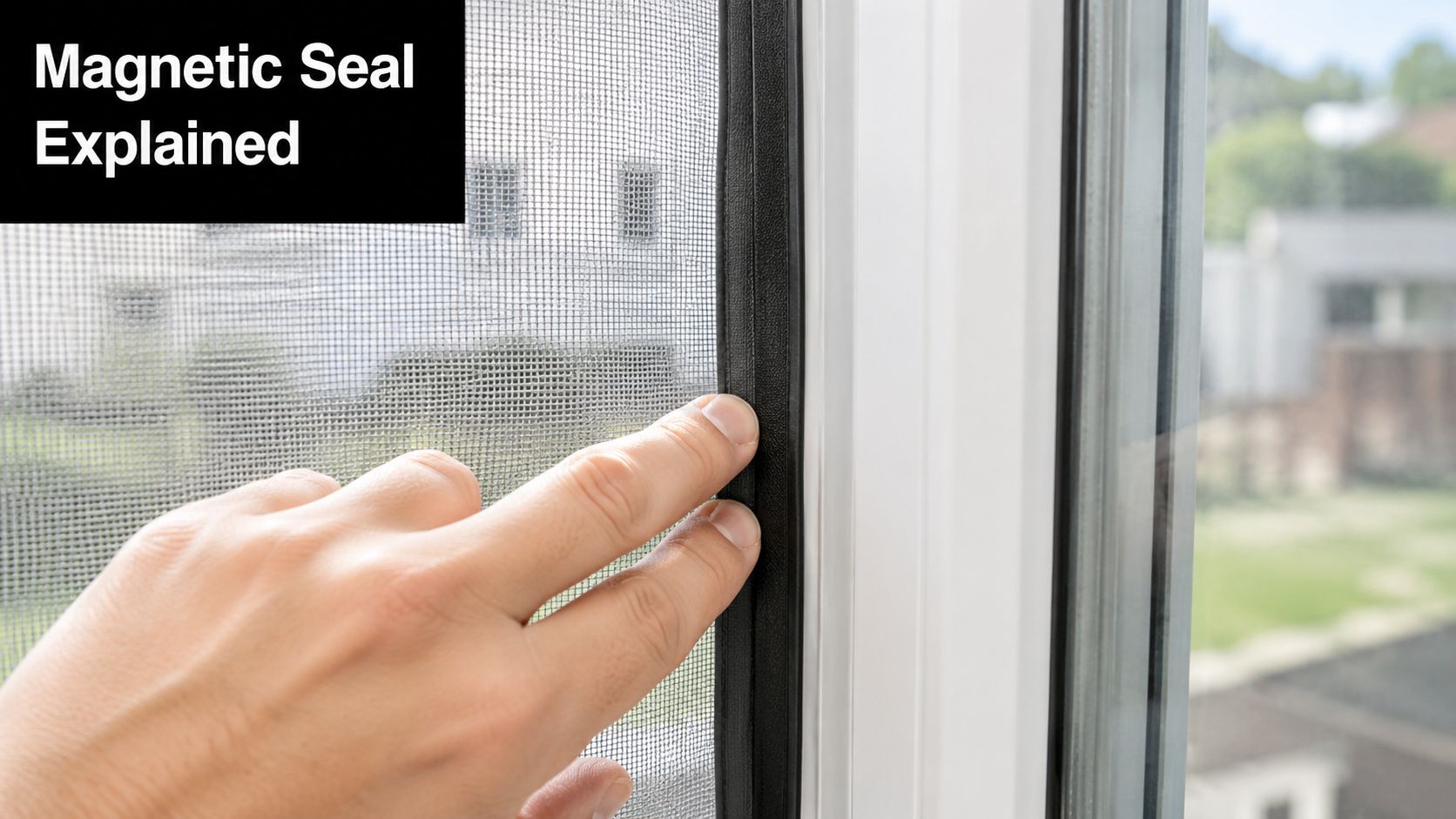
A magnetic fly screen works or fails at the edge. The mesh stops insects passing through the opening, but the perimeter seal is what stops them walking round it.
What the system is made of
A magnetic screen has three parts that need to work together:
The mesh panel
This is the barrier itself. Good mesh stays taut, sits flat, and does not pull the frame out of shape.The magnetic perimeter on the screen
This runs around the outer edge and creates the contact line that holds the screen in place.The mating strip on the frame or nearby surface
This is fixed to the window frame or reveal so the screen can seat properly and still be removed for cleaning or seasonal storage.
It works much like a fridge seal. Full contact around the perimeter matters. If one corner lifts or one side bows away, the opening is no longer properly protected.
Why the perimeter matters so much
In real installations, the weak point is usually not the mesh. It is the gap between the screen and the frame. Older UK windows are rarely perfectly true, and even newer ones can have enough variation to leave a small opening at the sill, head, or jamb if the screen is cut carelessly.
That is why proper measuring matters more than the magnet strength alone. Installers working with casement windows commonly measure each side separately, allow for handles and catches, and make small deductions so the screen sits cleanly without binding. The same approach is described in this casement magnetic screen measuring and installation guide.
Practical rule: If the screen only touches in parts, it is not sealed.
Bespoke screens earn their price. A made-to-measure unit can be built around awkward reveals, uneven frames, and projections that a generic DIY kit ignores. Cheap kits can work on a very straightforward opening. On non-standard UK windows, they often end up with ripples, corner lift, or a visible gap that lets midges and flies straight through.
What a good magnetic seal should do
A properly built magnetic screen should sit flat, remove cleanly, and go back in the same position without a fight. It should also stay reliable after repeated use, rather than losing alignment every time the window is cleaned or the screen is taken down.
That matters if the screen is doing more than basic insect control. If you are fitting finer mesh for pollen reduction or smaller biting insects, edge control becomes even more important because the benefit is lost the moment air starts bypassing the screen around the sides.
Magnetic systems are simple by design, which is part of their appeal. The catch is that simple does not mean forgiving. If the fit is wrong, the magnets will hold the mistake neatly in place.
Magnetic Screens Versus Other Options
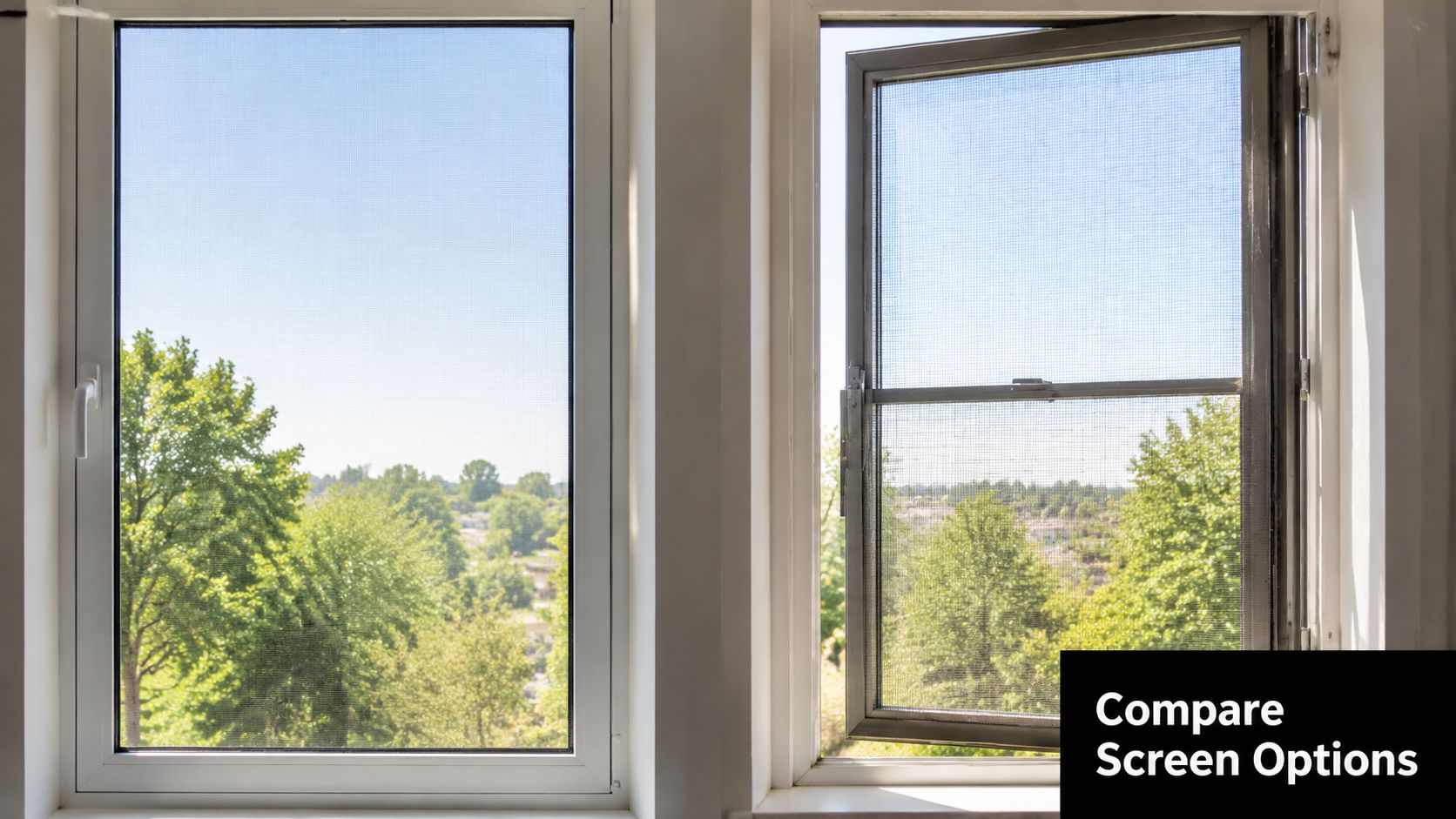
Most homeowners don't choose between a magnetic screen and nothing. They choose between several imperfect options. The right answer depends on how often the window is opened, how visible you want the screen to be, and how much tolerance you have for fiddly hardware.
Magnetic screens
Magnetic screens sit in the practical middle ground. They're usually the most sensible answer when you want a proper seal, easy removal, and a screen that doesn't turn the window into a project every time it needs cleaning.
They're especially useful where:
- The window is opened often
- The screen may need seasonal removal
- The reveal isn't perfectly standard
- You want straightforward access for cleaning
Their weakness is also obvious. They still rely on the quality of the perimeter fit. If the opening is awkward and the screen isn't measured properly, magnetic retention won't rescue a poor shape.
Fixed or hinged screens
Fixed and hinged screens are strong. Once fitted, they feel solid and can be a good answer where the opening is stable and the use pattern is predictable. In some settings, particularly service areas or windows that stay screened for long stretches, that solidity is useful.
But they're less forgiving. A fixed frame is less convenient to remove for cleaning, and a hinged format introduces another moving part into the opening. If the homeowner wants quick removal, they can become inconvenient.
Retractable systems
Retractable screens usually appeal to people who care strongly about the visual finish. When open, the mesh disappears into a cassette, which many homeowners prefer in principal rooms. They can be an elegant answer on suitable windows, and the same thinking often carries through to doors with products such as retractable fly screens for doors, where a disappearing screen is often more practical than a permanently visible barrier.
The trade-off is complexity. Retractable systems involve more hardware, more precise alignment, and a different maintenance profile. If the opening is very irregular or the user wants the simplest removable format, magnetic screens often win on day-to-day practicality.
Cheap hook-and-loop kits
These are the kits commonly regretted, leading to a second purchase. They look simple and inexpensive, but the usual problems are predictable:
- The seal isn't consistent
- Corners lift
- The mesh loses tension
- Adhesive struggles on less-than-perfect surfaces
- The finished look is temporary
If the goal is short-term relief on a very simple window, they can do a job. If the goal is a neat, repeatable, long-term solution, they fall short.
| Option | Best use case | Main strength | Main trade-off |
|---|---|---|---|
| Magnetic screen | Regularly used windows needing removal | Good balance of seal and convenience | Fit must be accurate |
| Fixed or hinged screen | Stable openings with less need for removal | Solid presence | Less flexible for cleaning and access |
| Retractable screen | Rooms where appearance matters most | Discreet when not in use | More complex mechanism |
| Hook-and-loop kit | Temporary use on simple openings | Low commitment | Poorer seal and shorter life |
If you want one screen to do everything on every opening, you'll usually end up with the wrong screen on at least half the house.
From Insect Protection to Allergy Relief
The frame gets most of the attention, but mesh choice is what decides what the screen stops. That's where many buyers go wrong. They order “a fly screen” as if all mesh does the same job, then wonder why they still get tiny biters indoors or why the screen doesn't cope with a cat's claws at the sill.

Standard mesh isn't for every problem
Standard insect mesh is usually fine for ordinary nuisance insects. If your issue is flies, wasps, and the usual warm-weather intruders, it will often do the job well when the seal is right.
Where people get caught out is with midges and gnats. Standard fly screens may not be effective against the UK's smaller biting insects, because effective exclusion depends on a much finer mesh aperture, as noted in this guidance on magnetic fly screen mesh considerations for small insects. That matters in parts of the UK where tiny biting insects are a genuine seasonal nuisance, especially near water, fields, or damp ground.
Matching mesh to the real problem
A better buying question is not “Do I need a fly screen?” It's “What exactly am I trying to keep out, and who uses this room?”
That leads to more useful choices:
- Standard insect mesh works for everyday flying insects in typical domestic rooms.
- Fine mesh suits homes dealing with smaller insects and can also help where airborne particles are a concern.
- Pet-resistant mesh is worth considering if dogs or cats push at windows, scratch lower sections, or treat the sill as part of their patrol route.
- Pollen mesh is the specialist option for households where opening the window can make hay fever worse. If that's your issue, it's worth looking at dedicated pollen mesh options rather than assuming standard insect mesh will address airborne allergens.
For readers who also want practical advice on keeping exterior screened areas cleaner, this homeowner porch cleaning guide is a useful reference because cleaning habits do affect how well mesh keeps performing over time.
Fly Screen Mesh Comparison
| Mesh Type | Primary Use | Key Benefit | Best For |
|---|---|---|---|
| Standard mesh | General insect exclusion | Good everyday barrier with airflow | Flies, wasps, common household insects |
| Fine mesh | Smaller particles and smaller insects | Better exclusion where standard mesh is too open | Midges, gnats, more exposed rural areas |
| Pet-friendly mesh | Higher wear resistance | Better durability against scratching and pushing | Homes with cats or dogs |
A practical note for commercial users: some environments need mesh and materials that fit hygiene and operational requirements, not just domestic comfort. In those cases, product selection has to follow the setting, not personal preference.
The right mesh fixes the right problem. The wrong mesh gives you a neat-looking screen that still lets the actual nuisance through.
Ensuring a Perfect Fit for UK Homes
You open a bedroom window on a warm evening, fit the screen, and still wake up with bites because one top corner never sat flat. That is usually a fitting problem, not a screen problem.
Many UK homes, especially older ones, were not built around standardised, perfectly square openings. Frames can be slightly out, plaster lines can wander, and handles or vents often sit exactly where a generic kit wants to seal. A bespoke screen measured for the opening is often the only dependable way to close those gaps. That matters even more if the screen is there for more than casual summer use, such as keeping out smaller insects, reducing pollen entry, or stopping pets from worrying the mesh.

Why off-the-shelf kits fail on British windows
British windows regularly catch DIY kits out.
Timber sashes shift over time. uPVC frames can still have uneven sightlines or bulky handles. Aluminium windows may be tidy to look at but leave very little fixing face once vents, trims, and beads are accounted for. In many homes, those assumptions don't hold.
A generic kit is built around an ideal opening. Fitters work with the opening that is there. That difference decides whether the perimeter stays closed or leaves the sort of hairline gap that lets insects through and makes the whole job feel pointless.
What to measure properly
If you want to know whether a magnetic screen will work, measure the opening like someone who has to fit it twice only if they get it wrong the first time.
Check:
Width at the top, middle, and bottom
Older openings often taper slightly.Height on the left, centre, and right
Heads and sills are not always level.Handle, vent, and catch projection
Any hardware that stands proud can break the seal.Usable fixing area
You need enough flat surface for the magnetic strip to sit properly.Clearance around blinds, shutters, and deep reveals
A removable screen still needs room to come on and off cleanly.
One missed detail is enough to ruin an otherwise decent screen.
What made-to-measure buys you
Bespoke does not mean decorative. It means the screen is built around the frame, the hardware, and the available fixing face. It means cleaner corners, better tension across the mesh, and a perimeter that closes properly instead of relying on adhesive and hope.
That is why made-to-measure magnetic screens tend to outlast cheap kits in awkward UK properties. They are not fighting the opening from day one.
If one room would suit a different format, made-to-measure retractable fly screens for windows can make more sense where frequent access, sash movement, or limited removal space makes a magnetic panel less practical.
Premier Screens Ltd is one UK manufacturer that supplies custom-made fly screens for domestic and commercial openings, including magnetic formats. That is often the sensible route when the window is non-standard and the screen needs to be built around the opening rather than trimmed to fit on site.
Good fit also makes maintenance easier. A screen that sits flat collects less grime at lifting edges and is less likely to snag during removal for cleaning. If you want a general reference on upkeep standards, this guide to professional screen cleaning in Flagstaff is useful for understanding the kind of cleaning approach that helps mesh last.
Installation and Long-Term Care
A magnetic screen is straightforward to live with if it was made properly and fitted to a clean surface. Most ongoing problems come from rushed prep, poor storage, or low-grade materials.
Fitting it so it stays put
The installation basics are simple, but each part matters:
Clean the fixing surface thoroughly
Dust, grease, and old residue weaken the bond straight away.Dry the area fully
Adhesive and damp frames don't mix well.Apply the frame-side magnetic strip carefully
Keep it straight and continuous. Corners matter.Offer up the screen and check the full perimeter
Don't just press the top and assume the rest is fine.Open and close the window normally
Make sure handles, catches, and movement don't disturb the seal.
A lifting corner usually points to one of two issues: poor surface prep or a screen that was never fitting the opening correctly in the first place.
Looking after the mesh
The longevity of a magnetic screen depends heavily on materials. UV-resistant fibreglass mesh matters because it helps prevent brittleness and premature failure after sunlight exposure, which is important for seasonal removal and reinstallation, as described in this UV-resistant fibreglass magnetic fly screen kit specification.
For routine care:
- Brush or vacuum lightly to remove dust and debris.
- Wash with mild soap and water when the mesh needs a deeper clean.
- Avoid harsh scrubbing that can distort mesh or weaken stitched edges.
- Let the screen dry fully before reattaching or storing it.
For readers who want a useful outside reference on what proper screen maintenance looks like in practice, this guide to professional screen cleaning in Flagstaff is worth a look because the cleaning principles are sound even if the location isn't relevant to the UK.
Seasonal storage
If you remove screens in colder months, store them flat if possible. If that isn't practical, store them carefully so the mesh doesn't crease and the magnetic edges don't get kinked. Don't wedge them behind tools in a shed and expect them to go back on neatly in spring.
Good screens don't usually fail all at once. They fail at the corners, edges, and storage creases first.
Making the Right Choice for a Bug-Free Home
The best magnetic fly screens for windows aren't the cheapest kits or the ones with the loudest claims. They're the ones that match the opening and the problem.
If the fit is poor, insects get through at the edges. If the mesh is wrong, the screen won't stop what's bothering you. That's why the right solution is usually a combination of bespoke sizing and the correct mesh type for the room, the location, and the people using it.
For most UK homeowners, magnetic screens make sense because they preserve ventilation, come off easily for cleaning, and suit the way windows are used day to day. But they work properly only when the perimeter seal is treated seriously. That's the difference between a screen you recommend and a screen you remove after one season.
If you're ready to narrow down the right option for your windows, start by looking at opening type, reveal condition, handle clearance, and whether your main issue is general insects, tiny biting insects, pets, or pollen. Then compare those needs against made-to-measure products such as Magnetic fly screens for windows.
If you want a screen that fits the window you have, not the one a generic kit assumes, Premier Screens Ltd is a practical place to start. Their site covers bespoke fly screen options for UK homes and businesses, including magnetic window screens, so you can match the screen type and mesh choice to the opening rather than compromising on either.