

Retractable Fly Screens UK: Your 2026 Buyer’s Guide
On a warm evening in the UK, the usual compromise arrives fast. Open the kitchen window and enjoy the breeze, or shut it because the flies have found the fruit bowl, the lights, and the dog's water.
That's the moment the search begins for retractable fly screens in the UK. Not because they want another add-on around the window, but because they want the house to work properly in summer. Fresh air should be easy. So should keeping insects out.
The difference with a retractable system is simple. It's there when you need it, and out of sight when you don't. That matters in real homes, especially where you've got white UPVC frames, trickle vents, handles that protrude more than expected, or a timber reveal that looks square until you put a tape across it. A screen can be a very good buy, but only if it suits the opening you have, not the one shown in a showroom photo.
Enjoy Fresh Air Without Unwanted Guests
Most buyers arrive at the same problem from different angles.
Some are fed up with kitchen flies every time the back door is left open. Some want bedroom ventilation without moths circling the lampshade. Others have bifolds or French doors and realise that one open panel is enough to let half the garden in. In each case, the aim isn't complicated. You want air movement, usable access, and a screen that doesn't make the room feel boxed in.
That's where retractable systems earn their place. They don't sit permanently across the opening like a fixed panel, and they don't have the temporary feel of magnetic nets. When retracted, the mesh disappears into its cassette, so the window or door looks normal again.
Retractable screens tend to suit UK homes best when the opening gets used differently through the year. You can deploy them in warm weather, then tuck them away when they're not needed.
They also fit the way many British homes are used. Kitchen windows are opened for cooking. Conservatory doors stay open on bright days. Bedrooms rely on night ventilation. A good retractable screen supports that routine instead of fighting it.
What Are Retractable Fly Screens and Why Choose Them
Retractable fly screens use a mesh panel that slides or rolls across the opening, then returns into a cassette when you want the frame clear again. On paper that sounds simple. In practice, the value is in how well the system copes with the opening you have, especially in UK homes where window handles project out, trickle vents steal fixing space, and older reveals are rarely perfectly square.
That is why retractable screens appeal to buyers who want a cleaner result than a fixed panel but still need the window or door to work normally. The mesh is there when insects are a problem and out of sight when it is not. On a back door, that often means summer use without having a screen across the opening all winter. On a kitchen window, it can mean proper ventilation without removing a panel every time you clean the sill or reach out to shut the casement.
Why people choose them over fixed screens
The key difference with a retractable system is flexibility. A fixed screen stays in place full-time, which can be fine on a rarely used window. It becomes less convenient on openings that need frequent access or where the screen would interfere with day-to-day use.
Retractable systems tend to suit these situations better:
- Openings with regular access: Useful where you reach through the window, carry food out to the garden, or use the door constantly.
- Frames where appearance matters: The mesh and cassette are far less dominant when the screen is parked away.
- Seasonal ventilation: You can use the screen in warmer months and leave the opening visually clear in colder weather.
- Awkward UK frame details: A properly specified retractable unit can often work around handles, cills, and limited face-fix areas better than a basic fixed panel.
That last point matters more than many buyers expect. A screen can look neat in a brochure and still be wrong for the opening if the handle fouls the mesh line or the top rail clashes with a trickle vent. On French doors and wider glazed openings, the layout also needs to account for traffic flow, threshold detail, and where the cassette will sit. Looking through retractable insect screen door installations for UK homes usually gives a better sense of this than product descriptions alone.
Where they work best
They work well on kitchen windows, bedroom windows used for night ventilation, back doors, French doors, conservatories, and garden rooms. They are particularly useful where the opening needs to stay practical, not just screened.
The trade-off is that retractable systems are less forgiving of poor measuring and poor fitting. If the opening is out of square, the rails need to be set up correctly or the screen will not run cleanly. If the frame is narrow, you may need a lower-profile cassette or a different fixing method. Choosing the right type is only half the job. The other half is making sure it suits the frame in front of you.
Choosing the Right Screen for Your Doors and Windows
You open the kitchen window to clear cooking heat, then find the handle projects further than expected and the trickle vent leaves almost no room at the head. That is the point where screen choice stops being about brochure photos and starts being about the actual frame in front of you.
The right screen depends on two things. The opening itself, and how the opening is used day to day. A bedroom window used at night needs a different setup from a back door carrying shopping, dogs, and garden traffic. In UK homes, details such as UPVC add-on trims, vent hoods, deep cills, and slightly out-of-square reveals often decide what will fit cleanly.
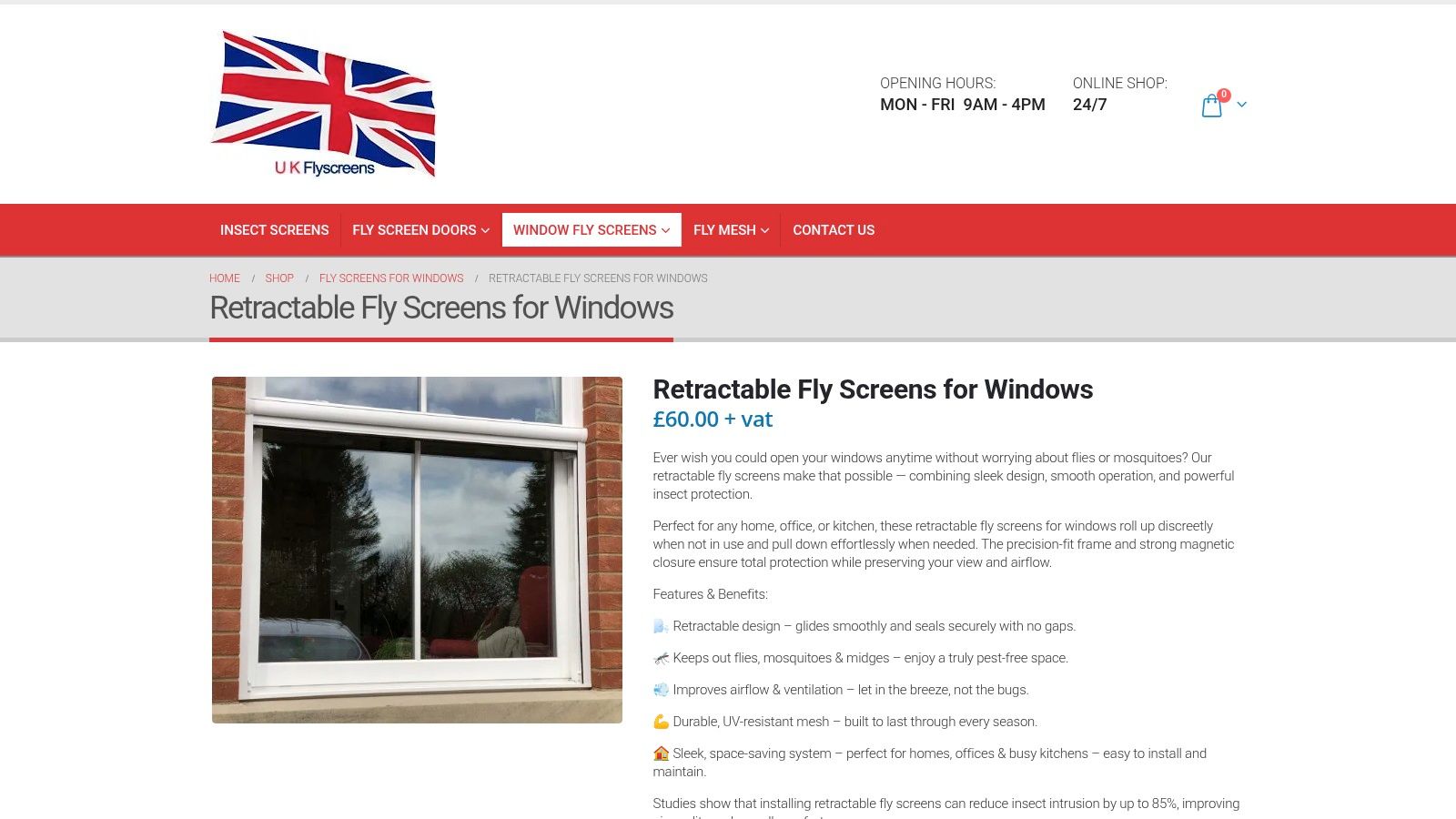
Window screens
For windows, retractable units suit openings that still need to function normally. That may mean reaching through to open a sash, cleaning around the frame, or keeping the inside sill usable.
They are often a good fit for:
- Kitchen casements: Frequent opening, regular cleaning, and a real need for ventilation.
- Bedroom windows: Better suited to night-time airflow where a fixed panel would get in the way.
- Conservatory side windows: Useful where windows are opened repeatedly through warmer periods.
- Selected sash-style openings: Possible where there is enough fixing room and the screen does not interfere with the existing movement.
The common measuring mistake is obvious to a fitter. Buyers measure the clear opening and ignore the frame edges, handles, vents, and any beading or trim. The screen fixes to solid surfaces, so the usable fixing area matters more than the visible gap.
Window handles are one of the main stumbling blocks. A retractable screen can often be specified to clear them, but not always with the same cassette size or fixing method. Trickle vents cause similar problems at the top of the frame, particularly on newer UPVC windows where headroom is already tight. If the opening is slightly out of square, the screen may still work well, but only if that is allowed for before manufacture.
Door screens
Doors need a more practical decision because people pass through them constantly.
A single retractable door screen usually suits a standard back door or side entrance where the route is simple and one leaf does the work. A double screen is usually the better choice for French doors, wider patio openings, and other glazed exits where you want a broader central access point.
Traffic pattern matters. So does threshold detail. On some openings, the neatest-looking option on paper is not the one that works best in use. If children are running in and out, or the door is the main route to the bins, washing line, or garden, the screen has to cope with regular use without becoming a nuisance. The layout, handle position, and closing direction all need checking before you choose.
For a better sense of how different door configurations work in real homes, look through this retractable insect screen doors gallery. It shows the sort of opening differences that product summaries usually skip over.
Match the screen type to the opening
Some openings are straightforward. Many are not.
A narrow face-fix area, proud hinges, uneven brickwork behind the frame, or a door set close to a return wall can all change the best option. In practice, the right question is not “Which screen looks best?” It is “Which screen will clear the obstructions, fit the available frame, and still be easy to use every day?” That is how you avoid ordering a screen that fits on paper but causes problems once installed.
Selecting the Perfect Mesh for Your Needs
Open a kitchen window on a warm evening and the question becomes obvious quite quickly. Do you want the most airflow possible, or do you need to stop smaller insects or pollen that a standard mesh will still let through?
Mesh choice decides that. The cassette and frame colour matter for appearance, but the mesh affects day-to-day performance. In UK homes, that often comes down to location and use. A bedroom near water or fields needs a different answer from a front-facing sash window in town. A family dealing with hay fever will judge the result differently from someone who only wants to keep bluebottles out of the kitchen.
Match the mesh to the problem
Standard insect mesh suits many homes. It gives good ventilation and deals with ordinary flies, wasps, and general summer pests without making the screen feel too closed in.
Finer mesh earns its place where the nuisance is smaller or more persistent. Homes near marshland, the coast, slow-moving water, or open farmland often need a tighter weave because midges and other small insects can pass through mesh that works perfectly well elsewhere. The trade-off is reduced airflow, and that is worth considering before you order for a warm south-facing room.
If hay fever is part of the brief, look at pollen mesh options. The frame may be the same, but the result is not.
Fly Screen Mesh Comparison
| Mesh Type | Primary Use | Best For |
|---|---|---|
| Standard insect mesh | General insect exclusion with good ventilation | Typical homes needing everyday fly protection |
| 18/16 mosquito mesh | Finer screening for smaller flying insects | Bedrooms, kitchens, and areas where standard mesh feels too open |
| Fine midge mesh | Improved control of very small insects | Rural, coastal, or midge-prone locations |
| Pollen mesh | Reducing airborne pollen while still allowing ventilation | Hay fever sufferers and homes needing allergen reduction |
Real homes complicate the decision. A window with a heavy use pattern, a deep reveal, or limited opening angle from bulky handles may already lose some airflow compared with a fully open window. Add a very fine mesh and expectations need to be realistic. On the other hand, fitting standard mesh to a cottage near a river usually leads to the same complaint every summer. The screen works, but the smallest insects still get through.
That is why I treat mesh as a practical specification, not an add-on. Start with what you are trying to stop, then weigh that against ventilation, room use, and the opening itself.
If you are still at the early planning stage, these essential room measurement basics can help you prepare before checking the exact fixing area and frame details.
How to Measure for a Perfect Fit in UK Homes
A lot of measuring errors happen in perfectly normal UK homes. The opening looks simple until you notice the trickle vent stealing top fixing space, the handle sitting proud of the frame, or the reveal being a few millimetres out from top to bottom. That is where made-to-measure screens either work properly or become a nuisance.
Retractable screens need more than an opening size. They need a usable fixing area that lets the cassette, side guides, and bottom bar sit straight and operate cleanly. On UPVC windows, timber frames, and older reveals, that usually means checking the surfaces around the opening just as carefully as the opening itself.
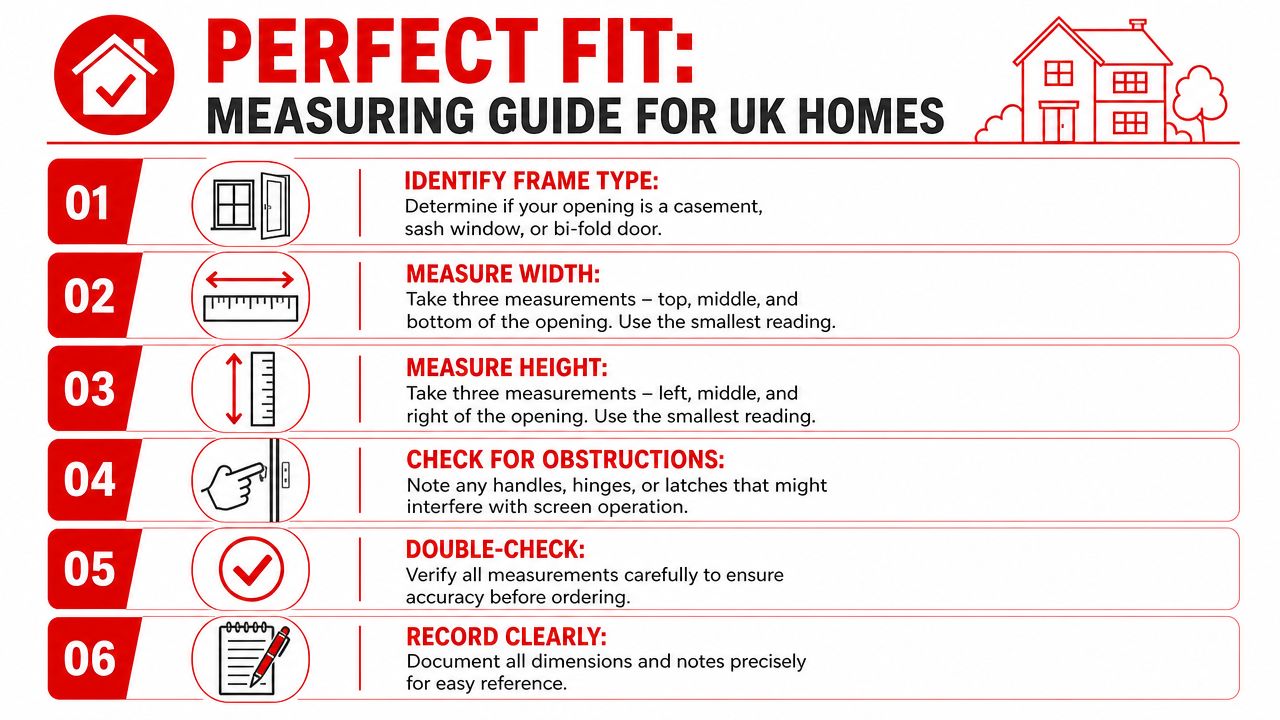
Measure the fixing area, not just the gap
Start with the opening, then measure the frame area the screen will mount to.
Use this method:
- Measure the width in three places. Top, middle, and bottom.
- Measure the height in three places. Left, centre, and right.
- Work from the smallest figure if the opening is not perfectly even.
- Check for flat fixing faces where the cassette and guides will sit.
- Look for anything that projects into the screen path before you assume a standard fit.
The last two checks are where generic guides often fall short. A tape measure gives you size. It does not tell you whether the guide will sit flush on a stepped UPVC profile, whether a vent cover reduces cassette space, or whether a sash horn or handle will catch the mesh bar in daily use.
If you want a refresher on measuring discipline before ordering any made-to-size product, these essential room measurement basics are a useful reminder of how small errors turn into expensive ones once a frame has been made.
The UK-specific problems buyers overlook
In real houses, the awkward details matter more than the headline width and height.
Common ones include:
- Trickle vents: These often break the top fixing line or force the cassette lower than planned.
- Window handles: Espag and cockspur handles can foul the pull bar or reduce mesh clearance.
- Alarm contacts and sensors: Even small fittings can stop a side guide from sitting properly.
- UPVC trims and beads: These can leave you with an uneven or narrow mounting face.
- Older timber reveals: Paint build-up, bows, and out-of-square corners are routine, not rare.
I always advise customers to measure the obstruction as well as the opening. If a handle projects 25mm, that matters. If a vent cover drops below the head by a noticeable amount, that matters too. You are not just checking whether the screen can be fitted. You are checking whether it will open, close, seal, and stay pleasant to use.
Practical rule: If a handle, vent, sensor, or trim sits in the path of the screen, ask what compromise follows. It may affect sealing, clearance, fixing position, or how easy the screen is to clean.
Check how the screen will work day to day
A screen can measure up correctly and still be wrong for the room.
Before ordering, check these practical points:
- Can you still reach the window opener without awkward hand positions?
- Can the screen clear blinds, shutters, or curtain tracks?
- Will the bottom bar or guide placement make sill cleaning harder?
- Is the screen going in front of taps, worktops, or other fittings that reduce access?
That last check gets missed all the time in kitchens and utility rooms. On paper, the opening is fine. In use, the screen ends up behind a mixer tap, too close to a hob splashback, or awkward to retract because the handle side was chosen without looking at how the room is used.
Good measuring is half dimensions and half judgement. In UK homes, especially retrofit jobs, the best result comes from measuring the opening, the fixing surfaces, and the obstructions as one complete setup.
Deciding Between DIY Installation and Professional Fitting
A lot of UK homeowners reach this point with a simple question: can I fit this myself over the weekend, or is this one of those jobs that looks easy until the screen starts catching on the frame? The answer usually comes down to the opening, not your enthusiasm.
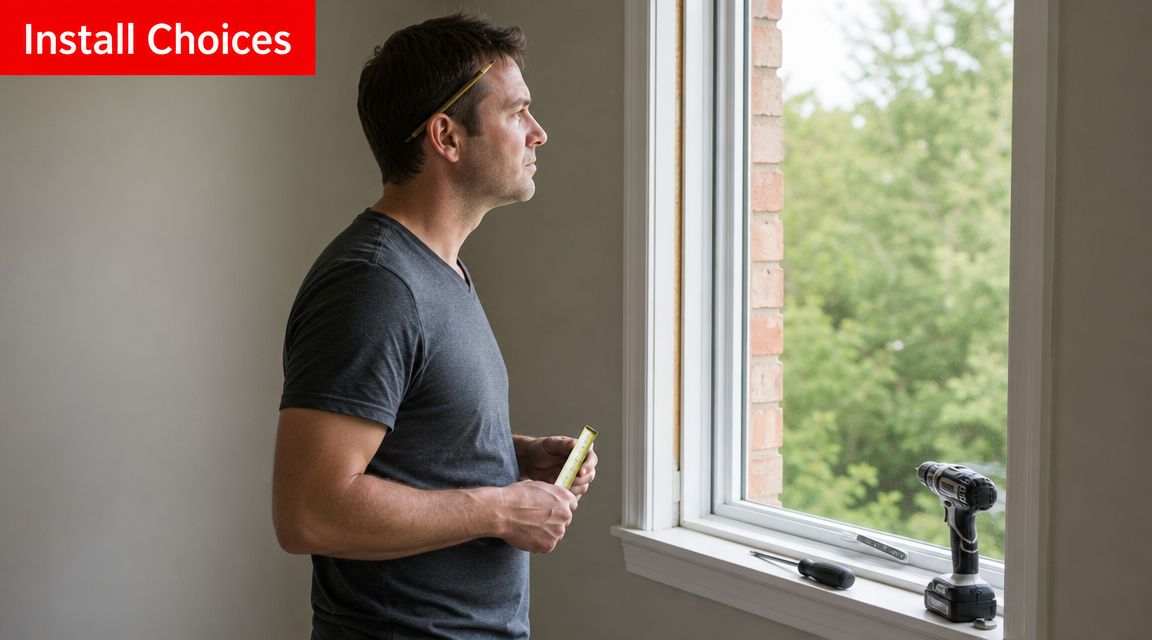
A straightforward opening is often fine for DIY. A modern casement window with flat fixing faces, decent access for a drill, and no awkward surprises around the head or handle can be fitted neatly by a careful homeowner. The same applies to some single doors where the frame is sound and the screen can be mounted without fighting bowed trim or uneven brick reveals.
DIY usually works well if you are comfortable with three things:
- Marking out accurately: A retractable screen needs proper alignment. A few millimetres out can affect how it runs and how well it closes.
- Fixing into the actual frame material: UPVC, timber, and aluminium all behave differently. You need the right screws, the right pilot holes, and a fixing point that will hold without distorting the frame.
- Making small adjustments patiently: If the cassette or side channels are slightly off, forcing the screen will not solve it. It just gives you rough travel and premature wear.
The awkward jobs are where professional fitting earns its keep. Older houses often have openings that are out of square. Some UPVC windows have add-on trims, deep handles, or trickle vents that leave very little room for a cassette. French doors and bifolds can look generous on paper but become tighter once you account for thresholds, plaster lines, and how the doors are used day to day.
I see the same pattern regularly. The customer measures the width and height correctly, but the opening still fights the product because the frame face is uneven, the vent projects more than expected, or the chosen fixing position blocks access to the handle. In those cases, the fitter is not just there to install it. They are there to judge the least awkward compromise before holes are drilled.
Professional fitting is usually the safer choice where:
- The opening is visibly out of square
- Handles, vents, sensors, or trims reduce clearance
- The screen is going on a high-use door
- You want the neatest finish on a prominent front or rear elevation
- The frame material or fixing surface is uncertain
There is also a cost trade-off to be honest about. DIY can save money at the point of purchase. Professional fitting can save money if it avoids a made-to-measure unit being ordered incorrectly or fitted in a way that never runs properly. That matters more on larger screens, and on openings where a poor fit will be obvious every time the screen is used.
For utility doors, workshops, or secondary access points, some homeowners also compare retractable systems with simpler options such as chain fly screens for doors where ease of access matters more than a concealed finish.
The practical rule is simple. Choose DIY for square, accessible openings and only if you are happy setting out accurately. Choose professional fitting for expensive screens, awkward UK frame details, and any opening where clearances are already tight.
Maintenance Durability and FSA Compliance
A retractable screen should be easy to live with. If it's difficult to clean or fussy to operate, people stop using it, and an unused screen doesn't solve anything.
Keeping it working properly
Routine care is simple:
- Brush or vacuum the mesh lightly: This removes dust, pollen, and kitchen residue before it builds up.
- Wipe the frame and guides: Dirt in the tracks affects smooth travel.
- Operate it gently: Don't let the screen snap back if the system is designed for controlled movement.
- Check the sill area: Debris at the bottom rail is a common cause of rough operation.
In kitchens and utility areas, cleaning frequency matters more than people expect. Grease and fine dust can cling to mesh, especially near hobs or extraction points.
Durability in homes and commercial spaces
Good systems are typically specified with aluminium framing and meshes designed for repeated use. That matters in back doors, kitchen windows, and conservatory openings where the screen may be opened and closed often through the warmer months.
For commercial or food-related settings, compliance becomes part of the buying decision. Screens used around food preparation need to support hygienic operation and sensible cleaning routines. In some service areas, a retractable screen may sit alongside other insect-control products such as chain fly screens for doors where access patterns differ and traffic is constant.
The practical point is this. Choose a screen you can maintain without fuss. Durability isn't just what the material can survive. It's whether the product still gets used properly after a full season.
Your Questions Answered and How to Order
A common UK scenario goes like this. The window opens fine, the room needs airflow, and then the details start to matter. The handle projects further than expected, a trickle vent sits where the top fixings would go, or the reveal is slightly out of square because the frame was fitted years ago. Those are the points that decide whether a retractable fly screen will work well.
Will a retractable screen work with trickle vents and bulky handles
Sometimes, yes. Sometimes the opening needs a different fixing method or a different screen style.
Compatibility is the main issue, not product type alone. On many UK windows, especially UPVC casements, the screen has to clear projecting handles, allow access to vents, and sit on a frame that is not perfectly even. A screen can be made to measure and still be wrong for the opening if those details are missed at the ordering stage.
If there is a trickle vent, check whether it must stay fully usable once the screen is fitted. If the handle sits proud, measure how far it projects, not just where it is positioned.
Are retractable screens suitable for pets and children
They can suit family homes, but they should be chosen with realistic expectations. A retractable screen is for insect control and ventilation. It is not a safety barrier, and it will not stand up to repeated pushing from dogs, cats, or young children treating it like a door.
For busy back doors, I usually advise customers to think about traffic first. If people are passing through all day, the screen needs to match that pattern of use or the opening may need a different setup.
Do they cope well with frequent opening and closing
Yes, if the screen is suited to the opening and fitted square.
Poor operation usually comes from one of three things. The opening was measured from the visible gap instead of the true fixing area, the frame is out of square and that was not allowed for, or dirt builds up in the track. In UK homes, uneven plaster lines, older timber reveals, and replacement UPVC frames can all affect how neatly a retractable system runs.
How to order without getting it wrong
Use a practical checklist:
- Identify the opening type. Casement window, sash window, French doors, patio doors, or a wider opening such as bifold-style doors.
- Measure the actual fixing area. Do not rely on the open gap alone. Check width and drop in more than one place if the opening looks uneven.
- Note every obstruction. Handles, trickle vents, alarm contacts, blinds, trims, cills, and anything else that affects clearance.
- Decide how the screen will be used. Occasional bedroom window use is different from a kitchen door opened all day.
- Choose the mesh for the job. Standard insect mesh, finer mesh for smaller insects, or a mesh chosen for a specific environment.
- Ask for advice if the frame is awkward. A quick check before ordering can prevent a screen that fits on paper but not in practice.
If you want a made-to-measure route with product guidance, Premier Screens Ltd offers bespoke retractable window and door screens through its online ordering setup, with options matched to domestic and commercial openings.
If you are ready to buy with fewer surprises, Premier Screens Ltd is a practical place to start. Measure carefully, note every vent and handle, and flag anything unusual before ordering. That is how you end up with a screen that works properly in a real UK home.