
Terrace Screening: Your Complete UK Guide for 2026
You're probably looking at your terrace because something about it isn't working as well as it should. In the afternoon it's pleasant, but dinner gets interrupted by flies. You want more privacy, but you don't want to block what little light you get. Or you run a hospitality or food site and need a practical barrier at an opening without turning the space into a sealed box.
That's where terrace screening earns its keep. In the UK, it isn't just a decorative add-on. It's a functional layer that can improve comfort, airflow, privacy, hygiene control, and day-to-day usability if it's chosen properly and fitted properly. The wrong screen feels clumsy, cuts light, rattles in the wind, or gets left open because nobody wants to use it. The right one disappears into the background and solves the problem.
The Core Benefits of Screening Your Terrace
A terrace often fails in small, repeated ways. Lunch is fine until wasps arrive. The doors stay shut because flies keep getting in. A seating area has decent sun, but it feels too exposed to use properly. Good screening fixes those day-to-day frictions and makes the space easier to use as intended.
Comfort without giving up ventilation
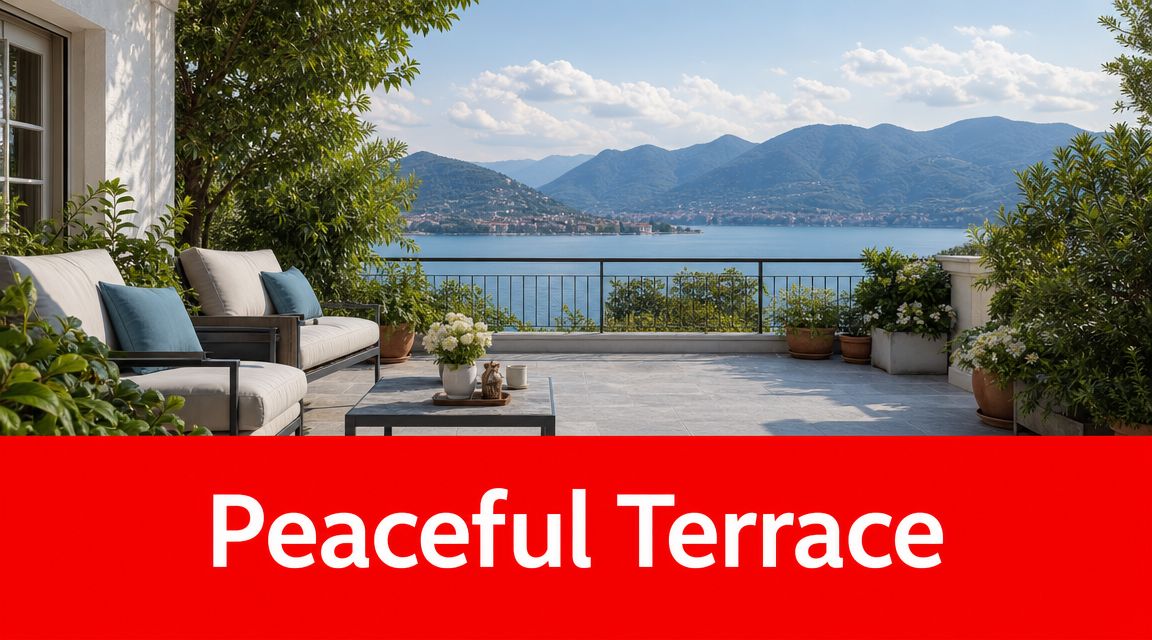
The immediate benefit is insect control with the opening still in use. That matters on terraces because people usually want airflow, not another closed room. A well-specified screen lets air pass while reducing flies, wasps, and other pests around food, drink, and seating.
In UK conditions, that trade-off matters more than many buyers expect. Light is limited for much of the year, so screening has to do its job without darkening the opening or making the terrace feel shut in. This is one reason retractable insect screen doors are often a sensible choice on terrace access points. They give protection when needed and clear the opening when not.
For commercial sites, the benefit is not just comfort. If food is being served, screening can support better hygiene control around openings, but it still needs to suit the way staff and customers move through the space. FSA compliance is not achieved by adding any mesh and hoping for the best. The screen has to be practical enough that people will use it.
Privacy that still lets the terrace breathe
Privacy is usually the next issue. On balconies, roof terraces, and tighter rear gardens, the problem is not always full visibility. It is awkward sightlines from upstairs windows, neighbouring paths, or adjacent seating areas.
Solid screening solves that fast, but it often creates a heavier structure, blocks more daylight, and can raise planning questions depending on height and position. In many UK projects, partial screening works better. Side panels, framed mesh sections, or slatted elements can break direct lines of sight while keeping the terrace lighter and less enclosed. If you are still weighing up layout options, the UrbanManCaves backyard privacy wall guide is a useful reference for early planning.
A terrace should feel sheltered, not boxed in.
Longer use through mixed British weather
Screening can also improve how the terrace performs across the year. It will not turn an exposed terrace into a conservatory, but it can reduce the impact of gusts around a doorway, soften glare, and create a more settled seating area near the opening.
Mesh choice matters here. A tighter mesh may help with smaller insects and airborne irritants such as pollen, but it can also trim airflow and light. A more open mesh keeps the space brighter and breezier, but it may not deliver the same level of filtering. That is a key specification decision on many UK jobs. Get the balance right and the terrace stays usable more often. Get it wrong and the screen becomes something people leave open or work around.
The best terrace screening earns its place by solving several problems at once. It improves comfort, supports hygiene control where required, manages privacy, and protects the usable value of the space without taking away the openness that made the terrace worth having in the first place.
Comparing the Main Terrace Screening Systems
Once you know what problem you're solving, the next decision is system type. This stage often determines project success or failure. Many buyers choose by appearance first, then discover the screen doesn't suit the way the opening is used in practice.
The simplest way to choose is to start with traffic. Ask how often the opening is used, who uses it, and whether the screen must disappear when not needed.
What each system is best at
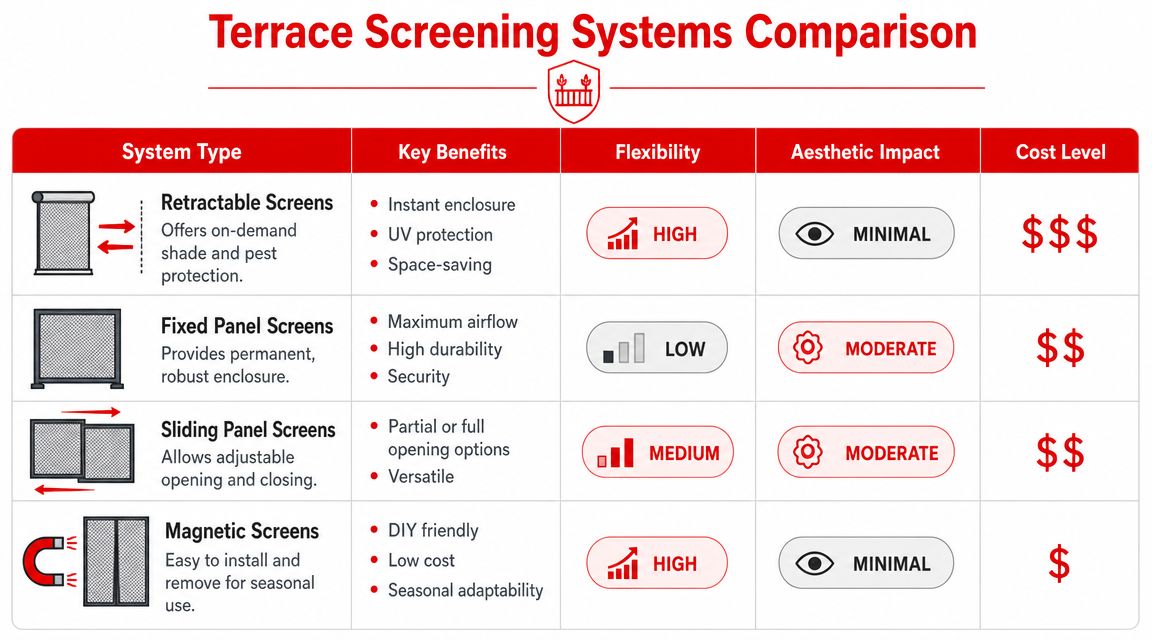
Retractable screens suit terraces where you want protection on demand but don't want a permanent visual frame across the opening. They're useful on doors that open onto patios, balconies, and garden terraces. When the screen is not in use, it retracts away rather than sitting permanently in view. Retractable insect screen doors are a common fit for this type of application.
Fixed panel screens are the workhorses. They're sturdy, simple, and effective where the opening doesn't need constant hands-on access or where permanent screening is more important than flexibility. They can look more architectural, but they're less forgiving if the opening has multiple uses.
Sliding panel screens sit well on larger openings and terrace doors where access is frequent but orderly. They allow controlled opening width, which is useful if one side is used more than the other. They need clean tracks and careful alignment to stay pleasant to use.
Magnetic screens are usually a lighter-touch option. They're straightforward for seasonal domestic use and can suit people who want an easier install route. The trade-off is longevity and finish. They rarely give the same precise fit as a made-to-measure framed system.
Terrace Screening System Comparison
| Screen Type | Ideal For | Pros | Cons |
|---|---|---|---|
| Retractable screens | Residential terrace doors, occasional to regular access | Neat appearance, available only when needed, good for preserving views | More moving parts, depends on accurate fitting |
| Fixed panel screens | Permanent screened zones, side sections, less-used openings | Strong, simple, reliable airflow | Always visible, less flexible for access |
| Sliding panel screens | Wider terrace openings, doors with repeated daily use | Adjustable opening, tidy operation on larger spans | Tracks need maintenance, frame planning matters |
| Magnetic screens | Seasonal domestic use, simpler retrofits | Easy to fit, low visual impact when light | Less durable, can feel temporary |
| Chain fly screens | Commercial doorways with frequent foot traffic | Fast pass-through access, practical for service zones | Limited privacy, more utilitarian appearance |
| Heavy-duty hinged aluminium doors | Commercial and food-related openings | Strong frame, controlled closure, suitable for repeated use | More prominent visually, needs proper clearance |
| PVC strip curtains | Kitchens, service yards, back-of-house areas | Very practical for high traffic, easy movement with hands full | Industrial appearance, not a residential terrace solution |
What works in practice
For homes, retractable or sliding systems usually win because people care about sightlines and ease of use. If the screen feels awkward, it gets left open. That defeats the whole point.
For commercial sites, convenience matters too, but durability and throughput often come first. A terrace access point near food service, storage, or back-of-house movement needs a screen that staff can move through quickly without damaging it.
Practical rule: Match the system to the behaviour of the opening, not the brochure photo. The best-looking screen is the wrong choice if people avoid using it.
Choosing the Right Mesh for Your Needs
A terrace door can have a well-made frame and still disappoint if the mesh is wrong. In practice, mesh choice decides how well the screen handles insects, airflow, light, cleaning, and day-to-day wear.
Terrace jobs vary more than people expect. A sheltered patio in Surrey needs something different from a waterside balcony in Norfolk, and neither should be specified the same way as a café terrace door or a garden room used as the main summer living space.
Start with the real problem
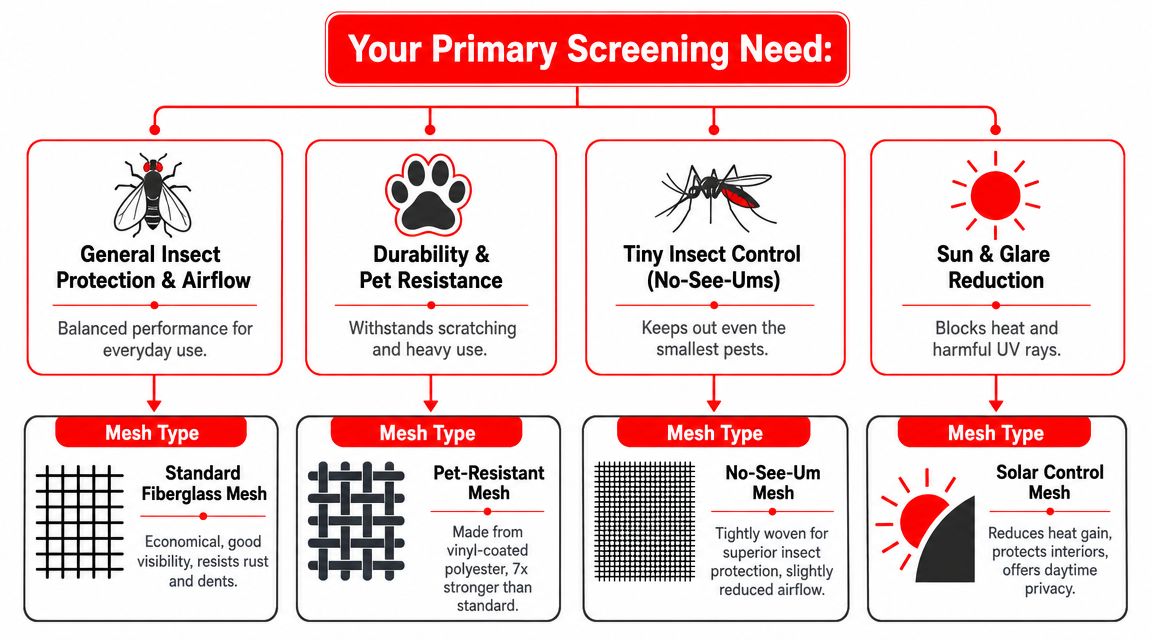
Choose mesh around the nuisance you need to control and the way the opening is used. The available insect mesh types for doors and windows only make sense once those two points are clear.
- Standard insect mesh suits general fly and wasp control on most domestic terrace doors. It gives a good balance of visibility, airflow, and everyday performance.
- Finer mesh is better where small insects are the main issue, especially in damp areas or near water. The trade-off is lower airflow and, in some cases, a slightly darker appearance from inside.
- Pet-resistant mesh is worth considering in lower sections where dogs scratch or push through. It lasts better, but it is usually heavier in look than standard mesh.
- Pollen mesh helps reduce airborne irritants entering through the opening. It can be a good option for households that rely on open doors in spring and summer, but ventilation expectations need to be realistic.
- Stainless steel mesh is often chosen for tougher environments where longevity, cleanability, and a firmer specification matter more than keeping the view as light as possible.
The main trade-offs on UK terraces
Light matters in the UK. Many terrace openings are doing two jobs at once. They bring in air, and they carry a lot of the natural light for the room behind. That is why the finest or toughest mesh is not automatically the best choice.
A tighter weave keeps out smaller insects, but it also cuts airflow compared with a more open mesh. A thicker or stronger mesh resists wear better, but it can make the screen more visible across the opening. If the terrace door is your main route for summer ventilation, those differences are noticeable.
Compliance can affect the choice too. On commercial sites, especially where food is prepared or served nearby, the screen specification has to support hygiene controls rather than just domestic comfort. In homes, planning is more likely to affect frame colour, visibility, and whether the screen changes the appearance of the elevation, particularly in flats, conservation areas, or blocks with management rules.
A practical way to narrow it down
Ask these questions before ordering:
- What needs stopping? Large flying insects, tiny biting insects, pollen, pet damage, or heavy wear.
- How important are airflow and daylight? They matter more than many buyers realise.
- Is the opening occasional or constant use? A weekend patio door and a busy hospitality terrace are very different specifications.
- Will the mesh need frequent cleaning? That matters on commercial sites and on exposed terraces where dirt and moisture build up quickly.
Get those answers right and the mesh choice becomes much clearer. Get them wrong and even a good screening system can feel disappointing in daily use.
Commercial and Residential Screening Requirements
A terrace outside a family kitchen and a terrace serving food to paying customers can look almost identical at first glance. The specification should not be. In UK projects, the dividing line is usually compliance and usage. One opening is there to improve day-to-day comfort. The other may need to support documented hygiene controls, stand up to constant traffic, and satisfy whoever is responsible for food safety on site.
For commercial premises, screening often sits inside a wider pest-control plan rather than being treated as a simple door accessory. Food businesses are expected to protect food from contamination and keep premises in good repair, and physical barriers can form part of that approach under UK food hygiene rules. In practice, that means the screen has to be easy to clean, dependable in daily service, and suited to the way staff move through the opening. A flimsy domestic unit on a busy hospitality terrace usually becomes a maintenance problem within one season.
Commercial buyers should look closely at four points:
- Cleanability. Frames, tracks, and mesh need to cope with regular cleaning without trapping grease, dust, or food debris.
- Duty level. Busy service doors need stronger frames, better closers, and hardware that tolerates repeated use.
- Consistent closure. A screen that is left ajar too easily does not support hygiene controls.
- Site-specific compliance. Food-led sites may need the screen choice to fit existing HACCP procedures, pest-control records, and inspection expectations.
Where traffic is heavy, a purpose-built commercial heavy-duty insect screen door is usually the safer option because it is designed for repeated use rather than occasional passage.
Residential work is different. The pressure is less about formal hygiene procedures and more about whether the screen suits the property, the household, and the building rules that apply to it. In houses, the common sticking points are appearance, ease of use, and how much daylight the screen blocks. In flats and managed developments, there can also be lease restrictions, planning conditions, or management company rules on visible alterations.
That matters in the UK because natural light is already limited for much of the year. A screen that looks fine on paper can feel too heavy on a north-facing kitchen door or a shaded courtyard terrace. Homeowners usually get the best result by balancing three things carefully. Operation, visibility, and appearance from inside the room.
A good domestic specification usually comes down to this:
- Use patterns. A screen on the main garden route needs to be simple enough that people use it properly every day.
- Visual impact. Frame colour and mesh visibility matter more on glazed rear elevations and contemporary extensions.
- Planning and management rules. Flats, conservation areas, and some new-build developments may limit what can be fixed externally or how obvious it can look.
- Maintenance tolerance. Householders usually want a system that stays tidy with light routine cleaning, not one that needs frequent adjustment.
The practical question is straightforward. Does the opening need to satisfy a process, or does it need to disappear into normal daily life? Commercial projects usually start with compliance and durability, then work back to convenience. Residential projects usually start with comfort and appearance, then check whether any planning or property rules narrow the options.
Key Installation and Sizing Considerations
A terrace screen usually gets judged on how it looks on day one. Its long-term performance is decided much earlier, at survey stage. If the opening is out of square, the fixing surface is weak, or the threshold detail is wrong, even a well-made screen will rattle, bind, or leave gaps.
The right starting point is a proper site check, not a quick tape measure across the brickwork.
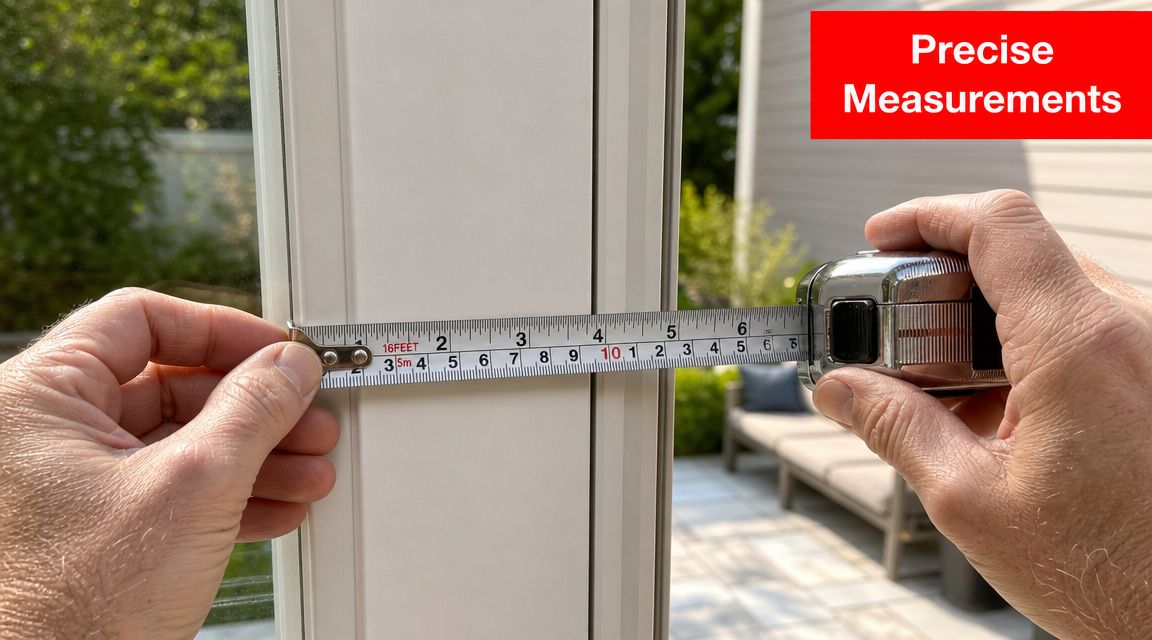
Measuring properly
Measure width and height in at least three positions. Older terrace openings, rendered reveals, and retrofit door sets often vary more than they first appear. A few millimetres of twist or taper can be enough to affect brush contact, track alignment, and how cleanly the screen closes.
The fixing substrate matters just as much as the opening size. UPVC usually gives a tidy line, but trims, cills, and projecting handles can reduce usable space. Timber can be easier to fix into, though it is not always perfectly straight and may move with moisture and temperature changes. Masonry and render need checking for soundness before any frame is offered up.
A practical survey checklist should cover:
- Fixing depth so the frame sits on a stable surface rather than packers and hope.
- Handle and hinge clearance where doors open close to the screen line.
- Threshold detail including cills, drainage slots, and any trip-sensitive track position.
- Reveal condition so loose render, cracked mortar, or uneven faces are identified before fitting.
- Water run-off so the screen frame or bottom track does not obstruct intended drainage.
On exposed terraces, bottom-track position needs particular care. The aim is simple. Keep the route for rainwater clear and avoid creating a lip that traps debris. For general UK guidance on resistance to moisture and drainage around external elements, Approved Document C of the Building Regulations is the better reference point than product catalogue advice: Approved Document C: site preparation and resistance to contaminants and moisture.
DIY or professional fitting
Some terrace screens suit careful DIY installation. Others do not. The dividing line is usually not the product alone, but the condition of the opening and the tolerance the system allows.
DIY fitting can work well where the opening is square, the substrate is reliable, and the system has straightforward adjustment. Fixed framed screens and smaller hinged units are generally more forgiving. Large retractable screens, double-door spans, mixed substrates, and uneven reveals are less forgiving and often cost more to correct after a poor install than they would have done to fit properly in the first place.
I usually advise professional fitting where any of the following apply:
- Wide openings that need accurate tracking across the full span.
- Older brick or rendered surrounds where fixings need careful selection.
- Low thresholds where operation, drainage, and trip risk all have to be balanced.
- Frequent-use access doors where poor alignment will show up quickly in daily use.
That trade-off is straightforward. DIY can save money at the start. Professional installation reduces the risk of callbacks, premature wear, and visible gaps.
The UK planning point many people miss
Terrace screening can sit in a grey area between a simple fitted screen and an external alteration. That distinction matters more on balconies, roof terraces, flats, and boundary-facing installations than it does on a modest rear patio door.
If the screen is fixed externally, changes the appearance of the elevation, adds privacy screening to a balcony or terrace, or affects overlooking, check the planning position before ordering. The relevant UK starting point is the Planning Portal guidance on permission and common householder projects. For leasehold flats or managed developments, planning is only part of the picture. The freeholder, management company, or building rules may also control what can be fixed to the outside of the building.
This comes up regularly on projects where the customer wants one product to do two jobs. Insect control is usually straightforward. Once the screen is also expected to act as a privacy barrier or visible enclosure, the compliance questions change.
Pay attention to three points:
- Location. Roof terraces, balconies, and side boundaries attract more scrutiny than sheltered garden openings.
- Permanence. A removable screen insert is treated differently from a fixed external structure.
- Impact on neighbours and light. In the UK climate, blocking daylight can be as important as overlooking, especially on shaded rear elevations.
If there is any doubt, confirm the local authority position first. It is much easier to adjust a drawing than alter a fitted installation after a complaint.
Budgeting Maintenance and Choosing a Supplier
By this stage, most buyers know what they want the screen to do. The final step is making sure the numbers, upkeep, and supplier support all line up with the project's practicalities.
The cost of terrace screening isn't just the ticket price of the frame. It's the combination of system type, size, mesh choice, hardware detail, and fitting complexity. A straightforward screen on a clean modern opening is one thing. A made-to-measure system on an awkward terrace doorway with threshold and clearance constraints is another.
What affects the total budget
Some cost drivers are obvious. Larger openings need more material. More specialised systems generally cost more than simpler framed solutions. But some of the expensive surprises come from details people ignore at the start.
The main budget factors are:
- System complexity. Retractable and sliding systems usually involve more components and tighter tolerances than basic fixed frames.
- Opening condition. Uneven masonry, awkward reveals, and difficult thresholds can increase installation time.
- Mesh specification. Standard insect control is one level. Fine insect, pet-resistant, pollen-focused, or heavier commercial mesh can change the build.
- Frequency of use. A screen used twenty times a day needs a sturdier operating setup than one used mainly in summer evenings.
When buyers try to save money by dropping quality on the moving parts, they often regret it first. Tracks, corners, fixings, and closure details determine whether the screen still feels right after repeated use.
Maintenance that actually matters
Maintenance is usually simple, but only if it's done little and often. Most terrace screens don't fail because the mesh wears out immediately. They suffer because dirt builds in tracks, fixings work loose, or the screen gets forced when movement isn't smooth.
A sensible routine looks like this:
- Brush or vacuum the mesh gently to remove dust, cobwebs, and pollen.
- Wipe frames and tracks so grit doesn't grind away at movement points.
- Check corners and fixings after windy periods or heavy use.
- Use the screen as designed rather than pushing on unsupported areas.
For commercial locations, cleaning schedules should be more disciplined because back-of-house dirt and grease build-up can affect operation much faster than in a domestic setting.
How to judge a supplier properly
A terrace screen may look similar online across several listings. The differences usually appear later, when you're trying to measure it, fit it, or get advice on whether a certain opening can take a particular system.
Look for a supplier that can answer practical questions clearly:
- Can they build made-to-measure screens for your exact opening?
- Do they understand both UPVC and timber fitting conditions?
- Can they explain the trade-offs between mesh options rather than pushing one default choice?
- Do they supply systems suitable for domestic and commercial use where relevant?
- Can they advise on access pattern, not just width and height?
Materials matter too. Rust-resistant aluminium frames and UV-stable meshes are worth looking for because terrace openings sit in a demanding environment of moisture, temperature swings, and repeated use.
One factual example is Premier Screens Ltd, which manufactures bespoke fly screens in the UK for homes and businesses, including retractable, sliding, magnetic, hinged, and commercial-duty options with different mesh choices for insect control, pet resistance, and pollen reduction.
A sensible buying checklist
Before placing an order, make sure you can answer these five points:
- What problem is the screen solving first? Insects, privacy, airflow management, hygiene control, or a mix.
- How is the opening used every day? Occasionally, constantly, by staff, by children, or while carrying items through.
- Is the chosen mesh right for the job? Not just acceptable, but specifically right.
- Will the fitting protect drainage, clearance, and operation?
- If something is unclear, can the supplier explain it plainly?
If you can't get clear answers before purchase, you're unlikely to get them after delivery.
If you're planning a terrace screening project and want made-to-measure advice for a home, hospitality site, or commercial opening, Premier Screens Ltd provides UK-manufactured fly screens with a range of system and mesh options for different access, ventilation, and compliance needs.