Security Doors for French Doors Your Complete UK Guide
You're probably looking at your French doors for their well-known benefits. They bring in light, open the room to the garden, and make the house feel bigger. Then you think about the other side of it. Lots of glass, a meeting point in the middle, and a frame that may have been designed more for looks and weather performance than resisting force.
That's where security doors for French doors become a practical upgrade, not a dramatic one. In UK homes, the main question usually isn't whether extra protection is possible. It's whether you can add it without ruining ventilation, creating awkward access, or interfering with the existing doors, especially if you've got uPVC frames, tight clearances, or outward-opening leaves.
Why Your French Doors Need a Security Upgrade
French doors are one of those features people love in daily life and worry about at night. That concern isn't misplaced. In the UK, 34% of residential burglaries occur through external doors, and French doors are disproportionately targeted. A Home Office study also found that 58% of burglars break glass to gain entry, while homes with multipoint locking systems on external doors saw a 47% reduction in burglary attempts (Home Office burglary data).
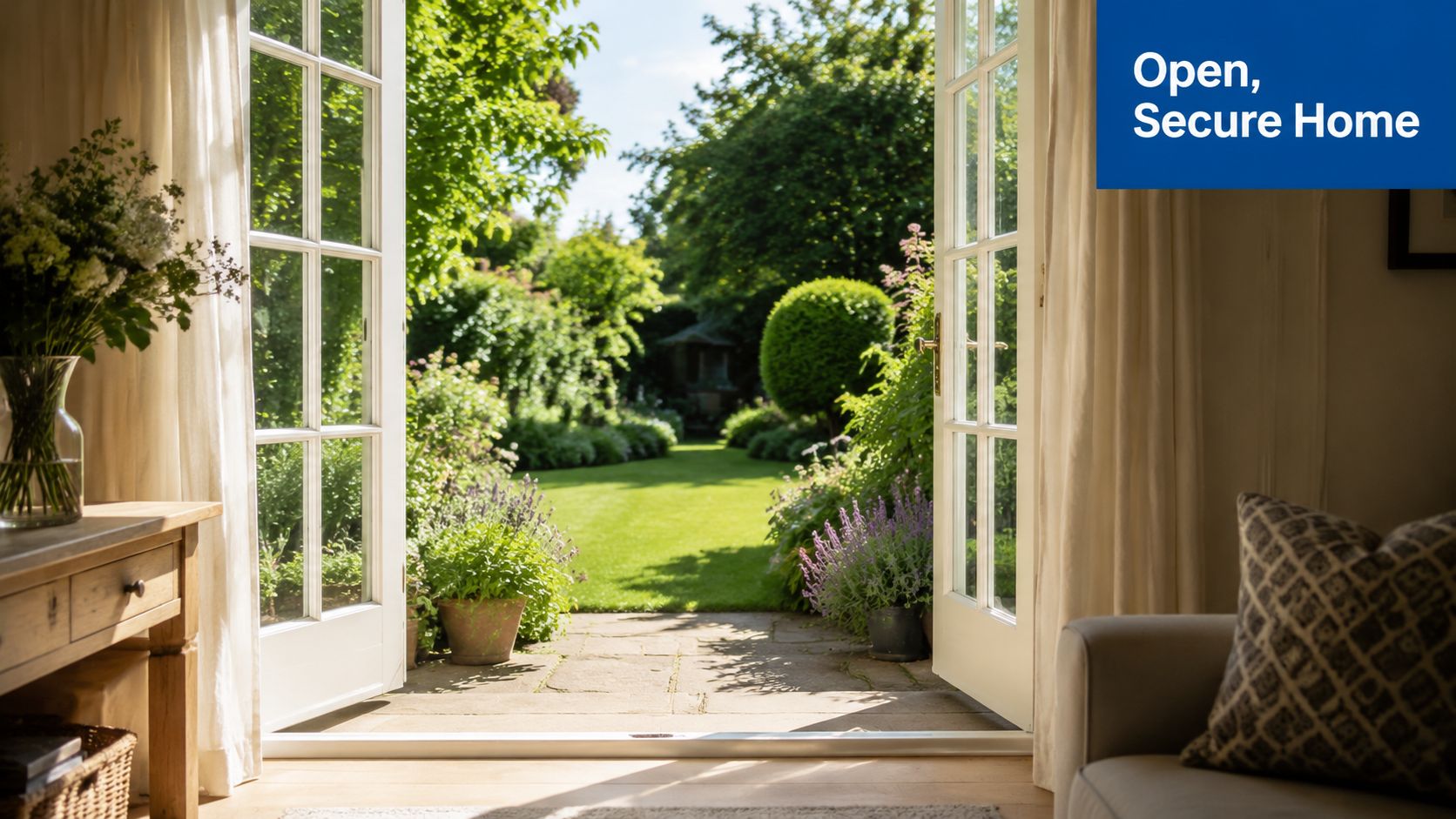
That doesn't mean every set of French doors is unsafe. It means standard setups often have predictable weak points. Large glazed panels let in light, but they also create an obvious attack point. The centre meeting stile can be vulnerable if the locking arrangement is basic. And on many UK properties, especially older ones, the surrounding frame or threshold detail can matter as much as the lock itself.
Where the real weakness usually sits
The problem is rarely just “the glass”. In practice, weakness often comes from a combination of parts:
- Single-point locking: One central lock leaves more opportunity for levering at the top or bottom.
- Flexible frames: If the frame gives under pressure, even a better lock can only do so much.
- Poorly managed clearances: Gaps that are too wide affect both security and weather sealing.
- Outward-opening layouts: Common on some patio and garden-facing doors, these need more thought around hinges, swing path, and external add-on systems.
Practical rule: If a supplier talks only about the door leaf and not the frame, hinges, threshold, and lock engagement, they're only addressing half the job.
A proper upgrade changes the whole entry point from “good enough for normal use” to “hard enough to attack that most intruders move on”. That can mean a security screen, a grille, or a full high-security secondary door set, depending on the property and how you use the opening.
For many households, the right answer also sits inside a wider plan. If you're reviewing alarms, cameras, lighting, and entry points together, it helps to look at broader home security solutions rather than treating the French doors in isolation.
Why homeowners delay, and why that often backfires
People often put this off because they assume a security door will look heavy, block airflow, or make the doors awkward. Sometimes that's true. Badly chosen systems do exactly that.
The better approach is to decide what matters most before you buy. If you want security with ventilation, the answer will differ from a property where the doors stay shut most of the time. If you've got children, pets, or constant garden traffic, convenience matters just as much as resistance. A system that's annoying to use tends to be left open, not secured, or bypassed. At that point, the specification on paper stops mattering.
Decoding Your Security Door Options
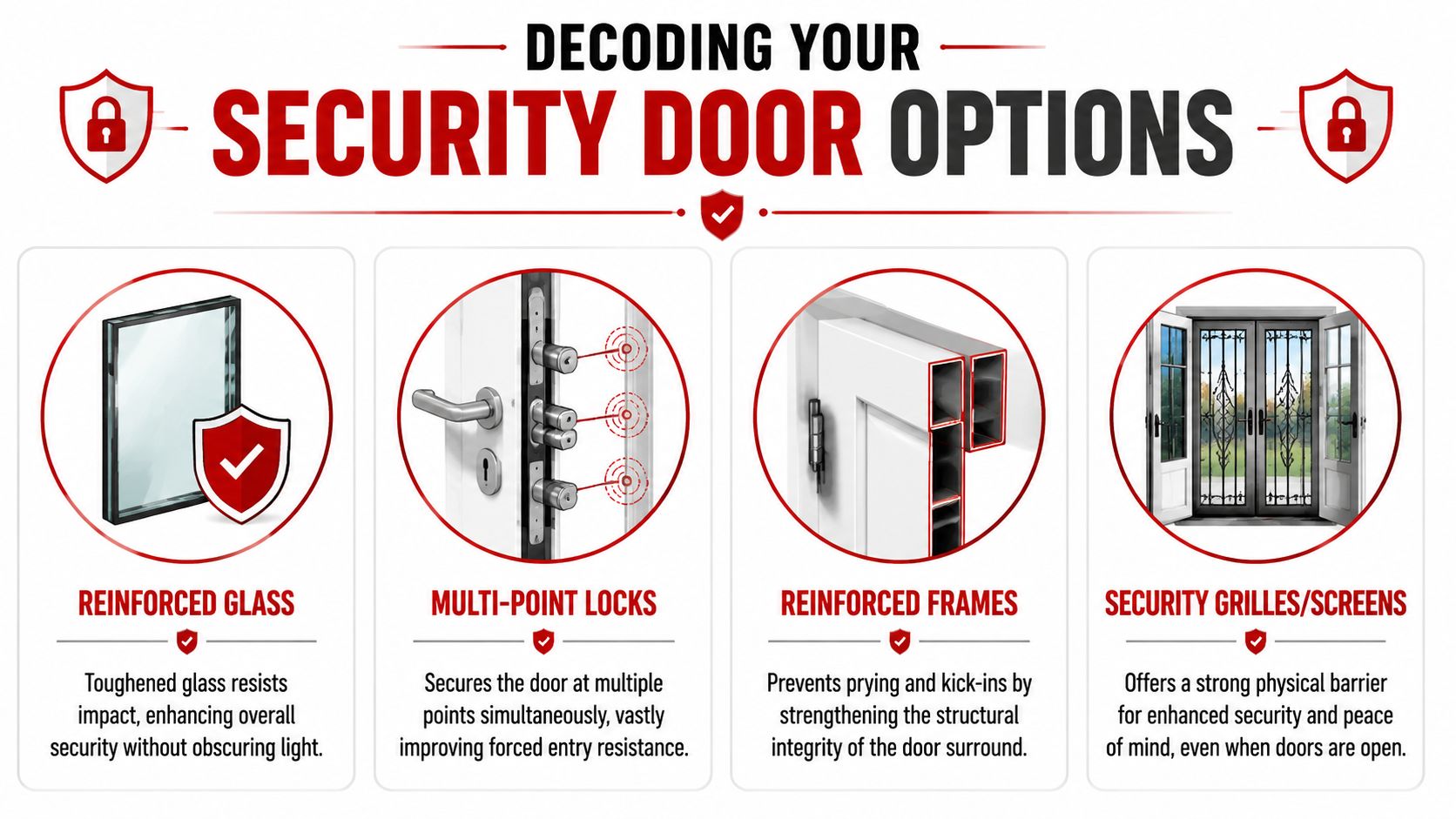
Most buyers get stuck because the market lumps different products together under one label. “Security doors for French doors” can mean a mesh screen door, a fixed barrier, or a fully integrated replacement system. They solve different problems.
A useful way to think about them is like layers of vehicle security. One option deters and delays. Another creates a tougher visible barrier. The most extensive option replaces the vulnerable parts with a more secure assembly from the start.
Security screens
Security screens are usually the most balanced choice for domestic French doors. They add a physical barrier over the opening while preserving airflow and outward visibility better than solid secondary doors.
The case for them is strong when you want the main doors open in warm weather without leaving the opening exposed. According to the UK Insurance Association, homes with security doors or screens over French doors can receive up to 15% lower insurance premiums. A RICE report also found that 68% of unprotected French doors failed a ramming test within 90 seconds, while those fitted with security screens passed the same test after 15 minutes.
That said, not every screen is suitable for every house. A domestic setup used all day by children, pets, and garden traffic needs sturdy hinges, stable frames, and sensible latch placement. If the design is too light, it may feel fine in a brochure and frustrating in use.
Security grilles
Grilles do one thing well. They create a visible, hard barrier. In some settings that's exactly what's needed, especially where ventilation matters less than obvious deterrence.
Their downside is usability. They can look more overtly defensive, and they often affect the appearance of the doors more than mesh screen systems. They also tend to feel less integrated in modern domestic spaces. For a rear garden opening in a family home, many people find them too industrial unless the priority is strictly protection.
Integrated security doors
An integrated high-security door set is the heavy-duty route. This usually means replacing or substantially upgrading the whole door assembly so the frame, hardware, glazing approach, and lock arrangement work together.
This route suits homes where the existing French doors are poor quality, damaged, badly fitted, or structurally weak. It also suits commercial premises where access control, compliance, and heavier use matter. In those cases, broader systems such as card reader access control systems can become relevant if the opening is part of a managed entry setup rather than a simple domestic patio door.
Security options for French doors compared
| Feature | Security Screens | Security Grilles | Integrated Security Doors |
|---|---|---|---|
| Ventilation | Strong option when airflow matters | Usually more limited in day-to-day comfort | Depends on door design rather than screen mesh |
| Visibility | Generally good outward view | More visually intrusive | Varies by glazing and frame design |
| Appearance | Often the easiest to blend into a home | More overtly defensive | Can look seamless if replacing the whole set |
| Best use case | Homes wanting security plus open-door living | Sites prioritising deterrence and barrier strength | Weak existing doors, major upgrades, or commercial use |
| Daily convenience | Good if hinged and fitted correctly | Can be less convenient | Good once installed, but more disruptive to specify |
| Budget fit | Mid-range approach for many homes | Varies by fabrication and fixing | Usually the largest commitment |
The right product isn't the one with the toughest sales language. It's the one your household will actually use every day without compromise.
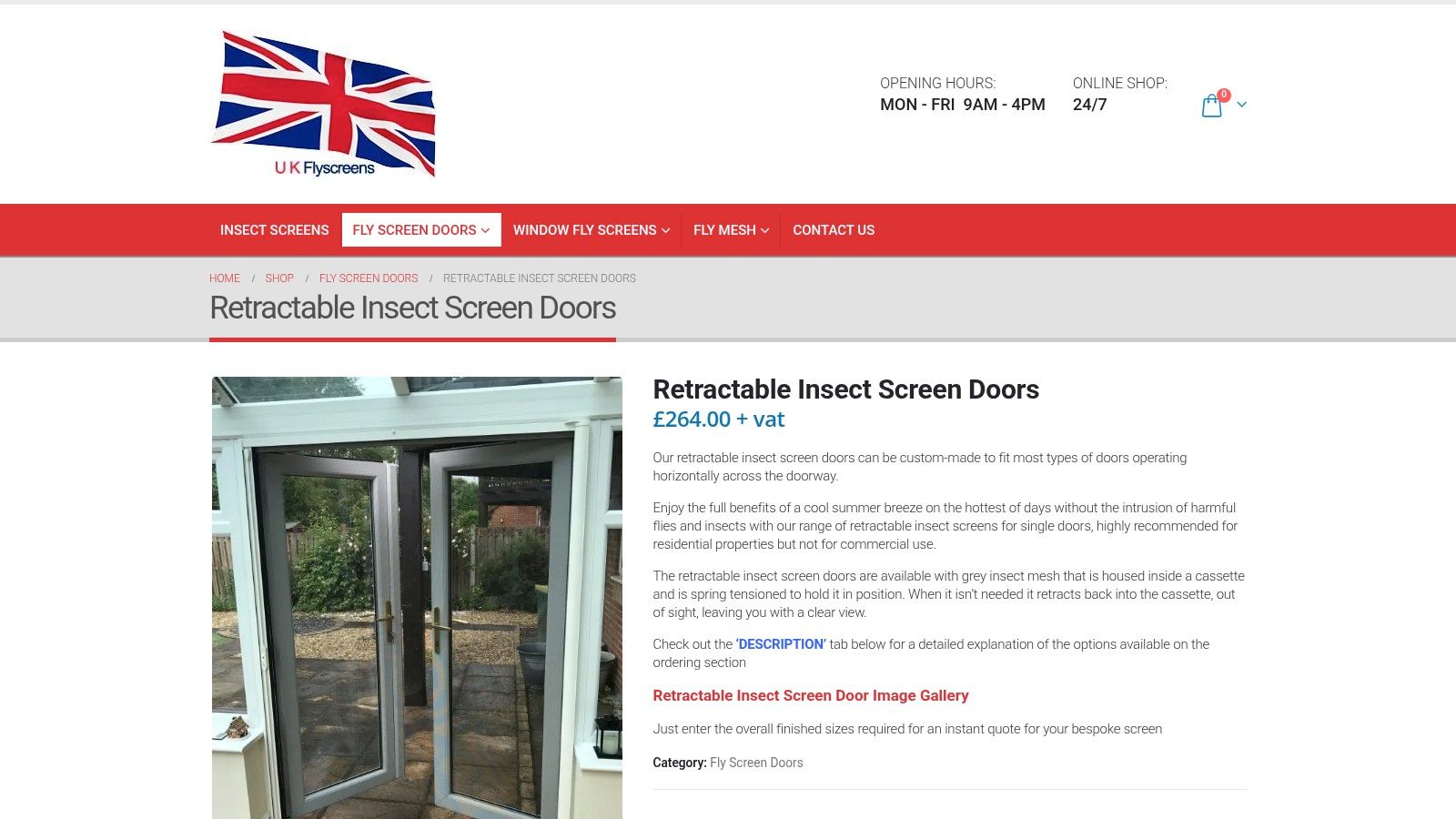
There's also a category that gets confused with security products. Standard insect screens help with airflow and pests, but they aren't the same thing as a security system. If your main goal is summer ventilation rather than intrusion resistance, Retractable insect screen doors or a made-to-measure option for double-door fly screen openings may suit the opening better. They solve a different problem, and it's worth being honest about which problem you're trying to fix.
The Anatomy of a Truly Secure Door
A secure French door setup isn't one feature. It's a combination of lock design, frame strength, material quality, and precise fitting. If one of those is weak, the others have to work harder.
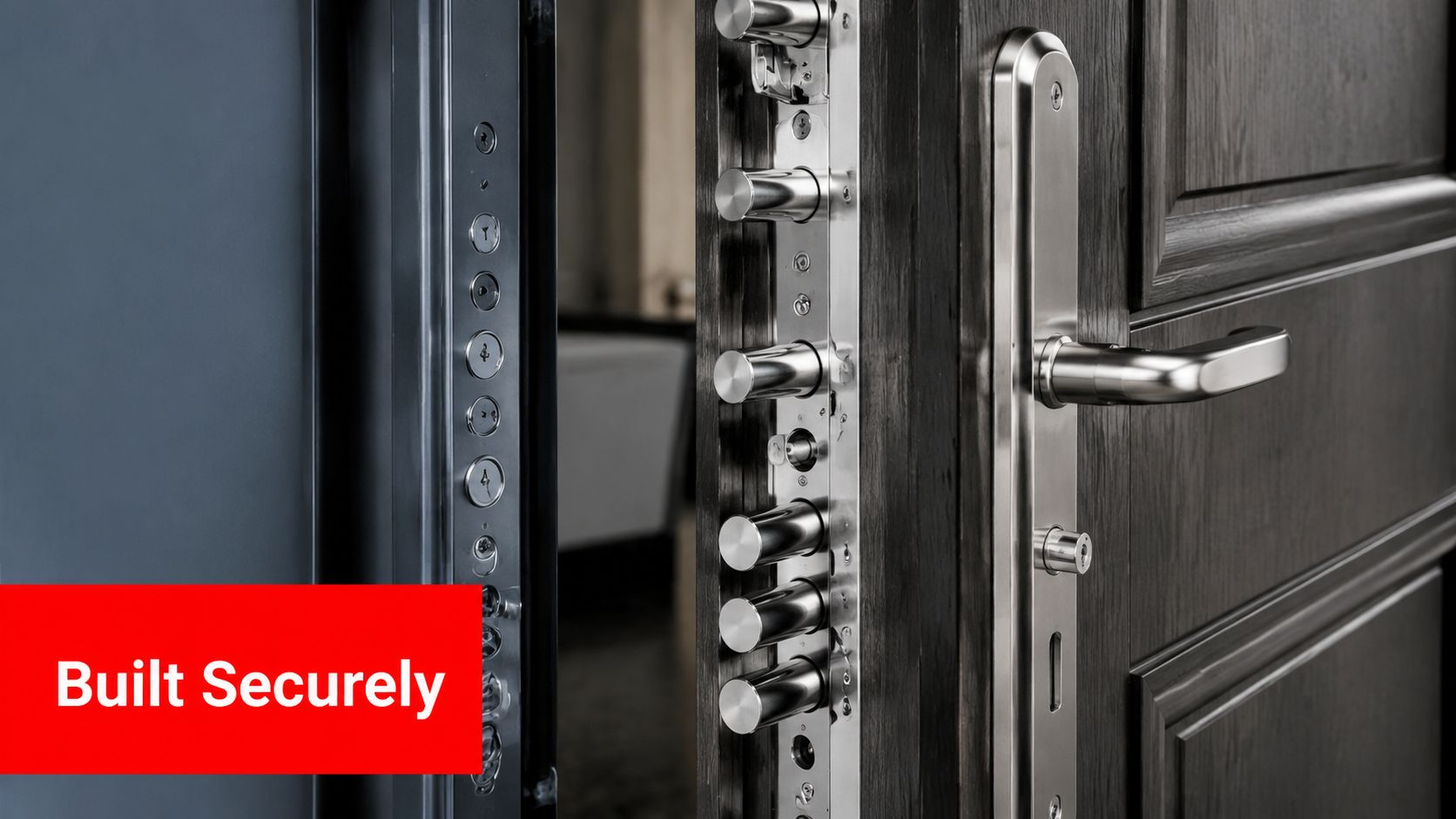
Multi-point locking is the backbone
The single most important difference between a cosmetic upgrade and a serious one is the locking system. High-security French doors for UK use typically rely on 3-point or multi-point locking systems. For single doors, stainless steel bolts generally range from 16 to 20, and for double doors from 22 to 30. Doors that meet BS 3621 standards, which require features such as minimum bolt throw, anti-drill plates, and reinforced frames, reduce burglary success rates by 68% in urban areas according to the UK Government's 2024 Building Safety and Security Report (BS 3621 security performance guidance).
That matters because French doors don't fail at one neat point. Attack pressure is usually spread across the stile, the frame edge, or the meeting point. A multi-point arrangement creates mechanical interlock along the height of the door instead of asking one central latch to carry the whole load.
The frame material matters more than many buyers realise
People tend to ask about mesh first. I'd ask about the frame first.
High-security systems for UK conditions commonly use thermally broken aluminium frames in Grade 6063-T6 and 316 marine-grade stainless steel for exposed mesh or hardware. That combination matters for two reasons. It raises resistance to attack, and it stands up better to the climate. Coastal air, persistent moisture, and repeated temperature swings punish poor-quality metalwork far faster than many homeowners expect.
A flimsy frame with decent mesh is still a flimsy frame. Once the perimeter distorts, lock alignment suffers, weather seals stop doing their job, and the door becomes harder to close properly.
Ask the supplier what happens if the frame is slightly out of square on installation day. The quality of that answer tells you a lot.
Gap tolerance and weather performance
For UK installations, proper gap tolerance between door and frame is critical. The benchmark noted in the verified data is 3 to 5mm. Outside that range, performance starts to slip. Too tight and the door binds. Too loose and you lose sealing quality, create noise and draught issues, and give force more room to work at the perimeter.
Many generic fitting guides fall short. They talk about width and height, but they don't deal properly with threshold variation, bowed reveals, or the small discrepancies that are common on real UK properties.
What to ask a supplier before you buy
Use these questions to separate a proper system from a decorative add-on:
- What standard does the locking system meet? Ask specifically about BS 3621 compliance where relevant.
- What is the frame material and grade? “Aluminium” on its own isn't enough detail.
- How is the inactive leaf secured? On French door openings, this point matters.
- What gap tolerance do you work to? If they can't answer clearly, expect fitting compromises.
- How will weather seals be preserved? Security shouldn't create a draughty door.
If the answers are vague, the product usually is too.
Bespoke Fitting for UK Homes and Businesses
A typical UK French door opening looks straightforward until you start measuring it properly. One side may sit a few millimetres out, the threshold may slope toward the garden, the uPVC frame may have limited fixing depth, and the doors may already be relying on weather seals that you do not want to crush or cut back.
That is why bespoke fitting matters. Off-the-shelf sizing rarely accounts for the details that decide whether a security door feels solid and convenient, or becomes another awkward layer you have to fight with every day. On UK homes, the job is usually less about the door panel and more about how the new frame sits against existing trims, drainage routes, handles, cills, and outward-opening leaves.
The fitting problems that usually decide the job
Three issues come up again and again on site.
uPVC frame constraints
Many French doors in the UK are fitted into uPVC outer frames that were never designed to take a second security frame without careful planning. Fixings need to avoid weak points, drainage channels, glazing beads, and trim sections. If the installer gets that wrong, you can end up with poor anchoring, blocked drainage, or a frame that looks acceptable but moves under load.Outward-opening door sets
Outward opening changes the geometry. Handle clearance, hinge projection, and the arc of the door leaf all affect where a security screen or secondary door can sit. A layout that works on paper can still be frustrating in daily use if it clashes with plant pots, patio furniture, steps, or the route people take in and out of the garden.Threshold and weather line
A secure fit still has to respect the existing weather seal. Raise the threshold detail too much and you create a trip point. Pull the frame too tight at the bottom and the door can bind. Leave the lower edge too open and you invite draughts, rattles, and water problems.
Measure the opening you have, not the one you hope you have
Before ordering anything, check the opening in a way that reflects how UK properties age and move.
- Reveal depth: Make sure there is enough room for a frame without fouling handles, trickle vents, trims, or adjacent brickwork.
- Threshold shape: Check for fall, settlement, and uneven surfaces across the full width, not just at the corners.
- Door swing: Confirm whether each leaf opens inward or outward and how that affects access.
- Lock side and hinge side: Treat them as separate details. They often need different fixing approaches.
- Existing condition: If the original French doors already drop, rub, or leak air, correct that first.
I tell homeowners this often. A security upgrade will not cure a tired or badly aligned base door set. It will usually expose the problem faster.
Homes and business premises need different compromises
At home, the brief is usually simple. Better security, fresh air in warm weather, and a setup that does not become annoying by week two. That means looking closely at how often the opening is used, whether children or pets pass through it, and how much inconvenience you will tolerate for a higher level of resistance.
Commercial sites usually ask a different question. They need airflow, insect control, durability, and hardware that survives repeated daily use. In those cases, a made-to-measure system from a supplier such as Premier Screens Ltd can make sense because the frame, mesh, and access pattern can be matched to the opening instead of forced into a standard size.
The right answer is not always a security-style hinged screen. At some service points, a chain fly screen for busy doorways may suit the traffic pattern better than a framed secondary door, especially where staff are moving through constantly and security is handled elsewhere.
That is the trade-off generic guides tend to miss. The best fit is the one that works with the way the opening is built and the way you use it every day.
Installation Process and Long-Term Maintenance
Installation quality decides whether the product feels solid or irritating. Even a good system can disappoint if the frame is packed badly, fixings are rushed, or lock alignment is left slightly off.
For UK installations, professional fitting of security doors on French doors typically takes 2.5 to 4 hours and averages £450 to £750. DIY installation is often cheaper, but it usually takes 5 to 7 hours because accurate measurement and frame adjustment take time.
What professional installation should include
A competent installer should do more than screw a frame into place.
- Opening check: They should confirm squareness, threshold condition, and fixing points before final fit.
- Protection of existing details: Weather seals, trims, handles, and drainage routes need to be preserved.
- Lock testing: The full lock engagement should be checked repeatedly, not just once at handover.
- Final adjustment: Doors should close cleanly without forcing, scraping, or latch misalignment.
Ask how they handle an opening that's slightly out of tolerance. That's where experience shows up.
DIY is possible, but it punishes inaccuracy
DIY fitting appeals because the hardware looks straightforward. The problem is that French door openings expose every small error. A frame that's slightly twisted can leave one corner proud, one latch reluctant, and the overall close inconsistent.
The common DIY mistakes are simple:
- Relying on one measurement only
- Assuming the threshold is level
- Over-tightening fixings and distorting the frame
- Ignoring the active and inactive leaf relationship
- Skipping repeated lock checks during fitting
A maintenance routine that actually works
You don't need a complicated schedule. You do need consistency.
- Clean the mesh and frame: Remove dirt, salt, and debris before they build up.
- Lubricate locks and hinges: Use the correct product for the hardware type.
- Check fixings and handles: Small movement becomes larger movement over time.
- Inspect seals: Replace worn weather seals before they affect closure.
- Watch for drag: If the door starts catching, address it early.
A secure door should feel ordinary in use. Smooth operation is part of security, not separate from it.
Your Decision Checklist Before You Buy
The best buying decision usually comes from asking practical questions, not chasing the most aggressive specification. A household that wants evening airflow with the doors open has different needs from one that wants a stronger closed barrier. Security and usability have to work together.
The key trade-off is straightforward. You need to judge how the system fits day-to-day life, how much ventilation it keeps, and whether a hinged double-door arrangement is more useful than a fixed screen or a more rigid barrier. If the product is awkward, households stop using it consistently.
The shortlist questions that matter
Use this as your final filter.
- What is my main goal? If your priority is open-door ventilation with protection, look closely at screen-style systems. If the current doors are structurally weak, a more integrated upgrade may be the better answer.
- How often do we use this opening? A garden door used all day needs different hardware from an opening used occasionally.
- Will the system affect access? Think about pushchairs, pets, shopping, furniture, and regular foot traffic.
- What is the frame made from? uPVC, timber, and mixed-material openings all present different fitting limits.
- How important are appearance and sightlines? Some households accept a more visible barrier. Others won't.
- Do I need ventilation, insect control, or both? These are related, but they're not the same specification.
- Who is fitting it? A bespoke product still needs careful installation.
- Will I maintain it? Choose a system you'll consistently keep in good working order.
A secure product that gets left open is less useful than a slightly lighter system that your household uses properly every day.
One final reality check
Don't buy a product category. Buy a solution for your opening.
For some properties, that means a dedicated security screen over the existing French doors. For others, it means accepting that the old doors themselves are the problem and need replacing. In mixed-use or commercial environments, the answer may be different again, especially where traffic levels are high and simpler industrial options such as Heavy duty insect screen doors may be considered alongside security requirements.
When you compare options, keep coming back to the basics. Does it fit properly? Does it preserve seals? Does it work with your opening direction? Will people use it? If the answer to those is yes, you're usually on the right track.
If you want made-to-measure advice for a French door opening, Premier Screens Ltd can help you assess practical options for ventilation, screening, and bespoke fit across UK homes and commercial sites.